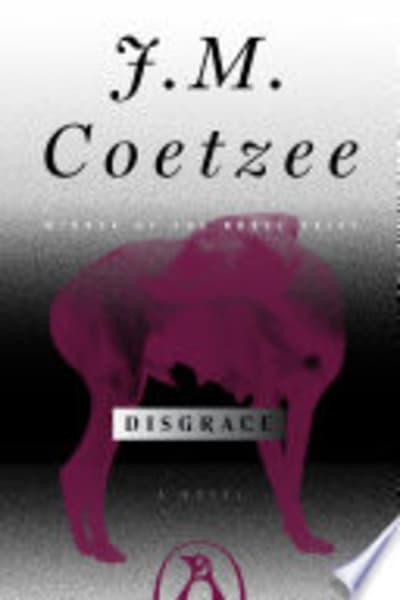
Disgrace — Book Summary & Review
by J.M. Coetzee
Last updated:
Disgrace Summary
David Lurie’s trajectory is inseparable from his fall from grace after an affair with his student Melanie Isaacs, a turning point at the heart of Coetzee’s Disgrace. In particular, Chapter 11 makes its case by focusing on the aftermath of a violent attack on his daughter Lucy’s farm, compelling David to face the brutal racial and social realities of post-apartheid South Africa. Coetzee renders David’s effort to salvage redemption and meaning in a world that has shifted beyond his comprehension with a grit that feels both visceral and tangled. The novel’s account of human weakness is especially hard to ignore, notably through David’s dealings with animals at the animal shelter, where their suffering becomes a blunt metaphor for his own disgrace and his search for some form of salvation. Yet Coetzee refuses to hand over easy answers or a clean resolution, so the reader is left wrestling with the same questions that keep chewing at David. That refusal will irritate anyone hoping for a clear moral or payoff; the book insists on sustained engagement with its weighty themes rather than tidy solutions. Coetzee’s sparse prose is forceful enough to drag you into the protagonist’s emotional and ethical mess, but it offers no comfortingly mapped escape route.
Key Takeaways from Disgrace
-
1
Melanie Isaacs’ Affair: Illustrates the power dynamics and moral complexities in David’s life, leading to his professional downfall.
-
2
Animal Shelter as Metaphor: Represents David’s own disgrace and search for redemption amidst societal and personal ruin.
-
3
Post-Apartheid Tensions: Highlights the racial and societal complexities that David must navigate in rural South Africa.
-
4
Lucy's Farm Attack: A pivotal event forcing David to confront personal and social demons, reshaping his beliefs.
-
5
Euthanasia of Animals: Reflects David’s internal conflict with dignity, control, and redemption in a morally ambiguous world.
Who Should Read This
Someone who is grappling with the complexities of redemption in a morally ambiguous world will find Coetzee’s narrative enlightening. If you’re wrestling with personal failures and seeking understanding in a changing society, this book will resonate.
Who Shouldn't Read This
If you’re expecting a light read with a neatly wrapped-up ending, this book will disappoint. Its themes are heavy, and it demands deep engagement with its characters’ moral dilemmas.
Editor's Verdict
Coetzee excels in portraying post-apartheid South Africa’s racial tensions, particularly through the events at Lucy's farm. However, the book's ambiguity in resolution might frustrate those seeking closure. It’s ideal for anyone in the midst of a personal crisis, questioning their place in a rapidly changing society.
Ready to read Disgrace?
Get your copy on Amazon today.
Disgrace — Frequently Asked Questions
About J.M. Coetzee
J.M. Coetzee, a South African-born author, was born on February 9, 1940, in Cape Town. He is a Nobel Prize-winning writer known for his profound exploration of complex themes like post-colonialism and human rights. Coetzee's credibility on topics of social justice and morality is evident in his acclaimed novel "Disgrace," which examines post-apartheid South Africa. Other notable works include "Waiting for the Barbarians" and "Life & Times of Michael K," both of which further establish his literary prowess.