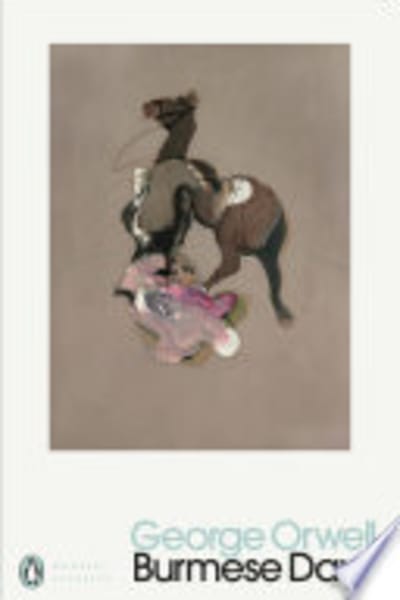
Burmese Days — Book Summary & Review
Last updated:
Burmese Days Summary
In Burmese Days, Orwell builds his moral pressure through the social chessboard of Kyauktada and the European Club—where status is treated like law and “decency” is mostly a costume. The plot hinges on U Po Kyin, a corrupt Burmese magistrate, who weaponizes gossip and favors to sabotage Dr. Veraswami’s reputation so John Flory’s “pukka sahib” world will stay closed to the Indian doctor. Orwell’s structure is basically a slow tightening of that club door: each attempt by Veraswami to live with dignity meets a new layer of institutionalized contempt, and Flory’s friendship becomes the one thread that keeps the story from turning into pure farce. A concrete example is the club maneuvering around membership, where Kyin’s scheming is less about personal taste than about maintaining the racial hierarchy that grants Europeans automatic credibility. Flory, meanwhile, drifts between sympathy and cowardice, trying to be decent while refusing to fully challenge the system that gives him comfort. Orwell also threads Kyin’s “redemption” plan—financing pagodas—through the hypocrisy of a man who wants absolution without accountability; the fact that he dies before the first pagoda is even started lands like an indictment of performative virtue. The book’s last stretch, including Kyin’s wife imagining his return as a rat or frog, turns the moral accounting into folklore: you can almost feel Orwell pushing the reader to ask who gets to rewrite consequences. If you come for “plot twists,” you may find the payoff is more psychological than sensational. Still, Burmese Days is sharply focused on how imperial class and race politics rot everyone involved, even the characters who think they’re exceptions.
Key Takeaways from Burmese Days
-
1
European Club status: Membership functions as an official stamp of worth, turning “belonging” into a weapon against Indians and Burmese.
-
2
U Po Kyin’s corruption: Kyin uses paperwork, influence, and social leverage to destroy reputations, then wraps it in talk of redemption.
-
3
Dr. Veraswami’s dignity: Veraswami’s steady competence and restraint highlight how the empire punishes people who refuse to perform subservience.
-
4
John Flory’s friendship: Flory’s loyalty is real, but his hesitation shows how proximity to power can still be a kind of surrender.
-
5
Pagoda “redemption”: Kyin’s plan exposes moral theater—good deeds announced for absolution don’t erase harm already done.
Who Should Read This
If you’re dealing with workplace politics where “respect” tracks with who has the title, you’ll recognize the club-and-gatekeeping mechanics in Kyauktada. Someone who’s tired of vague anti-racism preaching and wants a story that shows hierarchy working through everyday decisions should read Burmese Days.
Who Shouldn't Read This
If you want a modern, fast-moving plot with frequent reversals, Burmese Days can feel slow because it treats social pressure as the real engine. If you’re uncomfortable with colonial-era language and the book’s blunt focus on imperial racism and classism, you’ll likely find it exhausting rather than enlightening.
Editor's Verdict
The single best thing Burmese Days does is expose how “polite” institutions—like the European Club—operate as machinery for racial exclusion, and it does it through the Kyauktada membership sabotage around Dr. Veraswami. The real limitation is that the novel’s moral focus narrows heavily toward hierarchy and hypocrisy, offering comparatively little in the way of emotional complexity beyond that frame. This will hit hardest for anyone who’s ever tried to be a “good ally” while staying safely inside the system’s comfort zone and then realized that safety was the problem.
Ready to read Burmese Days?
Get your copy on Amazon today.
Burmese Days — Frequently Asked Questions
About George Orwell
George Orwell (1903–1950) was an English writer and journalist. He worked in British colonial service in Burma in the 1920s, directly observing colonial rule, racial hierarchy, and daily life under empire, which informs his writing about Burma. He later became known for political reporting and criticism of imperialism and authoritarianism. Notable works include Animal Farm (1945) and Nineteen Eighty-Four (1949).