Animal Farm — Book Summary & Review
Last updated:
Animal Farm Summary
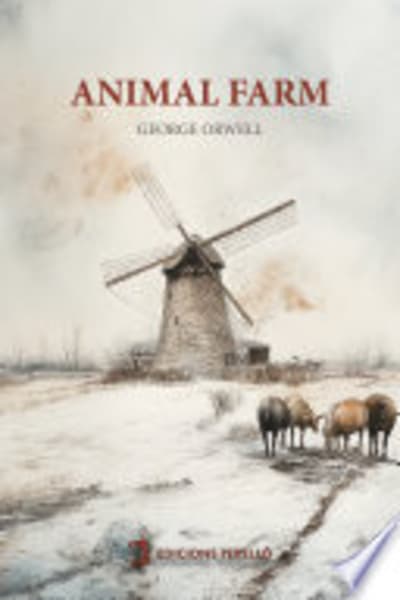
In Animal Farm, Orwell builds a tight political fable around the slogan “All animals are equal. But some animals are more equal than others,” and he lets that sentence rot in real time as the pigs seize control. The story begins with Mr Jones’s failure to feed the animals, then moves into the rebellion led by Napoleon and Snowball, who argue about what kind of future the farm should become. Orwell’s most effective structure is how each new “reform” arrives with a clean explanation and ends with harsher discipline, so you feel the betrayal in your gut rather than hearing a lecture. The pivotal stretch is the shift from the early dream of collective rule to Napoleon’s consolidation of power: the expulsion of Snowball, the rise of a cult of authority around Napoleon, and the way the commandments get rewritten to justify whatever the pigs want that day. The concrete mechanism is propaganda—especially the role of Squealer, who can talk a contradiction into sounding like common sense. Then Orwell sharpens the knife with the Battle of the Windmill, where the animals are asked to sacrifice for a cause that conveniently benefits the ruling class, and the “victory” becomes a tool for further rationing. By the time the farm’s original promises are replaced with new rules and new enemies, you’re watching idealism get processed like feed: ground up, redistributed, and branded as necessity. One honest limitation: this book doesn’t offer a nuanced “how to resist” playbook; it’s diagnosis, not strategy, and that will frustrate readers who want more than a bleak moral audit of power.
Key Takeaways from Animal Farm
-
1
Commandments rewriting shows how language becomes a lever of control, turning “equal” into a moving target for the pigs’ convenience.
-
2
Napoleon vs Snowball rivalry explains factional politics inside revolutions, where ideas lose to intimidation and strategic purges.
-
3
Squealer’s propaganda concretely demonstrates rhetorical gymnastics, using selective facts to keep the animals emotionally off-balance.
-
4
The Battle of the Windmill functions as a loyalty test, where sacrifice is demanded while the leaders quietly change the terms.
-
5
Seven Commandments to one rule reveals bureaucratic drift, where enforcement tightens as the meaning keeps shrinking.
Who Should Read This
Someone who feels cynical about politics but still wants a story that makes corruption feel personal should read Animal Farm. If you’ve ever watched a group you believed in start rewarding the loudest manipulators, this book will land hard.
Who Shouldn't Read This
If you need characters to be psychologically complex beyond their allegorical roles, you’ll likely find the animals frustratingly flat. If you’re looking for a step-by-step guide to activism or governance, Orwell mainly delivers a warning, not instructions.
Editor's Verdict
Orwell’s best trick is how the farm’s “equal” promise mutates through specific propaganda events like the rewritten commandments and Squealer’s explanations. The limitation is that it stays deliberately schematic, so you don’t get much moral ambiguity or character interiority beyond the political function. This hits hardest for anyone who’s just realized how easily institutions can rationalize cruelty after a crisis, and feels that realization tightening into anger.
Ready to read Animal Farm?
Get your copy on Amazon today.
Animal Farm — Frequently Asked Questions
About George Orwell
George Orwell (1903–1950) was a British writer and journalist born Eric Arthur Blair in British India. He became credible on political and authoritarian topics through firsthand experience reporting on poverty and inequality, serving in the Spanish Civil War, and later writing about totalitarianism and propaganda. He is best known for Animal Farm (1945) and also wrote Nineteen Eighty-Four (1949).