Tripas: Poems — Book Summary & Review
by Brandon Som
Last updated:
Tripas: Poems Summary
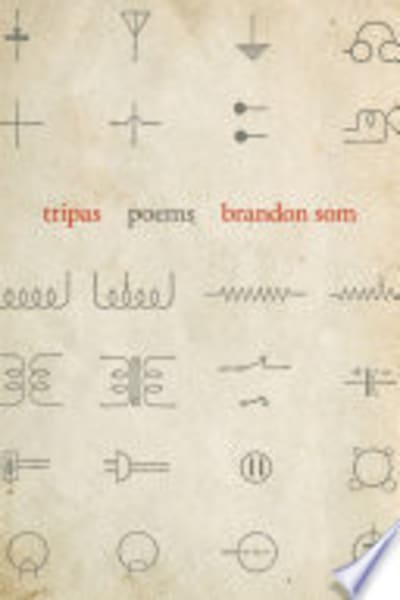
Brandon Som builds Tripas out of a “como se dice” poetics—poems that behave like conversations, where Som listens for heritage-language echoes the way you’d listen for a dial tone in an old phone line. The book is anchored in a multicultural, multigenerational childhood home: a Chicana grandmother who worked nights on the assembly line at Motorola, and Chinese American relatives who ran the family corner store, with memory passed through speech patterns, errands, and labor. Som doesn’t treat family history as background scenery; he treats it as infrastructure. You can feel the circuitry in the language’s movement—switching registers, hearing Spanish and Chinese American English as living tools, and letting migration and work shape the poem’s pacing. One concrete payoff is how Som stages “telephone” across cultures: a poem’s voice answers another voice, even when the answer arrives with friction, translation loss, or deliberate strangeness. The effect is that “memoir” becomes a method, not a label—mem(oir) as a practice of recording what can’t be fully captured, then recording the attempt. If you want a single throughline, Tripas offers one: the way capitalism routes bodies and languages, and the way a family home reroutes that damage into story, sound, and naming. Limitation: this is lyric poetry that asks you to read closely for language-play and historical labor context; if you’re hunting for plot, characters, or emotional payoff on a conventional arc, you may finish feeling like the book is refusing to summarize itself.
Key Takeaways from Tripas: Poems
-
1
“como se dice” poetics means translation as performance—each poem stages language choice, not just language content.
-
2
Dialogic poem-making treats the line break like a reply, so voices answer each other across generations and dialects.
-
3
mem(oir) frames memoir as technique, using sound and syntax to record memory’s gaps and distortions.
-
4
“telephone” between cultures shows how heritage travels with interference, where misunderstanding becomes part of the record.
-
5
Labor-and-circuit imagery turns work history into form, so Motorola shifts and corner-store routines shape the poem’s rhythm.
Who Should Read This
If you’re carrying family stories that don’t fit neatly into English—especially labor histories you inherited without context—Som’s approach will feel like it’s speaking your language. Someone who wants poetry that treats translation, silence, and code-switching as evidence, not ornament, will likely stick with Tripas.
Who Shouldn't Read This
If you mainly read poetry for straightforward narrative or big emotional reveals, Tripas will frustrate you with its method-first structure and dense language play. Someone who prefers poems that summarize themselves in plain terms will likely feel Som is asking for more attention than they want to give.
Editor's Verdict
The best thing Tripas does is make “telephone” feel physical—like you can hear the transmission errors—through Som’s dialogic, language-forward construction, especially around the Motorola and corner-store labor memories. The limitation is that the book rarely offers a conventional emotional arc or explanatory payoff, so readers who want clarity over craft may feel stranded. This hits hardest for anyone who’s spent years translating their own background for other people and now wants poetry that documents what translation costs.
Ready to read Tripas: Poems?
Get your copy on Amazon today.
Tripas: Poems — Frequently Asked Questions
About Brandon Som
Brandon Som is a poet and author of Tripas: Poems. He writes from a background shaped by lived experience and close attention to language, bodies, and everyday life, which informs his work on intimate, embodied themes. Som is credible on this topic through his published poetry and his sustained focus on the subject matter central to Tripas. Other notable works by Som include The New World (poetry).