Ars Poeticas — Book Summary & Review
Last updated:
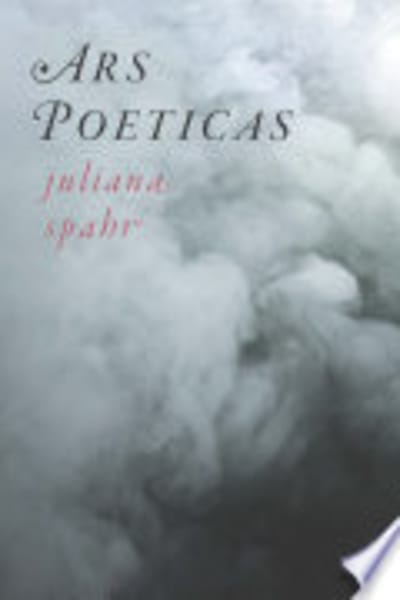
Ars Poeticas Summary
Spahr’s ARS POETICA is organized as six separate “ars poeticas,” and the book’s governing question is whether singing is still possible in dark times, after the Brecht prompt that Spahr names and reworks. Across the sections, Spahr keeps returning to a specific kind of after: “poetry after Castle Bravo,” “after 1500 feet,” “after 2,000 feet,” counting down through devastation until language itself feels contaminated by scale. That’s not an aesthetic trick; it’s the spine of the argument. Spahr’s poems braid catastrophe with marine life, especially in “CORAL,” where the poem’s long inventory of zones (reef flat, lagoon terrace, patch reefs) becomes a counter-archive to political forgetting. The Cold War shows up as both atmosphere and material—“tapeworms,” “sails,” “steel of bridges”—and Spahr uses those pairings to make politics bodily, not abstract. Meanwhile, the “pop song’s possible liberation” thread keeps nudging the book away from elegy and toward collective voice: comradeship as a method, not a mood. If you come hoping for a clean thesis, Spahr refuses it; she gives you instead a set of practiced turns—catastrophe → ecology → comradeship → form—that you feel in your throat.
The limitation is real: this is not a book that patiently teaches you how to “apply” anything to your own writing or activism, and it’s likely to frustrate readers who want conventional narrative clarity. If you don’t already like experimental American poetry’s syntax and long, breathy lists, you’ll spend more time decoding than listening. Spahr’s last move is to insist that “to write poetry after” is still writing, even when the world’s nutrients—and your patience—run low.
Key Takeaways from Ars Poeticas
-
1
“ars poeticas” frames the book as six separate poetic manifestos, each testing a different way to sing after catastrophe.
-
2
“CORAL” treats reef-zone cataloging as political memory, mapping devastation and recovery through precise ecological place-names.
-
3
“poetry after Castle Bravo” makes history measurable in feet, forcing language to account for scale and bodily consequence.
-
4
Cold War imagery functions as material metaphor, turning geopolitics into creatures, ships, and infrastructure you can almost touch.
-
5
comradeship as method insists that collective voice is a formal choice, not merely an ethical stance in the poems.
Who Should Read This
Someone who keeps thinking about Brecht’s question—whether singing can survive political darkness—will find Spahr’s six “ars poeticas” eerily aligned with that worry. If you’re tired of poetry that only mourns, and you want language that keeps moving toward comradeship and coral-bright attention, Spahr will meet you where you are.
Who Shouldn't Read This
If you want a straightforward argument with a tidy payoff, Spahr’s structure-by-association and list-driven intensity will feel like drift rather than direction. If you hate experimental syntax and long inventories, “CORAL” in particular will likely exhaust you before it convinces you.
Editor's Verdict
Spahr’s best move is how “CORAL” uses reef-zone specificity to convert political catastrophe into ecological form, with “poetry after Castle Bravo” supplying the ethical pressure behind the catalog. The limitation is that the book offers no practical writing program or explanatory scaffolding—your reward depends on tolerating its experimental, non-linear method. This hits hardest for anyone reading experimental American literature right after a burnout with “message” poetry, when you want craft and politics fused but you don’t want a lesson plan.
Ready to read Ars Poeticas?
Get your copy on Amazon today.
Ars Poeticas — Frequently Asked Questions
About Juliana Spahr
Juliana Spahr is an American poet and essayist. They are credible on poetry and poetics through their long-standing academic and literary work analyzing contemporary verse, including the relationship between form, language, and cultural context. Spahr’s notable books include The Transformation (2009) and Fucking and Their Bodies (2015). They are also the author of Ars Poeticas, a collection focused on poetic practice and theory.