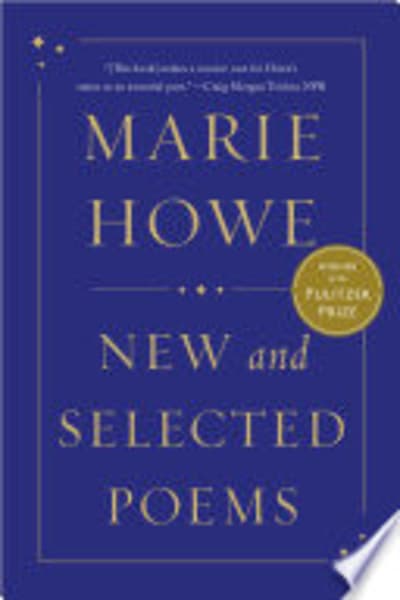
New and Selected Poems — Book Summary & Review
by Marie Howe
Last updated:
New and Selected Poems Summary
Marie Howe’s New and Selected Poems is organized as a long arc: four earlier collections are gathered alongside twenty new poems, so you can watch Howe’s “radical simplicity and seriousness of purpose” harden into a recognizable practice. The book keeps returning to the same engine—autobiography under pressure—yet it refuses to turn private grief into a brand. One of the clearest through-lines is how Howe treats ordinary scenes as moral weather: aging while walking a dog, caregiving, the aftermath of loss, and the stubborn, nearly religious way a person keeps going after tragedy. In the earlier work, What the Living Do (1997) functions like an emotional archive, where mourning doesn’t resolve so much as it learns new shapes. In Magdalene (2017), Howe shifts toward contemporary womanhood with a spiritual and sensual register, and you feel her attention move from “what happened” to “what it does to the body and the soul.” The new poems don’t feel like add-ons; they feel like Howe has gotten stricter about what counts as evidence. Even when she writes in a voice as mythic as Persephone, the poems land on lived details—an address, a room, a memory that won’t behave. If you want a concrete example of how the book earns its emotional authority, look at how Howe repeatedly stages the same scene with different emotional temperatures, so the reader learns to track change rather than closure. The limitation is real: this is not a themed anthology designed for quick mood-selection. If you want a tidy set of “best poems” by topic, you’ll have to do more choosing than the title promises, and some readers may find the seriousness heavy without much formal play.
Key Takeaways from New and Selected Poems
-
1
Four-decade structure: Howe’s earlier collections plus twenty new poems create a visible evolution in how she handles grief.
-
2
Radical simplicity: the language strips down until the emotional logic becomes unmistakable, even when themes stay complicated.
-
3
Autobiography under pressure: personal tragedy is treated as material that keeps working, not a story that ends.
-
4
Persephone voice: myth isn’t decoration; it’s a lens for ordinary suffering and the body’s ongoing negotiations.
-
5
Everyday sacredness: poems make small scenes carry ethical weight, so joy and sorrow show up as neighbors.
Who Should Read This
If you’re carrying grief that doesn’t fit neatly into “closure,” someone who wants poems that keep breathing with you will feel seen. If you spend a lot of time translating your own life into meaning and still come up short, Howe’s method will match your pace.
Who Shouldn't Read This
If you only want poems that announce their point with clean resolution, Howe’s seriousness may feel like emotional refusal. If you want a strictly curated, topic-sorted anthology you can sample effortlessly, the long collection-spanning layout will frustrate you.
Editor's Verdict
The single best thing New and Selected Poems does is let you witness Howe’s craft tightening across eras, especially the shift from What the Living Do’s mourning archive to the more embodied spirituality of Magdalene. The real limitation is the book won’t reliably give you quick, theme-labeled entry points; you have to navigate its serious, cumulative rhythm. Anyone who’s mid-career and tired of “inspiration” books will hit hardest when they realize Howe treats aging and loss as ongoing work, not a lesson you finish.
Ready to read New and Selected Poems?
Get your copy on Amazon today.
New and Selected Poems — Frequently Asked Questions
About Marie Howe
Marie Howe (born 1950) is an American poet and professor. She grew up in the Midwest and earned an MFA from the Iowa Writers’ Workshop. Her long publication record and teaching career make her credible to write and reflect on contemporary poetry. She is the author of New and Selected Poems and other collections, including What the Living Do and The Good Thief.