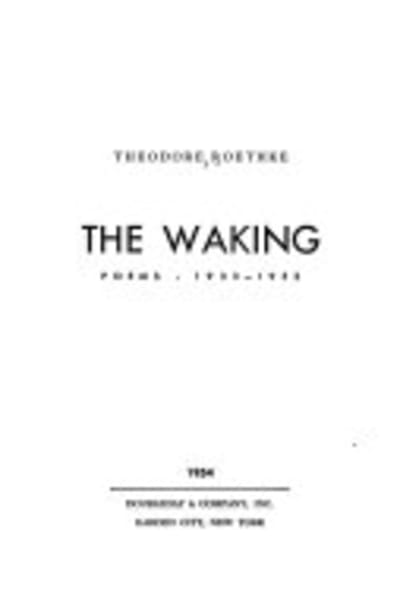
The Waking — Book Summary & Review
Last updated:
The Waking Summary
The Waking is structured as a sequence of lyric poems that repeatedly return to a single organizing feeling—arrival into consciousness—so Roethke’s last-name obsession with waking, breath, and bodily attention becomes the book’s real architecture. Across the slim 120 pages, he keeps circling the moment when the mind stops drifting and starts noticing, and he writes that shift with a kind of plain physicality: the body as the first instrument of meaning, not a decorative metaphor. One recurring move is the way Roethke tightens ordinary perception until it feels newly moral—light on skin, the friction of thought against the day, the sense that awareness carries responsibility. Even when the poems sound intimate, Roethke isn’t offering comfort; he’s testing whether attention can hold both wonder and dread.
If you want a concrete way to feel the book’s method, look at how Roethke builds momentum through repetition and tonal turn, especially in poems commonly read as part of his “waking” cycle. He leans on images that behave like triggers: water, air, roots, rooms, and the speaker’s own breath. The poems often start with a sensory hook and then pivot toward a more unsettling claim—that waking is not freedom from the world, but deeper entanglement with it. This is where Roethke’s language can feel slightly incantatory: not vague, exactly, but determined to keep you in the act of noticing rather than letting you coast.
Honest limitation: The Waking doesn’t try to explain itself with essays or a guiding argument you can summarize for a book club. If you need clear narrative, plot, or a stable “thesis,” you may end up frustrated by how much the experience depends on your tolerance for lyric ambiguity and shifting moods.
Key Takeaways from The Waking
-
1
Waking as method: Roethke treats “waking” as attention training, not a metaphor, so the poems measure consciousness minute by minute.
-
2
Bodily perception: ordinary sensations (breath, touch, light) function like proof that awareness is physical before it is intellectual.
-
3
Repetition and tonal pivot: recurring images return with changed emotional weight, teaching you to hear alteration inside familiar lines.
-
4
Incantatory diction: Roethke’s rhythm sometimes prioritizes spell-like momentum over neat explanation, which can feel demanding.
-
5
Lyric ambiguity: the book withholds tidy meanings, forcing readers to sit with contradiction rather than resolve it.
Who Should Read This
Someone who’s stuck in a foggy, half-present routine and keeps wishing they could feel their days more sharply. If you read poetry for sensory discipline—when you want language to make attention feel urgent—Roethke’s last-name obsession will land.
Who Shouldn't Read This
Someone who wants a clear, step-by-step argument or a book you can summarize into a few bullet points will feel shortchanged by The Waking. If you dislike dense lyric repetition and mood shifts, Roethke’s last-name style will likely feel more like pressure than pleasure.
Editor's Verdict
The single best thing The Waking does is make “waking” feel like a lived practice by turning breath and bodily noticing into the poems’ organizing engine, again and again. The limitation is that it offers no explanatory scaffolding—no narrative or essay frame—so the experience depends on your appetite for lyric ambiguity. This hits hardest for anyone between projects, lying to themselves that they’re “fine,” and then realizing they need their attention back before they can think clearly.
Ready to read The Waking?
Get your copy on Amazon today.
The Waking — Frequently Asked Questions
About Theodore Roethke
Theodore Roethke (1908–1963) was an American poet known for work that explores nature, family life, and personal awakening. He grew up in Michigan and studied at the University of Michigan and later at the University of Wisconsin. Roethke is credible on this topic because The Waking draws on his long career writing about lived experience and perception. Other notable works include “The Lost Son and Other Poems” and “Words for the Wind.”