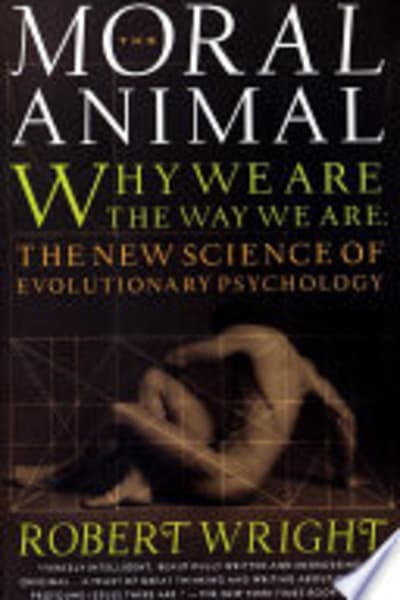
The Moral Animal — Book Summary & Review
Last updated:
The Moral Animal Summary
Robert Wright introduces readers to the concept of “moral machinery” in The Moral Animal, arguing that our ethical behaviors are grounded in evolutionary psychology. He tracks Charles Darwin’s life as a narrative framework, using evolutionary theory to explain human behavior and casting new light on issues like monogamy and self-deception. A standout section, “Darwin and the Pursuit of Happiness,” considers how our evolutionary past steers the ways we chase fulfillment. Wright’s prose is readable and helps make complex science less intimidating, but the book leans heavily on theory, which may annoy anyone hoping for practical guidance. Wright’s account of human nature through evolutionary psychology is persuasive, yet it offers few concrete tools for handling personal moral dilemmas.
Key Takeaways from The Moral Animal
-
1
Moral Machinery: Wright argues that our ethical instincts are shaped by evolution, influencing behaviors like cooperation and competition.
-
2
The Self-Deception Theory: Explains how deceiving ourselves can be an evolutionary advantage by enhancing social cohesion.
-
3
Monogamy Questioned: Wright explores whether humans are naturally monogamous, linking it to evolutionary survival strategies.
-
4
Sibling Rivalry: Investigates how the evolutionary need for resource allocation can explain love-hate relationships among siblings.
-
5
Darwin’s Happiness: Analyzes how Darwin’s life decisions reflect the impact of evolutionary psychology on the pursuit of happiness.
Who Should Read This
Someone who is curious about how evolutionary psychology might explain everyday human behavior and moral choices. If you're pondering the biological bases for ethics and morality, this book will offer a fascinating perspective.
Who Shouldn't Read This
If you're looking for a step-by-step guide to improve personal morality, this book's theoretical focus might disappoint. Those who find detailed scientific explanations tedious may struggle with Wright's dense, academic style.
Editor's Verdict
Wright's best achievement is his ability to weave Charles Darwin's personal life into the broader discussion of evolutionary psychology, especially in the 'Darwin and the Pursuit of Happiness' chapter. However, the book's theoretical depth can be overwhelming and lacks practical application for readers seeking direct moral guidance. This book is perfect for anyone at a crossroads in life, contemplating the roots of their values and choices from an evolutionary standpoint.
Ready to read The Moral Animal?
Get your copy on Amazon today.
The Moral Animal — Frequently Asked Questions
About Robert Wright
Robert Wright is an American author and journalist, known for his work on evolutionary psychology and its implications on human behavior. He holds a degree in public affairs from Princeton University and has contributed to The New Republic and The Atlantic. Wright is credible on the topic due to his extensive research and clear articulation of complex ideas. Besides "The Moral Animal," he authored "Nonzero: The Logic of Human Destiny" and "Why Buddhism is True."