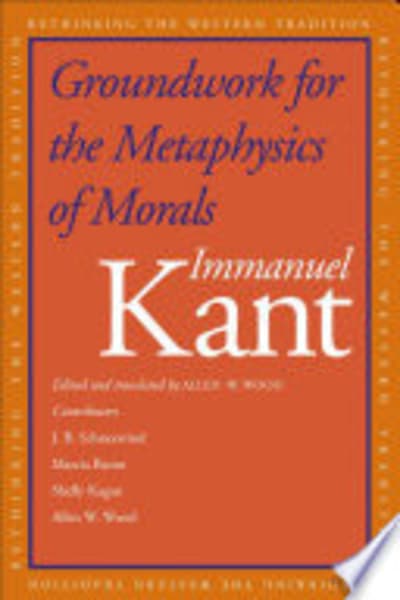
Groundwork for the Metaphysics of Morals — Book Summary & Review
Last updated:
Groundwork for the Metaphysics of Morals Summary
Kant establishes the framework of the categorical imperative in the "Groundwork for the Metaphysics of Morals," introducing readers to his argument on moral duty independent of personal desires. Presented in three sections, Kant starts with the notion of 'good will' and progresses to the principles of universal law. In the second section, he formalizes the idea of categorical imperative, which he uses to evaluate moral actions based on their ability to be universalized. The third section connects these moral laws to human freedom. However, the book is dense and can be perplexing to those not already familiar with philosophical jargon, as Kant assumes a base level of understanding and does not simplify his arguments for beginners.
Key Takeaways from Groundwork for the Metaphysics of Morals
-
1
Categorical Imperative: A principle suggesting actions must be universally applicable to be considered moral.
-
2
Good Will: Defined by Kant as the only intrinsically good thing, emphasizing intention over consequence.
-
3
Universal Law: An action is morally right if it can be universally applied without contradiction.
-
4
Kingdom of Ends: Kant's ideal where individuals act as both authors and subjects of moral law.
-
5
Moral Duty: Suggests that duty, not emotion or consequence, should motivate moral actions.
Who Should Read This
Someone who finds themselves questioning the foundations of ethical behavior and seeks a structured philosophical framework. If you’re grappling with the idea of moral duty beyond personal gain, this book will challenge your thinking.
Who Shouldn't Read This
If you lack patience for dense philosophical texts or prefer straightforward, modern language, this book will frustrate you. Those looking for practical, easily digestible advice on ethics might find Kant’s academic style off-putting.
Editor's Verdict
The book’s rigorous exploration of the categorical imperative is unmatched, especially in its detailed analysis in section two. However, Kant's dense prose and complex structure demand careful study, which can be a barrier. This book resonates most with philosophy students or anyone deeply questioning the principles that underpin ethical decision-making.
Ready to read Groundwork for the Metaphysics of Morals?
Get your copy on Amazon today.
Groundwork for the Metaphysics of Morals — Frequently Asked Questions
About Immanuel Kant
Immanuel Kant (1724-1804) was a German philosopher from Königsberg, Prussia. He is a foundational figure in modern philosophy, particularly known for his work in epistemology and ethics. Kant's credibility on moral philosophy stems from his development of deontological ethics, emphasizing duty and the categorical imperative. Besides "Groundwork for the Metaphysics of Morals," his notable works include "Critique of Pure Reason" and "Critique of Practical Reason," which further explore his philosophical ideas.