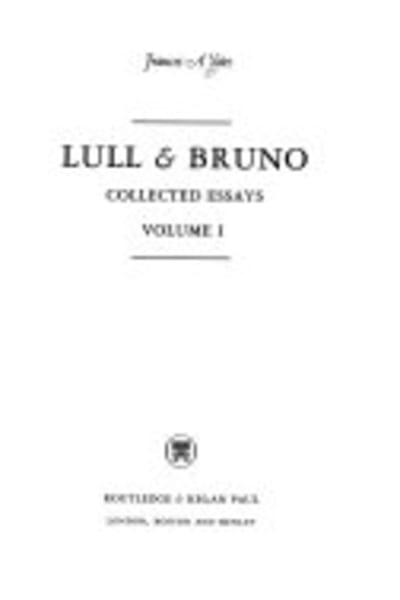
Lull & Bruno — Book Summary & Review
Last updated:
Lull & Bruno Summary
Yates opens with an exploration of the 'Art of Memory,' a pivotal framework in understanding both Llull and Bruno's philosophical contributions. The book is divided into two main sections, thoroughly examining Llull's combinatorial logic and Bruno's mnemonic techniques. In the chapter 'The Memory Theatre of the World,' Yates illustrates how these mnemonic systems were more than mere tools for memorization; they were vehicles for transforming philosophical thought. Yates' meticulous research and analysis shine throughout, especially in her comparison of Llull's 'Great Art' with Bruno's 'Ars Memoriae,' highlighting their impacts on Renaissance thinking. However, if you're looking for a comprehensive biography of either figure, this book may frustrate, as it focuses more on their ideas than their lives.
Key Takeaways from Lull & Bruno
-
1
The Art of Memory: Yates describes this as a method to enhance both philosophical understanding and memory retention.
-
2
Combinatorial Logic: Llull's system for structuring knowledge, which influenced medieval and Renaissance thought.
-
3
Memory Theatre: Bruno's concept for organizing ideas spatially, expanding how memory aids philosophical discourse.
-
4
Great Art: Llull's approach, integrating divine and logical elements, aiming to convert non-believers through reason.
-
5
Ars Memoriae: Bruno's adaptation of classical techniques to push the boundaries of human cognition and creativity.
Who Should Read This
Someone who is intrigued by the intersection of philosophy and memory techniques will find this book enlightening. If you're grappling with how historical methods can influence modern cognitive practices, Yates provides rich material.
Who Shouldn't Read This
If you're seeking a detailed biography of Llull or Bruno, this book will disappoint with its focus on their philosophical contributions. Those preferring narrative-driven historical accounts might find the dense academic style challenging.
Editor's Verdict
Yates excels at making complex philosophical ideas accessible, especially in 'The Memory Theatre of the World'. The book's academic tone and focus on ideas rather than personal stories may not engage everyone. Perfect for those delving into the history of ideas, especially if you're exploring how past philosophies shape current cognitive theories.
Ready to read Lull & Bruno?
Get your copy on Amazon today.
Lull & Bruno — Frequently Asked Questions
About Frances Amelia Yates
Frances Amelia Yates (1899–1981) was a distinguished British historian renowned for her scholarly work on the Renaissance. She was a respected member of the Warburg Institute in London, which solidified her credibility in the study of esoteric traditions and Renaissance thought. Yates authored "Lull & Bruno," exploring the ideas of Ramon Llull and Giordano Bruno. Her notable works include "The Art of Memory" and "Giordano Bruno and the Hermetic Tradition," both influential in the field of intellectual history.