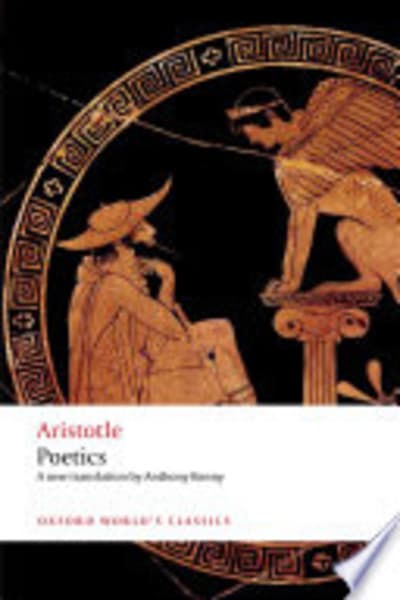
Poetics — Book Summary & Review
by Aristotle
Last updated:
Poetics Summary
In Poetics, Aristotle lays out a craft-minded ladder for tragedy: plot (mythos) over character (ethos), with catharsis as the end goal of well-made dramatic action. He begins by defining what poetry is for, then treats epic and tragedy as related species, not interchangeable products. The book’s most famous spine is the discussion of the “six parts” of tragedy—plot, character, thought, diction, song, and spectacle—where spectacle is the least “serious” contributor, even though it’s the most tempting for audiences. Aristotle also insists that the tragic effect doesn’t come from sensational events alone, but from how events are structured: a good plot has unity, builds necessity or probability, and lands in a reversal (peripeteia) and recognition (anagnorisis).
A concrete highlight is his section on hamartia, the tragic error that triggers the chain of events; Aristotle doesn’t reduce it to “a moral failing,” but to the kind of misstep that makes the outcome feel both earned and intelligible. He also warns against slack plotting and “episodic” drama, where scenes feel like a list rather than a mechanism. Even the famous contrast with comedy matters: Aristotle’s surviving text is partial, since the portion on comedy is lost, which means his comparisons sometimes feel lopsided toward tragedy.
If you come looking for modern psychology or a guide to writing scripts, Poetics will frustrate you. Aristotle is narrow in scope—he’s mostly analyzing how art works, not teaching you to produce it step-by-step—and his Greek terminology can feel stubbornly technical. Still, once you follow Aristotle’s priority of plot and his insistence on causal structure, you start seeing why later critics kept returning to Poetics whenever drama, art, and moral emotion were on the table.
Key Takeaways from Poetics
-
1
Mythos (plot) priority: Aristotle treats plot as the engine of tragedy, so character matters mainly through how it serves action.
-
2
Unity of action: A tragedy should feel like one connected causal chain, not a sequence of loosely related scenes.
-
3
Peripeteia and anagnorisis: Reversal and recognition must be integrated into the plot so the audience experiences change with understanding.
-
4
Catharsis as plot-effect: Emotional release comes from structured dramatic necessity, not from spectacle or random shocks.
-
5
Six parts of tragedy: Aristotle ranks elements from most to least essential, demoting spectacle even though it grabs attention first.
Who Should Read This
If you’re rewriting something and keep getting stuck on “what should happen next,” Someone who wants Aristotle’s rules for action and causality will find it immediately useful. If you’ve argued about tragedy with friends and feel like you’re repeating vibes, Aristotle gives you vocabulary—peripeteia, anagnorisis—to sharpen the debate.
Who Shouldn't Read This
If you want a practical modern craft book with exercises and examples from contemporary media, Aristotle’s dry, analytical method will feel like work for work’s sake. If you’re hoping for a full aesthetics survey, you’ll be disappointed by what Poetics lacks—especially the missing portion on comedy and the limited coverage beyond tragedy and epic.
Editor's Verdict
Poetics’ strongest move is Aristotle’s ranking of tragedy’s “six parts,” especially his insistence that plot (mythos) and causality matter more than spectacle. The real limitation is that Aristotle offers analysis more than instruction, with a narrow focus that leaves comedy lost and leaves writers without a modern step-by-step method. This hits hardest for anyone in their first serious literature criticism phase, right before you have to write a paper where you can’t rely on “I liked it” anymore.
Ready to read Poetics?
Get your copy on Amazon today.
Poetics — Frequently Asked Questions
About Aristotle
Aristotle (384–322 BCE) was a Greek philosopher and student of Plato, born in Stagira. He studied at Plato’s Academy and later founded his own school, the Lyceum. He is credible on literary analysis because he systematically examined drama, poetry, and rhetoric, including how plots, characters, and effects work. His Poetics is the foundational work on literary theory. Other notable works include Politics and Rhetoric.