After Virtue — Book Summary & Review
Last updated:
After Virtue Summary
In After Virtue, Alasdair MacIntyre builds his case around the “three-stage” breakdown story and the idea that moral language depends on shared practices and traditions, not on detachable principles. Early on, MacIntyre argues that contemporary moral philosophy behaves like a set of disconnected arguments floating above history: it treats ethics as if you could start from scratch with neutral reason and derive obligations without inheriting a living moral order. He then pressures the reader with a hard question: if our moral vocabularies keep shifting and no shared rational framework settles disputes, what exactly is left of “rational” ethics? The famous payoff is his critique of emotivism and of the modern tendency to treat moral judgments as expressions of attitude rather than claims embedded in a coherent way of life.
MacIntyre’s historical angle isn’t decorative. He uses the collapse of the medieval synthesis to explain why modern debates feel interminable: once you lose the authority of a tradition that connected virtues to a teleology of human flourishing, you also lose the background that makes moral claims intelligible. He insists that “relativism” isn’t a free pass; it’s an outcome of the fragmentation that follows from rejecting tradition. In later sections, he pushes a theologically inflected picture: ethics returns to something like moral education—learning to inhabit virtues through practices, exemplars, and communities that can answer “what for?”
A concrete example of how he thinks appears in his discussion of Aristotle’s virtue ethics and the way later moral theories sever virtue from its narrative and social setting. He doesn’t offer a single modern “plug-and-play” rule; instead, he demands that you evaluate which tradition can justify your standards. Limitation: After Virtue doesn’t patiently walk beginners through every step of the philosophy-history map, so if you want practical moral advice or contemporary policy guidance, you’ll feel stranded well before the end.
Enjoyed this one? Read these next.
Top picks in Ethics, chosen for readers of After Virtue.
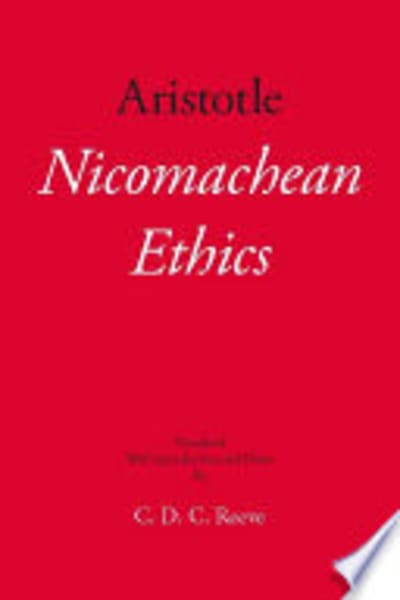
Nicomachean Ethics
by Aristotle
Check price on Amazon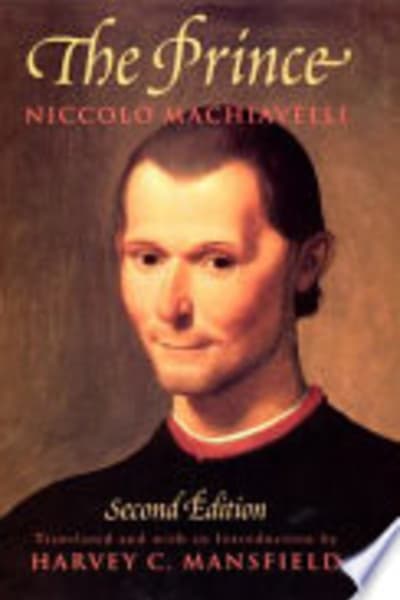
The Prince
by Niccolò Machiavelli
Check price on Amazon
Letters from a Stoic
by Seneca
Check price on Amazon
Justice
by Michael Sandel
Check price on AmazonKey Takeaways from After Virtue
-
1
Three-stage breakdown story: MacIntyre narrates how moral reasoning decays when traditions lose their shared standards and explanatory unity.
-
2
Emotivism critique: Moral judgments, treated as mere attitude, can’t stabilize disagreement or ground obligations in a common practice.
-
3
Concepts depend on practices: Terms like virtue only make sense inside forms of life where they guide action and evaluation.
-
4
Relativism as diagnosis: Relativism is not a shrug; it names the intellectual condition produced by abandoning inherited frameworks.
-
5
Teleology and the “for the sake of”: Flourishing requires an account of human ends, not just procedures or preferences.
Who Should Read This
Someone who keeps bumping into moral debates that feel like shouting matches—where everyone cites “reason” but nothing converges—will find MacIntyre’s diagnosis uncomfortably clarifying. If you’re rethinking your own moral language after a major life change that disrupted your old community, After Virtue gives you a vocabulary for what broke.
Who Shouldn't Read This
If you want a tidy list of ethical principles you can apply immediately, MacIntyre’s method will frustrate you: it’s diagnosis and historical argument, not a practical code. If you dislike dense philosophy with heavy references and long argumentative turns, you may bounce off before the book starts to click.
Editor's Verdict
The single best thing After Virtue does is connect moral philosophy to historical intelligibility, especially in its critique of emotivism and its insistence that virtues require a shared practice-grounded framework. The real limitation is that it offers no modern, step-by-step replacement for today’s ethical reasoning; it mostly judges the landscape rather than guiding your daily decisions. This hits hardest for anyone mid-career who feels their work-life “values” have become slogans and wants to know why the slogans don’t answer for anything anymore.
Ready to read After Virtue?
Get your copy on Amazon today.
After Virtue — Frequently Asked Questions
About Alasdair MacIntyre
Alasdair MacIntyre (1929–2024) was a Scottish-born philosopher known for work in moral philosophy and the history of ideas. He taught at institutions including the University of Manchester, the University of Notre Dame, and Boston University. His credibility on virtue ethics comes from decades of scholarly research into Aristotle, medieval thought, and the development of moral frameworks. Notable works include A Short History of Ethics (1966) and Whose Justice? Which Rationality? (1988), in addition to After Virtue (1981).