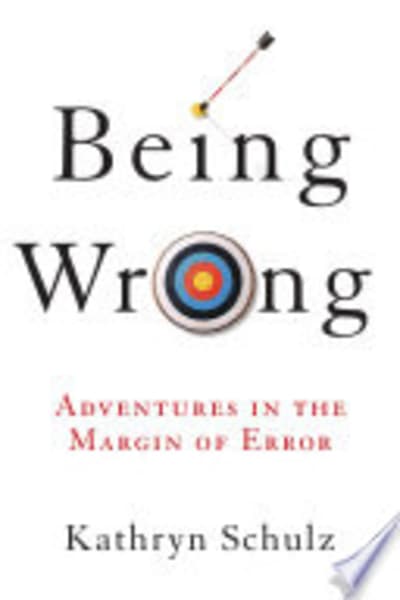
Being Wrong — Book Summary & Review
Last updated:
Being Wrong Summary
Kathryn Schulz introduces a compelling framework in 'The Certainty Trap,' a chapter that unravels why we cling to our convictions despite their fallibility. Schulz explores four main areas—religion, politics, memory, and love—demonstrating how our biases shape our understanding of the world. Through stories like the infamous WMD debacle and personal anecdotes about lost keys, she illustrates the complex relationship between error and human cognition. Schulz's engaging narrative style makes each section deeply relatable, particularly when she examines the emotional turmoil and eventual relief of admitting wrongs. However, this book won't satisfy those seeking a step-by-step guide to error correction; it’s more of a philosophical exploration than a manual. Schulz's detailed narratives offer valuable perspectives, but readers looking for actionable strategies might be disappointed.
Key Takeaways from Being Wrong
-
1
The Certainty Trap: Explains why people hold on to beliefs even when faced with contradicting evidence.
-
2
The Ignorance Loop: Describes how lack of knowledge perpetuates itself, leading to repeated errors.
-
3
Dissonance Theory: Schulz illustrates how our minds reconcile conflicting beliefs to maintain cognitive harmony.
-
4
The Empathy Gap: Highlights how understanding others' mistakes can foster compassion and reduce judgment.
-
5
The Fallibility Principle: Emphasizes the necessity of acknowledging human error to foster personal growth.
Who Should Read This
Someone who constantly finds themselves baffled by others' irrational decisions will find Schulz’s exploration enlightening. If you're perpetually frustrated by political debates or personal disagreements, this book offers a fresh perspective.
Who Shouldn't Read This
If you're seeking a practical guide for avoiding mistakes, Schulz's philosophical approach will not meet your needs. Those looking for a quick fix or a self-help manual should look elsewhere.
Editor's Verdict
The book excels in its exploration of 'The Ignorance Loop,' revealing how errors perpetuate ignorance. However, it falls short by not providing concrete solutions for mitigating errors. Anyone grappling with the existential weight of being wrong, especially after a career misstep, will find Schulz's insights impactful.
Ready to read Being Wrong?
Get your copy on Amazon today.
Being Wrong — Frequently Asked Questions
About Kathryn Schulz
Kathryn Schulz is an American journalist and author, known for her expertise in exploring human error and uncertainty. She gained credibility on the topic through her book "Being Wrong: Adventures in the Margin of Error," which delves into the psychology of error. Schulz is a staff writer for The New Yorker, where her insightful essays further establish her authority. Her notable works include "The Really Big One," a Pulitzer Prize-winning article on seismic risk in the Pacific Northwest.