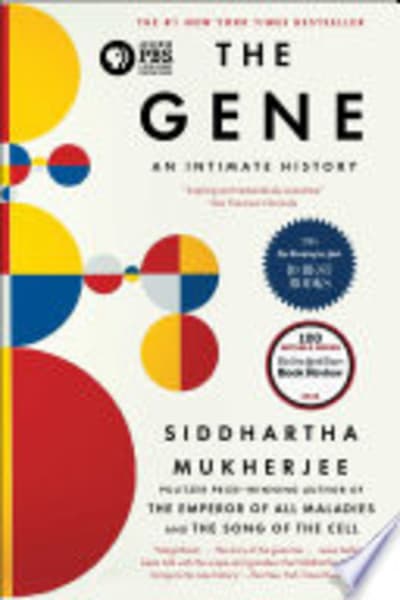
The Gene — Book Summary & Review
Last updated:
The Gene Summary
Mukherjee organizes The Gene into two main narratives: the historical evolution of genetic science and his family's own genetic legacy. He crafts a compelling interplay between stories of scientific discovery and personal anecdotes, particularly in chapters like 'The Missing Science of Heredity.' Mukherjee draws on historical examples, such as the eugenics movement, to issue a warning about the potential misuse of genetic knowledge. Throughout the book, he discusses complex topics like CRISPR with a clarity that makes them accessible to a broad audience. However, readers looking for a deep dive into the technical mechanisms of genetic editing might find the book lacking in detailed scientific discourse. Mukherjee's talent lies in weaving scientific history with ethical debates, but his focus remains more on the philosophical implications than on cutting-edge technical advancements in genetics.
Key Takeaways from The Gene
-
1
The Missing Science of Heredity: Mukherjee explores how early misconceptions about heredity influenced modern genetics.
-
2
The Genetic Lottery: He discusses how genetic traits are randomly assorted, affecting everything from health to personality.
-
3
Genetic Predisposition: Mukherjee warns against allowing genetic predispositions to define personal fate, using eugenics as a cautionary tale.
-
4
CRISPR Technology: He provides a layman's overview of this groundbreaking gene-editing tool and its ethical ramifications.
-
5
The Human Genome Project: Mukherjee details its monumental role in mapping human genes, shaping future scientific inquiries.
Who Should Read This
Someone who is grappling with a family history of genetic conditions and wants to understand their implications more deeply. If you're curious about the ethical dimensions of modern genetic science, this book will engage your thoughts.
Who Shouldn't Read This
If you're looking for a technical manual on genetic editing techniques, this book will disappoint with its broader narrative focus. Mukherjee's philosophical approach may frustrate readers seeking straightforward scientific explanations.
Editor's Verdict
Mukherjee's best contribution is his ability to intertwine historical and personal narratives, especially in 'The Missing Science of Heredity.' However, his book lacks detailed technical insights into the latest genetic technologies. This book resonates most for someone pondering the ethical dimensions of genetic science, perhaps after receiving genetic test results.
Ready to read The Gene?
Get your copy on Amazon today.
The Gene — Frequently Asked Questions
About Siddhartha Mukherjee
Siddhartha Mukherjee is an Indian-American physician, oncologist, and author, renowned for his expertise in medicine and genetics. He holds an M.D. from Harvard Medical School and a D.Phil. from the University of Oxford as a Rhodes Scholar. Mukherjee is credible on genetics due to his extensive research and clinical experience. Besides "The Gene: An Intimate History," he is also known for "The Emperor of All Maladies: A Biography of Cancer," which won the Pulitzer Prize for General Nonfiction in 2011.