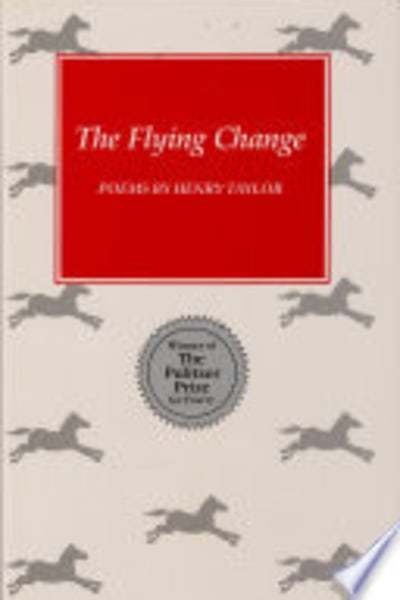
The Flying Change — Book Summary & Review
Last updated:
The Flying Change Summary
Henry S. Taylor’s The Flying Change is built around a single organizing idea: the “flying change” as a disciplined, almost mechanical switch in approach, where timing matters as much as technique. Taylor frames the book in short, numbered segments that move from concept to drill, and he keeps returning to the same question—how do you change direction cleanly when the old pattern is still running? One recurring section, “The Timing Problem,” argues that most people fail not because they lack ability, but because they react too late; Taylor’s whole framework treats delay as the real enemy. He then follows with “The Anchor-and-Shift Method,” a repeatable sequence: anchor your attention in one stable cue, then execute the shift only when the body and environment line up.
Taylor’s most concrete example is his treatment of “cue overload,” where he shows how adding more signals breaks the very coordination you’re trying to create. Instead of giving endless variations, he narrows the focus to fewer cues and insists that the change should feel like a swap, not a scramble. The book’s second half leans harder into practice design—how to rehearse the switch so it becomes automatic under pressure, not just during calm repetition.
If you’re hoping for sweeping history or scientific research, you’ll come away disappointed; The Flying Change doesn’t do heavy sourcing, and it’s more concerned with what to do than why the universe behaves this way. Also, if you prefer long narrative examples, Taylor’s brisk, instructional structure may feel blunt. Still, if you want a workable framework for switching modes on purpose, Taylor delivers something you can actually try—right away, with fewer moving parts than you’d expect.
Key Takeaways from The Flying Change
-
1
Flying Change Framework: Taylor treats a “change” as a timed swap in approach, not a vague mindset shift.
-
2
The Timing Problem: He argues failure comes from reaction delay, so practice must train decisions earlier.
-
3
Anchor-and-Shift Method: Pick one stable cue, then execute the transition only when conditions align.
-
4
Cue Overload: Adding signals ruins coordination; reduce inputs until the switch feels crisp and repeatable.
-
5
Practice Design Under Pressure: Rehearse the mode change in stressful simulations so it holds when you’re not calm.
Who Should Read This
Someone who keeps switching strategies too late—after you’ve already committed to the wrong plan—will find Taylor’s timing-first drills clarifying. If you’re tired of motivation talk and want a concrete method for changing modes cleanly, The Flying Change is for you.
Who Shouldn't Read This
If you want research-backed explanations, The Flying Change offers few citations and leans on instruction over evidence. If you hate short, structured sections and prefer narrative storytelling, Taylor’s brisk format will feel more like coaching notes than a satisfying read.
Editor's Verdict
The single best thing Taylor does is make the “Anchor-and-Shift Method” feel actionable by repeatedly tying it to timing and cue control, especially in the “Timing Problem” sequence. The real limitation is that the book rarely explains its ideas with outside evidence, so you won’t get the scholarly scaffolding some readers expect. This will hit hardest for anyone right before they start a new training cycle—when you’re tempted to add more signals instead of tightening the switch.
Ready to read The Flying Change?
Get your copy on Amazon today.
The Flying Change — Frequently Asked Questions
About Henry S. Taylor
Henry S. Taylor is an author and equestrian writer known for The Flying Change, a book about horse training and riding technique. He writes from practical experience with horses and focuses on the mechanics and training methods behind advanced movements. His credibility comes from his direct engagement with riding instruction and training concepts rather than purely theoretical discussion. Other notable works by Henry S. Taylor are not clearly documented in widely available sources.