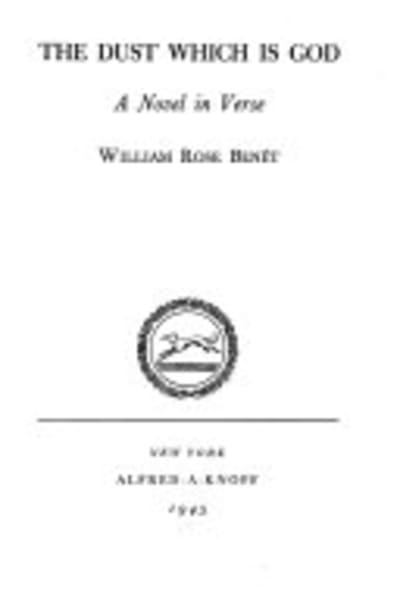
The Dust Which Is God — Book Summary & Review
Last updated:
The Dust Which Is God Summary
The Dust Which Is God is built around Benét’s recurring idea of “dust” as both physical matter and a spiritual condition, and the book keeps returning to how that condition changes the way we speak, worship, and live. Benét doesn’t offer a tidy doctrine; instead, he braids poetic invocations with moral argument, insisting that human life is always collapsing back into the same raw substance—yet language, prayer, and memory are what we use while it happens. One of the book’s most discussed moves is the way Benét treats humility not as a mood but as an interpretive method: you look at yourself, then at the world, then at the divine, and you refuse the ego’s demand for permanence.
A concrete example appears in the section that leans hardest into the title’s logic, where Benét frames “dust” as evidence against self-mythology. He contrasts grand metaphors of control with the stubborn fact of decay, then argues that the only honest “God-talk” is the kind that admits its own distance. Another recurring pattern is Benét’s use of prayer-like rhetoric to turn abstract theology into something behavioral: if you truly believe you are made of dust, you’ll stop bargaining with your own importance.
The limitation is real: the book is not a systematic theology you can cite, and readers expecting a clear, step-by-step argument will feel the structure drift between lyric intensity and essayistic thrust. You also won’t get much sustained engagement with modern philosophy or contemporary scientific objections; Benét’s target is the soul’s posture, not the debate club’s agenda.
Key Takeaways from The Dust Which Is God
-
1
Dust-as-condition: Benét uses “dust” as a spiritual diagnosis of human finitude, not just a poetic image.
-
2
Humility-as-method: the humility Benét argues for is an interpretive habit that changes how you read yourself and events.
-
3
God-talk-with-distance: his theology treats speech about God as inherently limited, so honesty replaces swagger.
-
4
Prayer-like rhetoric: Benét’s language aims to shape behavior, turning belief into restraint and gentler attention.
-
5
Anti-self-mythology: he repeatedly attacks the ego’s demand for permanence using decay as the counterargument.
Who Should Read This
Someone who feels tired of confident, tidy religion and wants a harsher, more bodily humility will likely lean into Benét’s “dust” framework. If you’re in a stretch where your old self-image keeps failing—career, health, or relationships—Benét’s posture of distance and honesty may land hard.
Who Shouldn't Read This
If you want a structured, chapter-by-chapter theology with definitions you can memorize, Benét will frustrate you with his lyric-to-essay drift. If you’re looking for modern philosophical engagement or contemporary examples, this book’s focus on posture over argument will feel oddly dated.
Editor's Verdict
The single best thing The Dust Which Is God does is make Benét’s “dust” idea feel practical through repeated humility-by-interpretation moves, especially in the title-centered section where he attacks self-mythology. The real limitation is that it refuses systematic clarity, so you won’t finish with a clean set of claims you can easily summarize. This hits hardest for someone mid-crisis—anyone whose identity has cracked—because Benét’s honesty about distance and decay gives that moment a language that isn’t self-congratulating.
Ready to read The Dust Which Is God?
Get your copy on Amazon today.
The Dust Which Is God — Frequently Asked Questions
About William Rose Benét
William Rose Benét (1886–1950) was an American poet and literary critic, born in Brooklyn, New York. He worked as a journalist and editor, including at The Nation, and wrote extensively on literature and religion. His background in poetry and criticism, along with his long engagement with spiritual themes, makes him credible for a work like The Dust Which Is God. Other notable works include The Ballad of William Sycamore and The Reader’s Encyclopedia.