Self-Portrait in a Convex Mirror — Book Summary & Review
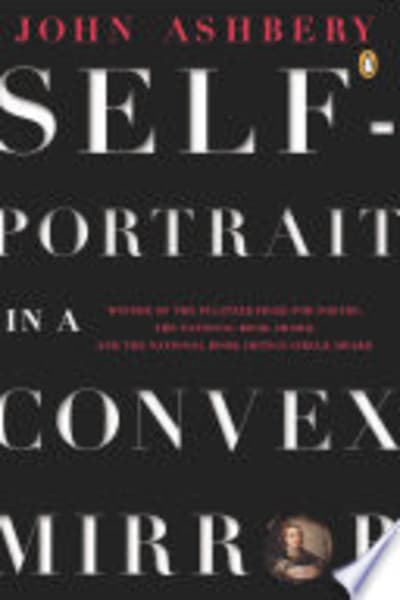
by John Ashbery
Last updated:
Self-Portrait in a Convex Mirror Summary
John Ashbery builds Self-Portrait in a Convex Mirror around the title poem’s weirdly elastic “convex” viewpoint, where the speaker keeps widening and distorting the self until identity feels like weather instead of a fact. Ashbery’s method is consistent across the short, densely packed pieces: images arrive out of sequence, grammar loosens, and the poem behaves like a mind trying to remember itself while being interrupted by the present. The collection’s structure matters—Ashbery doesn’t give you a stable narrative arc, so you learn to read by tracking patterns of attention rather than plot. In the title poem, the speaker’s self-portrait is never finished because the “mirror” keeps curving what it reflects; you get a sustained argument that perception is always compromised by the distance between observer and image. Elsewhere, Ashbery treats language as a kind of gallery lighting—bright, flattering, and misleading at the same time—so “meaning” becomes something you sense, not something you solve. A concrete example: the way Ashbery repeats motifs (art, looking, time passing, the sense of being watched by your own thoughts) while changing their emotional temperature makes the collection feel like revision happening in real time. You’re not meant to pin down one “message”; you’re meant to notice how the poem’s shifts keep producing new versions of the self. The limitation is real: if you want poems that explain themselves or reward a hunt for a single thesis, Ashbery will frustrate you. This book also won’t function like a sampler of accessible “greatest hits,” because the payoff depends on tolerating ambiguity for its own sake, not as a prelude to clarity.
Key Takeaways from Self-Portrait in a Convex Mirror
-
1
Convex mirror perspective: Ashbery makes the self look distorted on purpose, so identity reads like shifting optics, not a fixed portrait.
-
2
Attention over plot: the poems reward following recurring motifs and tonal changes instead of expecting a narrative with answers at the end.
-
3
Language as lighting: diction and syntax act like illumination that flatters and lies, turning “meaning” into felt atmosphere.
-
4
Motif revision technique: repeated images return with different emotional temperature, so interpretation happens through incremental re-seeing.
-
5
Ambiguity as method: Ashbery refuses to settle for a single thesis, making the reader’s patience part of the reading experience.
Who Should Read This
Someone who keeps rereading the same personal memories and can’t decide what’s real will feel less alone with Ashbery’s shifting self-portrait. If you’re stuck in a work routine where everything must be summarized, this book offers a different kind of intelligence—one built from attention and uncertainty.
Who Shouldn't Read This
If you need poems to deliver a clear argument, Self-Portrait in a Convex Mirror will feel like you’re being teased instead of taught. If you’re allergic to syntax that won’t behave and images that won’t resolve, Ashbery’s style will frustrate you more than it satisfies.
Editor's Verdict
The best thing Self-Portrait in a Convex Mirror does is make the title poem’s convex viewpoint function like an operating system for the whole collection, turning selfhood into an ongoing perceptual process. The limitation is that Ashbery won’t provide explanatory scaffolding, so readers hunting for a stable thesis or tidy interpretation will feel stranded. This hits hardest for anyone who’s just realized they’re bored with “clarity-first” writing and wants to practice reading without demanding closure.
Ready to read Self-Portrait in a Convex Mirror?
Get your copy on Amazon today.
Self-Portrait in a Convex Mirror — Frequently Asked Questions
About John Ashbery
John Ashbery (1927–2017) was an American poet and critic, born in Rochester, New York, and educated at Harvard University. He taught at several colleges, including Bard College, and helped define postwar American poetry through his distinctive, often associative style. Ashbery is credible to write about self-representation and perception because his work repeatedly explores memory, consciousness, and shifting viewpoints. Notable works include Three Poems and The Tennis Court Oath.