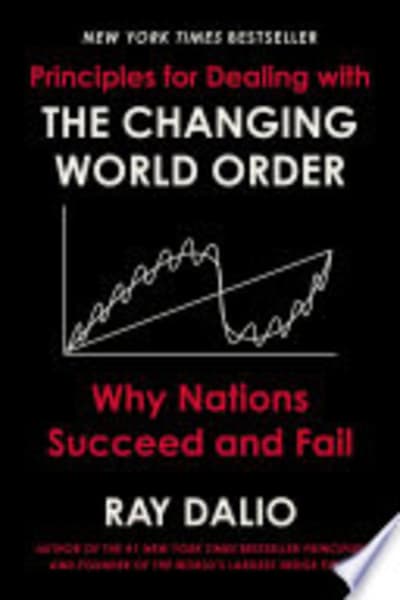
Principles for Dealing with the Changing World Order — Book Summary & Review
by Ray Dalio
Last updated:
Principles for Dealing with the Changing World Order Summary
Ray Dalio's book introduces the concept of the 'Big Cycle', a framework that examines economic and political shifts over centuries. Dalio uses historical examples from major empires like the Dutch, British, and American to illustrate patterns of rise and decline, focusing heavily on the parallels with today's geopolitical tensions. In the chapter titled 'The Rise of China', Dalio provides an in-depth analysis of China's current position and its implications for global power dynamics. He argues that understanding these cycles is crucial for navigating future challenges, offering actionable principles for individuals and policymakers. While Dalio's historical analysis is extensive, the book may frustrate those seeking immediate, actionable strategies for personal finance or business, as it leans heavily on long-term macroeconomic trends.
Key Takeaways from Principles for Dealing with the Changing World Order
-
1
The 'Big Cycle': A historical pattern where an empire’s rise, peak, and decline are driven by economic and political factors.
-
2
The 'Debt Cycle': Dalio explores how economies expand and contract due to patterns of credit and debt accumulation.
-
3
The 'Wealth Gap': A widening disparity in wealth that often precedes significant political and social upheaval.
-
4
The 'Internal Order': How a nation's internal dynamics, like political stability and social harmony, impact its global standing.
-
5
The 'External Order': The global balance of power and how shifts can lead to conflicts or cooperation between nations.
Who Should Read This
Someone who feels overwhelmed by the current global economic climate and wants a historical perspective to make sense of it. If you're trying to forecast how today's political tensions might reshape the future, this book offers a framework.
Who Shouldn't Read This
If you're looking for a quick guide to personal finance or business strategies, this isn't your book. Dalio's focus is on macroeconomic patterns, which may not satisfy readers seeking immediate, actionable advice.
Editor's Verdict
Dalio excels at contextualizing today's economic challenges with his 'Big Cycle' framework, particularly in 'The Rise of China'. However, his long-term focus can leave those seeking short-term solutions feeling unfulfilled. This book is ideal if you're grappling with understanding the broader forces shaping today's global economy.
Ready to read Principles for Dealing with the Changing World Order?
Get your copy on Amazon today.
Principles for Dealing with the Changing World Order — Frequently Asked Questions
About Ray Dalio
Ray Dalio is an American billionaire investor and founder of Bridgewater Associates, one of the world's largest hedge funds. He is a credible authority on economic principles and global financial systems, having decades of experience in investment management. Dalio is the author of "Principles for Dealing with the Changing World Order," which explores historical economic cycles. His other notable works include "Principles: Life and Work" and "Principles for Navigating Big Debt Crises."