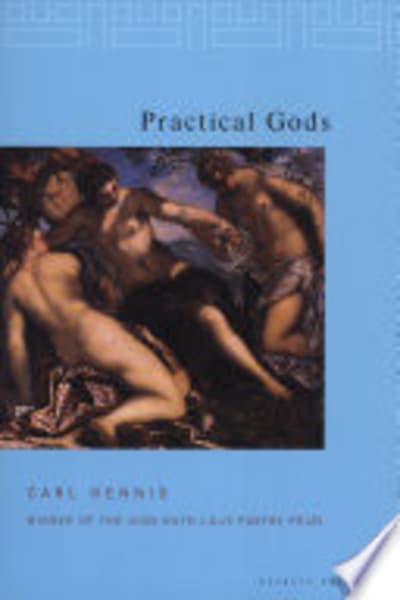
Practical Gods — Book Summary & Review
by Carl Dennis
Last updated:
Practical Gods Summary
In Practical Gods, Carl Dennis organizes many poems around a deliberate “dialogue” between pagan images and biblical language, then tests the result against ordinary household life. The collection’s core move is simple to describe and hard to pull off: Dennis borrows the machinery of religious myth—gods, prayers, ritual speech—and then translates it into secular attention, so the sink, the hallway, the late-afternoon light, and the small routines of staying alive start to feel like the real stage. A lot of poems read like miniature negotiations with belief: he’ll let a mythic voice speak, then pull it back into the room where you actually live, refusing grand metaphysics while still taking the spiritual impulse seriously.
One recurring pattern is Dennis’s trust in precise metaphor. Instead of using myth as decoration, he uses it as a tool for noticing: the “household gods” idea isn’t a slogan so much as a method for paying homage to what keeps functioning when nobody is praising it. You can feel his ear for cadence and his preference for clear, sensitive lines that don’t beg for interpretation; they offer it, then get out of the way. Even when the poems sound quietly devotional, Dennis keeps the temperature human—no cosmic certainty, just the insistence that everyday life deserves the seriousness we usually reserve for scripture.
Limitation: at ~77 pages, this is not a sustained argument or a long-form sequence with a single storyline. If you want narrative momentum, a defined “answer” to religion, or a book that explains its worldview in plain prose, Dennis’s lyrical method will frustrate you.
Key Takeaways from Practical Gods
-
1
Household gods: Dennis treats everyday routines as worthy of reverence, not as background noise.
-
2
Pagan-biblical dialogue: He sets mythic vocabularies in conversation, letting their tensions sharpen daily perception.
-
3
Religious myth to secular terms: The poems translate religious imagery into lived attention without claiming ultimate reality.
-
4
Precise metaphor practice: Dennis uses metaphor as a noticing device, not ornament, so objects gain spiritual weight.
-
5
No ultimate reality claims: The collection stays honest about uncertainty, offering homage rather than doctrine.
Who Should Read This
Someone who keeps thinking about faith but feels allergic to sermons will likely enjoy how Practical Gods turns religious language into attention to the ordinary. If you’re in a stretch where your days feel interchangeable, Dennis’s household focus can make the room feel newly inhabited.
Who Shouldn't Read This
If you want a clearly structured argument with a beginning, middle, and end, this slim poetry collection will feel like it wanders. If you dislike mythic references or prefer plainspoken themes without formal craft, Dennis’s reliance on metaphor will frustrate you.
Editor's Verdict
The single best thing Practical Gods does is its pagan-biblical dialogue, where Dennis lets mythic speech land inside domestic scenes and keeps the emotional logic coherent. The real limitation is that it offers no explanatory prose or long-form structure—this is lyric meaning, not a guided lecture. Anyone who’s just burned out on productivity books and needs a quieter reeducation of attention will feel this hardest on the poems that frame chores and rooms as the actual site of devotion.
Ready to read Practical Gods?
Get your copy on Amazon today.
Practical Gods — Frequently Asked Questions
About Carl Dennis
Carl Dennis is an American author and scholar known for writing about practical, accessible spirituality. He has published works that draw on religious history and everyday ethics, making him credible to explain how beliefs can be applied in daily life. Dennis’s book Practical Gods presents ideas for living with meaning and purpose grounded in spiritual practice. He is also the author of The Art of Living: A Guide to Practical Spirituality.