Native Guard — Book Summary & Review
Last updated:
Native Guard Summary
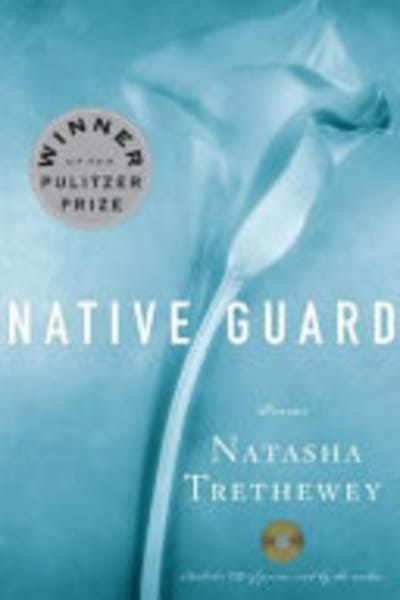
Native Guard is built around two interlocking recoveries: Trethewey’s elegies for her mother and her insistence that the Mississippi Native Guards—Black soldiers serving the Union—belong in the historical record, not in footnotes. The book’s structure feels like a braided argument, shifting between the speaker’s childhood sightline from Gulfport to Ship Island and the later, more private work of mourning after her mother’s death. Trethewey keeps returning to the same haunting geography: the fort where Confederate captives were guarded by Black men, and the legal violence that surrounded her mother’s interracial marriage in 1960s Mississippi. The title is more than an emblem; it’s a correction, and Trethewey uses lyric form to make that correction physical—line breaks that pause like breath, images that slide from public history into family memory.
One concrete section that crystallizes this is the Ship Island sequence, where the speaker watches the past sit across the water and realizes how easily “overlooked” can mean “allowed to disappear.” Trethewey also writes with a tight emotional logic about her mother’s love and vulnerability: her marriage was illegal, her grief is inherited, and the poems refuse to treat tragedy as aesthetic material. Trethewey’s craft is never ornamental; it’s a way of revising who gets to speak. She even frames the soldiers’ service as a kind of witness, and the book keeps asking what it costs to survive while the story of your survival is still being denied.
Limitation: this is not a narrative history you’ll read for dates, campaigns, or an explanation of Civil War strategy. If you want a chronological account of the Native Guards or a long-form argument with citations, you’ll feel the book’s brevity and lyric focus as a wall.
Key Takeaways from Native Guard
-
1
Mississippi Native Guards: a Black Union regiment Trethewey insists history forgot, and she treats that forgetting as an active harm.
-
2
Ship Island sightline: childhood distance becomes moral distance, showing how memory can fail when the past is visually present.
-
3
Interracial marriage illegality: Trethewey anchors the poems in her mother’s lived legal risk, refusing abstraction.
-
4
Elegiac mourning: grief functions as method, where remembering is a form of historical repair rather than private sentiment.
-
5
Braided legacies of the Deep South: public war and domestic vulnerability are written as one system of racial policing.
Who Should Read This
Someone who has been circling the same family story—especially around race, loss, or an inherited silence—will find Native Guard painfully clarifying. If you’ve ever felt angry that “history” skips the people closest to you, Trethewey’s corrections will land fast.
Who Shouldn't Read This
If you want a straightforward Civil War account of the Mississippi Native Guards, Native Guard will frustrate you with its lyric compression and lack of explanatory scaffolding. If you dislike personal grief poems that refuse to generalize, Trethewey’s intimate focus may feel too narrow to justify the time.
Editor's Verdict
The single best thing Native Guard does is fuse public erasure with private mourning, especially in the Ship Island poems where Trethewey’s gaze turns history into something you can’t look away from. The real limitation is that it offers no chronological or factual walkthrough of the Native Guards’ campaigns, so readers seeking context may feel left hanging. This hits hardest for anyone grieving and researching at the same time—right after a family death when you start noticing how often the record leaves your people out.
Ready to read Native Guard?
Get your copy on Amazon today.
Native Guard — Frequently Asked Questions
About Natasha Trethewey
Natasha Trethewey is an American author and former U.S. Poet Laureate. She was born in Gulfport, Mississippi, and raised in the South, later earning degrees from the College of William and Mary and the University of Georgia. Her work draws on her family history and the legacy of slavery and segregation, making her credible on Native and Black American history. She is the author of Native Guard and also wrote Beyond Katrina and Thrall.