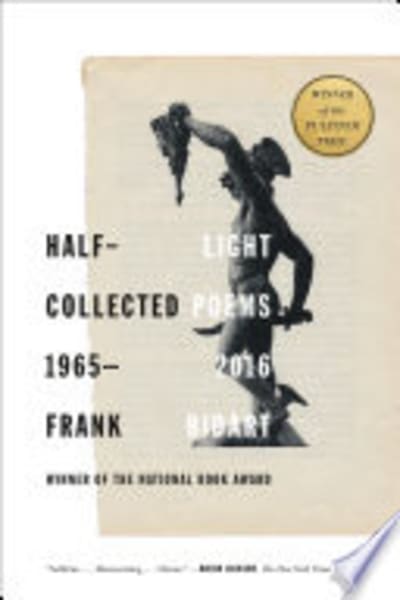
Half-light: Collected Poems 1965–2016 — Book Summary & Review
by Frank Bidart
Last updated:
Half-light: Collected Poems 1965–2016 Summary
Half-light is organized as a long, chronological sweep that lets Frank Bidart braid decades of poems with a late-life addendum called Thirst, and that structure matters because Bidart keeps revising what “self” means as the years tighten the lens. In the earlier poems, Bidart’s voice feels like it’s trying to outrun its own moral reflexes: he stages speakers who look monstrous up close (the child-murderer Herbert White is one of the collection’s headline presences), then forces the reader to stay in the room instead of rushing to judgment. What makes Half-light stick is Bidart’s method of transmuting bodily obsession into language—lines that behave like nerves, not ornaments—so that desire, nausea, and shame become the grammar. Even when the poems are formally restless, they’re rarely random; you can feel Bidart returning to a few hard problems: how empathy can become a kind of violence, how art can “speak for” others without pretending to absolve itself, and how the mind invents arguments to keep suffering “reasonable.” Thirst, the newer section, is where the collection’s emotional temperature shifts: Bidart surveys his life in a more stripped cadence, then turns that plainness outward, as if thirst were both condition and metaphor for language itself—“a Creature coterminous with thirst,” not as a slogan but as an organizing pressure. The limitation: this is not a book that offers narrative closure or a steady emotional release; if you want clean arcs, soothing music, or poems that explain themselves, Bidart’s density and refusal to tidy up will frustrate you.
Key Takeaways from Half-light: Collected Poems 1965–2016
-
1
Collected Poems 1965–2016 tracks Bidart’s evolving poetics, so early obsessions mature into late-life accounting rather than staying fixed.
-
2
Thirst reframes autobiography as pressure, using the body’s need to test whether language can stay honest without consoling.
-
3
Herbert White functions as a moral stress test, forcing you to witness a speaker’s logic without letting your disgust take over.
-
4
Ellen West appears as a portrait of self-monitoring, where appetite and self-erasure become the poem’s propulsion.
-
5
Transmuting body into language is Bidart’s central technique, turning sensation into syntax that refuses decorative distance.
Who Should Read This
If you’re the kind of person who rereads old guilt and keeps trying to translate it into something bearable, Bidart’s Half-light will feel uncomfortably accurate. Someone who can’t stop thinking about how empathy works—especially when it risks becoming voyeurism—will find Bidart’s speakers and revisions hit hardest.
Who Shouldn't Read This
If you need poems to resolve their tensions into clear moral or emotional payoff, Half-light will feel like it keeps the lights off. If you prefer accessible lyric clarity over formal abrasion and psychological confrontation, Bidart’s density and refusal to “tidy” will wear you down.
Editor's Verdict
Half-light’s best trick is how Bidart makes moral attention physical: the Herbert White presence isn’t a theme, it’s a sustained pressure on your reading habits. The real limitation is that the collection offers no comforting structure of release—its emotional logic stays jagged, even in Thirst’s plainer cadence. This will hit hardest for anyone in the middle of a life revision—after a breakup, a diagnosis, or a professional reset—when you want honesty but can’t tolerate sentimentality.
Ready to read Half-light: Collected Poems 1965–2016?
Get your copy on Amazon today.
Half-light: Collected Poems 1965–2016 — Frequently Asked Questions
About Frank Bidart
Frank Bidart (born 1940) is an American poet known for intense, formally controlled lyric and narrative work. He studied at the University of California, Berkeley, and later taught at institutions including the University of California, San Diego. His long publication record and wide critical attention make him a credible authority on his own collected poetry. Other notable works include Golden State and The Sacrifice.