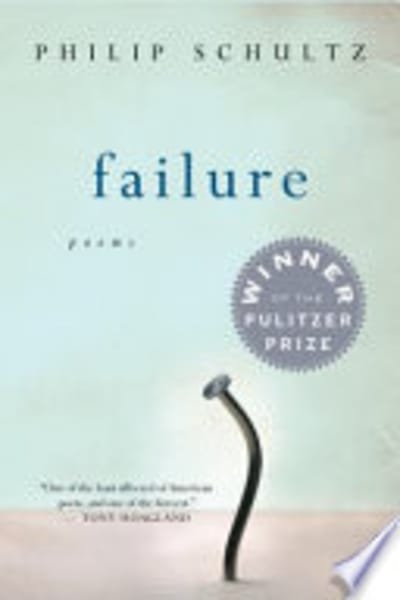
Failure — Book Summary & Review
Last updated:
Failure Summary
Philip Schultz structures Failure in a loose, roaming sequence of poems that keeps returning to one stubborn idea: “failure” isn’t an event you survive and forget, it’s a weather system that follows you into family life, desire, work, and public catastrophe. Early poems circle domestic pleasures—marriage, beaches, dogs—then let the smile curdle into a more complicated tenderness, the kind that admits you can love people and still disappoint them. Schultz’s best move is how he treats small humiliations with the same moral seriousness he gives to the national wound of 9/11, so the collection never lets you hide in either private sentiment or grand politics.
One concrete example of this balancing act is the way the New York City of the 1970s functions like a stage set for old hopes turning sour. Schultz doesn’t announce a thesis; he keeps tightening the lens. A poem may start with the comfort of routine—someone’s voice, a familiar street, the ease of being home—then the poem pivots, showing how the same routines can trap you. When the book reaches the terrors of 9/11, Schultz’s compassion feels earned rather than rhetorical: he writes grief as an ordinary human condition, not as a spectacle for the reader.
The limitation is real: Failure is not a “guided” collection with section headings that tell you how to read it, and Schultz’s tonal shifts can frustrate anyone wanting a clean narrative arc or a single, repeatable argument about how to live with failure. You have to meet him halfway, poem by poem, and some readers will bounce off that demand.
Key Takeaways from Failure
-
1
Failure-as-weather: Schultz treats failure as a constant condition, not a single setback, shaping love, routine, and public grief.
-
2
Domestic pleasures with teeth: Family and marriage imagery keeps its warmth while quietly exposing humiliation and missed chances.
-
3
New York City in the 1970s: The city works as a mood engine where older hopes decay into daily disillusionment.
-
4
Interior revolutions: Schultz frames personal change as reluctant, messy, and often triggered by embarrassment or loss.
-
5
9/11 compassion method: He writes national terror through human-scale attention, refusing both sermon and spectacle.
Who Should Read This
Someone who keeps thinking about a recent professional or relationship disappointment and can’t stop replaying what went wrong. If you want poems that treat private failure and public tragedy with the same human scale, Schultz will meet you there.
Who Shouldn't Read This
Someone who needs a clear, step-by-step structure or a single central argument will feel annoyed by how Failure moves poem to poem. If you only like poetry that stays in one emotional register—either cozy or furious—Schultz’s constant tonal pivot may wear you out.
Editor's Verdict
Failure’s strongest strength is Schultz’s ability to braid domestic scenes with the national catastrophe of 9/11, keeping the compassion grounded rather than performative. The real limitation is that the collection offers no roadmap, so readers who want a guided reading experience or a clean narrative arc will feel adrift. This will hit hardest for anyone who’s recently realized their life didn’t turn out the way they promised themselves it would, and now they’re searching for language that doesn’t lie.
Ready to read Failure?
Get your copy on Amazon today.
Failure — Frequently Asked Questions
About Philip Schultz
Philip Schultz is an American writer and journalist. He has reported on business, politics, and culture, and his work draws on firsthand research and interviews. He is credible on the topic of failure because his writing examines how people and institutions respond to setbacks, drawing on real cases rather than theory. He is also the author of The First Time I Saw Your Face and The Unfinished Life of the Great American Writer.