Critique of Pure Reason — Book Summary & Review
Last updated:
Critique of Pure Reason Summary
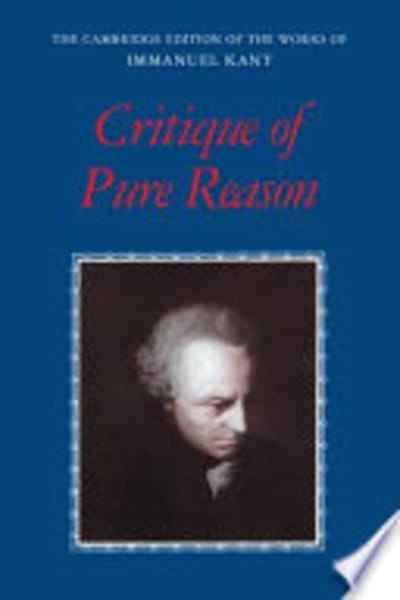
Kant’s Critique of Pure Reason introduces the concept of phenomena and noumena, separating the world as we experience it from the world as it exists independently of our perceptions. He organizes the work into two main parts: the Transcendental Aesthetic and the Transcendental Logic, with the latter splitting into the Analytic and Dialectic of Pure Reason. In the Transcendental Aesthetic, Kant argues that space and time are forms of human intuition rather than features built into the physical world. The book is dense and demands patience, because Kant’s method is complex and frequently tortuous in style. Still, it provides little in the way of a practical guide for modern philosophical use, which will likely irritate readers who want immediate relevance to contemporary problems.
Key Takeaways from Critique of Pure Reason
-
1
Phenomena and Noumena: Kant's distinction emphasizes that our experiences are shaped by our perceptions, not the things-in-themselves.
-
2
Transcendental Aesthetic: Introduces space and time as forms of sensibility, setting groundwork for later discussions on perception.
-
3
Categorical Imperative: Though not fully developed here, Kant hints at this moral framework, which will later be pivotal in his ethics.
-
4
Pure Concepts of Understanding: Known as 'categories', these are basic conceptual lenses through which we interpret experiences.
-
5
Transcendental Dialectic: Explores the limits of human reason, warning against illusions when it overreaches its empirical boundaries.
Who Should Read This
Someone who is deep into philosophical studies and wants to grapple with foundational questions of knowledge and perception. If you're eager to understand the roots of modern philosophy and its abstractions, this is your book.
Who Shouldn't Read This
If you need practical applications of philosophical theories or prefer straightforward writing, this book will disappoint. Its dense and abstract nature might frustrate those looking for direct life guidance or easily accessible concepts.
Editor's Verdict
The most intriguing aspect of this book is Kant's rigorous analysis in the Transcendental Logic, which challenges our understanding of knowledge. However, the book's complexity and abstract nature can be daunting for those unfamiliar with philosophical jargon. Anyone undertaking a serious study of philosophy or wrestling with the fundamentals of epistemology should dive into this at the start of their journey.
Ready to read Critique of Pure Reason?
Get your copy on Amazon today.
Critique of Pure Reason — Frequently Asked Questions
About Immanuel Kant
Immanuel Kant (1724-1804) was a German philosopher from Königsberg, Prussia, known for his foundational contributions to modern philosophy. He is credible on the topic of epistemology and metaphysics, having authored the seminal work "Critique of Pure Reason" (1781), which explores the limits and scope of human understanding. Kant's other notable works include "Critique of Practical Reason" (1788) and "Critique of Judgment" (1790), which further establish his influence in ethics and aesthetics.