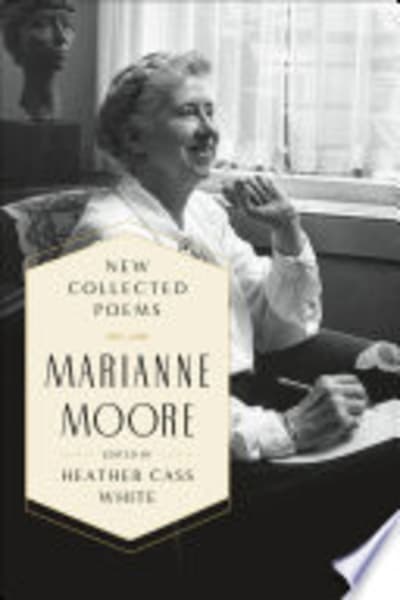
Collected Poems — Book Summary & Review
Last updated:
Collected Poems Summary
In Collected Poems, Marianne Moore’s editorial problem—how to present a poet who kept rearranging, revisiting, and revising her own work—drives the logic of Heather Cass White’s definitive edition, and it’s the first thing you feel in your hands. This isn’t a simple “here are the poems” book; it’s a guided confrontation with Moore’s messy, brilliant lifetime process. White builds a vantage point for the whole body of work by letting you see the same poem, or closely related versions, shift over time, so Moore’s craftsmanship doesn’t look like a static talent but a set of decisions made again and again. If you’ve ever wondered why Moore can feel exacting one moment and strange the next, White’s framing helps you notice that the strangeness is often revision—hard edges sharpened, images recast, lines re-engineered.
A concrete example: the collection foregrounds Moore’s famously fussy attention to “hard surfaces,” the kind of precision that makes her metaphors feel engineered rather than merely lyrical. You can also feel the modernist culture White points to in the way Moore moves among forms without surrendering her control—she can sound like a naturalist, a satirist, and a formalist all in the same stretch. Even when you don’t track every textual change, the arrangement makes the later poems land with more force because you’ve already watched the earlier ones being treated as raw material. White’s organizing principle also clarifies why Moore’s reputation can seem split: the poems are both playful and severe, both artful and argumentative, and that tension is part of the method.
The limitation is real: this edition is heavy on editorial context and textual history, so if you want purely to read poems straight through with minimal fuss, Collected Poems may frustrate you rather than satisfy you.
Key Takeaways from Collected Poems
-
1
Textual history: Moore’s poems were repeatedly rearranged, so this edition treats revision as part of the work, not background noise.
-
2
Heather Cass White’s arrangement: the collection emphasizes how later poems reframe earlier ones, so your reading changes as you progress.
-
3
Hard surfaces: Moore’s precision is literal—line-level construction makes images feel measured, not merely described.
-
4
Modernist culture: the book shows Moore as an active participant in modernism’s rules, not a poet who simply arrived inside them.
-
5
Later achievements: by tracing refashioning, the edition helps you understand why Moore’s maturity feels earned instead of sudden.
Who Should Read This
Someone who keeps bouncing off Marianne Moore because her poems feel too technical or too strange should read this edition, since it explains how revision shapes the tone you’re reacting to. If you’re a poetry lover who wants to understand why Moore’s lines change meaning over time, this book will give you a sturdier map than a standard “best of” volume.
Who Shouldn't Read This
If you want a low-friction poetry collection with minimal editorial framing, you’ll likely find Collected Poems fussy and occasionally over-literal about process. If you only care about reading Moore’s poems for mood or confession, the emphasis on arrangement and textual history may feel like homework.
Editor's Verdict
The single best thing Heather Cass White does is make Moore’s lifelong revision practice legible through the edition’s organizing logic, so the later achievements don’t feel like a mystery. The real limitation is that the book leans hard into textual history and editorial method, which can slow down readers who just want to sink into poems. Anyone who’s mid-career and suddenly realizing their “taste” for difficult art needs a better framework will hit hardest while trying to understand why Moore’s control keeps evolving.
Ready to read Collected Poems?
Get your copy on Amazon today.
Collected Poems — Frequently Asked Questions
About Marianne Moore
Marianne Moore (1887–1972) was an American modernist poet known for precise, often imagistic verse. Born in Kirkwood, Missouri, she was educated in local schools and later studied at Bryn Mawr College. She worked as a teacher and became a major literary figure through her poetry and criticism. Her credibility on poetry is established by her long publication career and the acclaim of Collected Poems. Other notable works include Observations (1924) and The Complete Poems (1967).