At the End of the Open Road — Book Summary & Review
Last updated:
At the End of the Open Road Summary
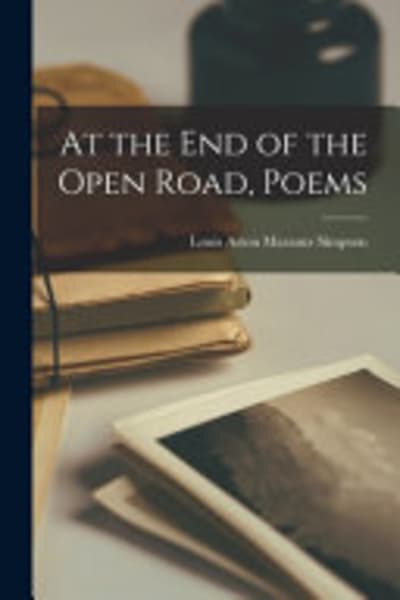
At the End of the Open Road is structured as a tight sequence of Louis Simpson poems that keeps returning to one governing idea: the road isn’t a route out, it’s a place where memory, loss, and dignity argue with each other until you stop pretending you can outrun them. Simpson’s voice keeps circling the same emotional problem—what remains when movement ends—so the book reads less like separate lyrics and more like one long, weathered conversation. The title itself behaves like a thesis: “open road” sounds free, but the poems treat it as a setting where the mind has nowhere to hide. In poem after poem, Simpson leans on concrete images—dust, distance, the posture of people who’ve carried too much for too long—to make grief feel physical rather than decorative.
If you’re looking for a “plot,” you won’t get one. Instead, Simpson builds momentum through recurrence: a way of speaking that starts plain, then tightens; a willingness to name what hurts; and a refusal to wrap pain in easy moral. The book’s emotional climax arrives not through volume but through accumulation, as if each poem is another step you can’t take back. Simpson also makes a sharp choice about scale: he’s not interested in grand historical speeches; he’s interested in how a single life seems to contain an entire worldview.
Here’s the honest limitation: this isn’t a study guide and it won’t spoon-feed meaning. If you want clear narrative payoff, or if you dislike poems that depend on tonal shifts and repetition more than explanation, you may feel impatient. Simpson’s last word isn’t a conclusion so much as a final tightening of the same question—what do you do with what the road leaves behind?
Key Takeaways from At the End of the Open Road
-
1
Open Road framing: the poems treat “freedom” as a test, where movement exposes what you’ve been carrying all along.
-
2
Simpson’s recurring images: dust and distance function like emotional measurements, not scenery, so grief feels measurable.
-
3
Plain diction, tightened tone: Simpson often begins almost conversationally, then narrows the language as the speaker runs out of cover.
-
4
No narrative payoff: the book advances through accumulation, so meaning lands as mood-shifts rather than story beats.
-
5
Dignity under pressure: Simpson keeps returning to how people hold themselves when escape routes fail.
Who Should Read This
Someone who’s been stuck in a loop of late-night rumination—replaying old losses and wondering what “moving on” even means—will feel spoken to by Simpson’s road-as-memory logic. If you want short poems that reward rereading and tolerate ambiguity without turning it into philosophy homework, this will likely land.
Who Shouldn't Read This
If you need poems to explain themselves or deliver a clean emotional resolution, you’ll find Simpson’s approach frustratingly indirect. If you mainly read for plot, argument, or recognizable “sections” with distinct themes, this slim collection may feel like one long pressure chamber with no release.
Editor's Verdict
The single best thing At the End of the Open Road does is sustain its emotional argument through recurrence—Simpson’s repeated road images turn distance into a moral and psychological pressure test. The real limitation is that it offers no narrative structure or guided interpretation, so readers who want clarity will feel stranded. This hits hardest for anyone who’s recently ended a chapter of life—breakups, retirements, relocations—then realizes the real work starts after the motion stops.
Ready to read At the End of the Open Road?
Get your copy on Amazon today.
At the End of the Open Road — Frequently Asked Questions
About Louis Simpson
Louis Simpson (1910–1998) was a Jamaican-born British poet and novelist. He grew up in Jamaica and later lived and worked in Britain, giving him firsthand experience of Caribbean life and the postwar British world. His long career as a writer and his extensive engagement with travel, displacement, and cultural change make him credible for writing about life on the road. Other notable works include The Arrivistes and The Emigrants.