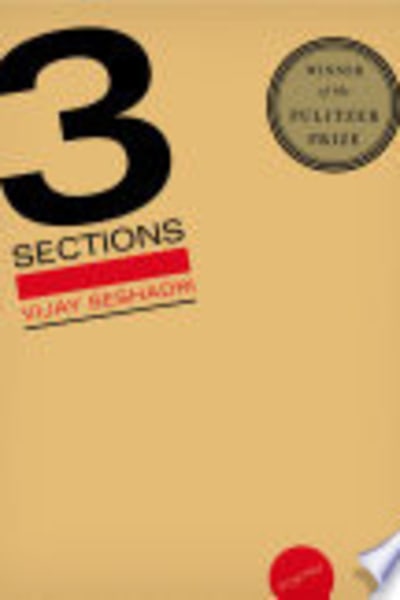
3 Sections — Book Summary & Review
Last updated:
3 Sections Summary
In 3 Sections, Vijay Seshadri organizes the book into three named movements—“Wayward History,” “Indeterminate Future,” and “Present Condition”—and the whole point is that each one tries to outmaneuver time while still getting tangled in it. Seshadri’s argument is less “here’s what happened” or “here’s what’s coming,” and more “watch how language behaves when it’s asked to measure history, forecast consequences, and then confess its own failure.” In “Wayward History,” the poems keep returning to the idea of a past that won’t sit still: events feel narrated into being, then revised by the pressure of the present. The book’s tension is that wanting coherence becomes its own kind of trap. In “Indeterminate Future,” Seshadri treats prediction like a moral risk—every attempt to name tomorrow carries an implicit claim about who gets to speak with authority. He doesn’t offer a comforting alternative; he shows the mind reaching for certainty and then watching certainty fray. “Present Condition” is where the book’s cranky intelligence turns personal: the speaker wants to outthink time, but the poems keep making room for what can’t be solved—desire, memory, political weather, and the blunt fact of living inside other people’s narratives. Seshadri’s style is dense and argumentative, with syntax that feels like it’s arguing with itself. A hard limitation: this isn’t a book that explains its references or offers a steady emotional release; if you want straightforward storytelling, you’ll feel locked out. Also, because the work is only about 82 pages, it’s more concentrated than expansive—some readers will want more grounding for the historical and cultural pressures the poems assume you can track. Still, Seshadri’s craft is exacting, and the three-section architecture makes the book feel like a sustained pressure test on how we talk about time.
Key Takeaways from 3 Sections
-
1
Wayward History: the past behaves like a draft, revised by the present’s urgency and by the speaker’s own language.
-
2
Indeterminate Future: forecasting is treated as ethically loaded, since naming tomorrow grants power and invites distortion.
-
3
Present Condition: the poems stage wanting-to-outthink-time as a desire that keeps colliding with lived mess.
-
4
Outthink Time: the book’s recurring impulse frames cognition as a coping mechanism that can’t fully control consequences.
-
5
Three-section structure: the rigid map forces the reader to feel how “history,” “future,” and “present” keep bleeding together.
Who Should Read This
Someone who keeps rereading history and politics in their head—trying to make the past “add up”—will find Seshadri’s Wayward History sections painfully familiar. If you’re stuck in the loop of planning your future while feeling your certainty slip, Indeterminate Future will land with real friction.
Who Shouldn't Read This
If you need poems to be legible on first pass, 3 Sections will frustrate you with its argumentative density and refusal to translate itself. If you’re looking for narrative payoff, this book’s compressed 82 pages won’t slow down to supply context or emotional release.
Editor's Verdict
The single best thing 3 Sections does is its architecture: the pivot from “Wayward History” to “Indeterminate Future” to “Present Condition” makes the reader feel time as an active opponent, not a backdrop. The real limitation is that Seshadri assumes high tolerance for abstraction and offers almost no explanatory scaffolding for the cultural-historical pressures the poems gesture at. This hits hardest for anyone who’s spent years trying to rationalize their life choices and is now tired of tidy explanations—especially mid-career, when the future plan starts to feel fraudulent.
Ready to read 3 Sections?
Get your copy on Amazon today.
3 Sections — Frequently Asked Questions
About Vijay Seshadri
Vijay Seshadri is an American writer and academic known for his work in poetry and criticism. He teaches at the University of California, Berkeley, where he has focused on literary studies and the history of modern poetry. His expertise and long-standing scholarship make him credible to write about poetic form and interpretation in 3 Sections. Other notable works include his poetry collections 3 Sections and The Long Goodbye.