Why Survive? — Book Summary & Review
Last updated:
Why Survive? Summary
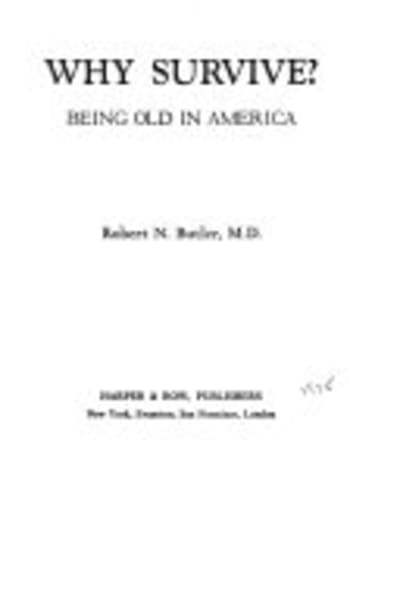
In Why Survive?, Robert N. Butler organizes the argument around a blunt framework for old-age public assistance: if society wants older people to “survive” materially, it has to design policy around real constraints, not sentimental ideals. Butler’s core move is to treat aging as a social environment with measurable breakdown points—income instability, inadequate services, and the way community norms can either cushion or abandon you. The book leans on government policy analysis while refusing to let policymakers hide behind abstractions; Butler keeps dragging the reader back to what assistance programs actually do to daily life, dignity, and social participation.
One of the most useful parts is the chapter on “Old Age Assistance as a Social Relationship,” where Butler explains that benefits aren’t only financial transfers; they also signal whether older adults are treated as full members of the community. He repeatedly returns to the idea that policy can either reduce dependency stigma or amplify it, and that “survival” includes social standing, not only calories and rent. Butler also spends time on the mechanics of eligibility, administration, and local variation—how the same rule can feel like protection in one place and humiliation in another. In “The Cost of Inadequate Support,” he lays out why underfunded programs don’t merely fail; they shift burdens onto families, workplaces, and informal networks that are often already stretched.
Honest limitation: Butler doesn’t offer a crisp, modern “program blueprint” with step-by-step implementation, and the prose can feel dated because the book assumes a mid-1970s policy landscape. If you want contemporary research updates or data dashboards, you’ll be frustrated; if you want a grounded argument about how assistance shapes an older person’s social reality, Butler is worth reading.
Key Takeaways from Why Survive?
-
1
Old Age Assistance as a Social Relationship: Butler argues benefits function as social signals, affecting dignity and inclusion as much as income.
-
2
Survival as Social Environment: “Survive” means coping within community norms, services, and stigma—not merely staying above a poverty line.
-
3
Eligibility and Administration: Butler treats paperwork, gatekeeping, and local enforcement as drivers of real outcomes for older adults.
-
4
The Cost of Inadequate Support: Underfunding shifts burdens to families and informal networks, creating cascading stress rather than isolated hardship.
-
5
Policy vs Sentiment: Butler insists policymakers confront constraints directly, rejecting vague moral language that ignores daily life.
Who Should Read This
If you’re worried about how public support systems actually work when you or a loved one hits older age—especially the paperwork, stigma, and service gaps—this book will feel uncomfortably relevant. Someone who’s frustrated by policy talk that stays abstract will want Butler’s insistence that “survival” includes social participation and dignity.
Who Shouldn't Read This
If you want a modern, research-heavy update with current program names, recent statistics, and implementation checklists, Butler’s 1975 framing will feel behind. If you only want personal caregiving advice or emotional memoir-style writing, this book’s policy focus will feel cold and relentlessly structural.
Editor's Verdict
The single best thing Butler does is insist that old-age assistance is a social relationship, not just a cash program, especially in the chapter “Old Age Assistance as a Social Relationship.” The real limitation is that Butler doesn’t provide a practical, step-by-step blueprint for reform, leaving readers with argument more than actionable design. This hits hardest for anyone mid-life watching parents or relatives fall through service cracks and realizing the “system” is experienced as judgment.
Ready to read Why Survive??
Get your copy on Amazon today.
Why Survive? — Frequently Asked Questions
About Robert N. Butler
Robert N. Butler was an American geriatric psychiatrist and physician who served as the founding director of the Division of Geriatrics at the Mount Sinai School of Medicine and later as president of the International Association of Gerontology. He was known for research and public advocacy on aging, mental health, and the social conditions affecting older adults. His expertise in geriatric care and policy makes him credible on survival and aging-related well-being. Other notable works include Why Survive? and The Life Review.