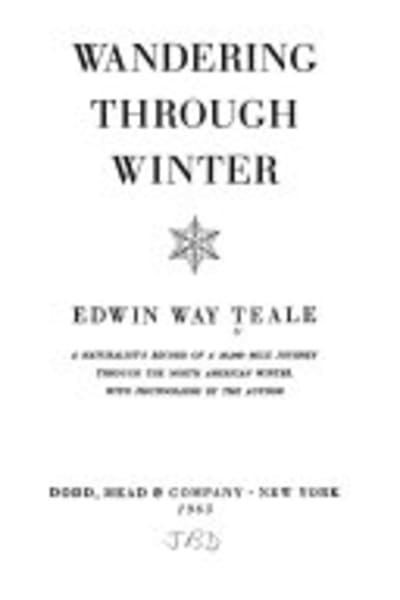
Wandering through Winter — Book Summary & Review
Last updated:
Wandering through Winter Summary
Teale structures Wandering through Winter around a seasonal rhythm—he moves from thin, early cold to the heavier stillness of midwinter, and he keeps returning to the same practical method: watch closely, then name what you’re seeing as if you might have to defend it. In the early stretches he leans on field discipline, describing how small signs—tracks in powder, seed heads left behind, the way light behaves on snow—become evidence rather than decoration. Teale’s best chapters (like “The First Snow” and “The Silent Town”) don’t chase spectacle; they train your attention until the ordinary turns legible. He also uses a recurring contrast: what animals do when visibility is low versus what humans assume they’re doing. The book’s quiet argument is that winter is not emptiness; it’s a full calendar of behavior, and you only notice it if you stop treating cold as a pause button.
A concrete example: Teale lingers on how birds manage energy—where they feed, when they shift, and how their choices telegraph what the landscape can provide. Later, he returns to the ground level, showing how insects and other small life persist under insulating layers, so your “winter walk” becomes a controlled experiment in persistence. Teale’s writing can feel patient to the point of stubbornness, but it’s consistent: he’s trying to earn wonder through specificity.
Honest limitation: this is not a “survival” book and it doesn’t offer modern habitat politics, climate science, or how-to gear lists; if you want actionable outdoor tactics or big ecological debates, Teale will frustrate you.
Key Takeaways from Wandering through Winter
-
1
First Snow: Teale treats early flakes as a new evidence system, where tracks, wind patterns, and leftovers tell you who’s active.
-
2
Silent Town: The phrase becomes a discipline—he makes you listen for behavior in places you’d otherwise call lifeless.
-
3
Seasonal Rhythm: Winter chapters map changes in light and food access, so sightings feel like clockwork rather than random luck.
-
4
Field Discipline: Teale insists you “name what you see” carefully, turning impressions into observations you could verify later.
-
5
Energy Management: His bird sections connect feeding routes to survival needs, making animal movement readable even at a distance.
Who Should Read This
Someone who’s stuck in a winter rut—taking the same walks but seeing nothing—will benefit from Teale’s method of turning ordinary cues into observations. If you’ve grown tired of outdoors books that rush to adrenaline, Teale’s slow attention will feel like permission to notice quietly.
Who Shouldn't Read This
If you want a practical guide with gear recommendations, safety steps, or modern climate/ecology arguments, Teale won’t deliver. If you dislike patient natural history prose—where meaning comes from accumulation rather than dramatic plot—this will feel needlessly leisurely.
Editor's Verdict
Wandering through Winter earns its calm by repeatedly doing the work of attention; Teale’s “The First Snow” sequence shows how he turns tracks and seed leftovers into a defensible way of seeing. The limitation is scope: it’s observational natural history without modern science debates, politics, or actionable outdoor instruction, so some readers will feel stranded. Anyone recovering from burnout in a screen-heavy life will hit hardest on a day when you’re tempted to treat winter as dead time and need a reason to look again.
Ready to read Wandering through Winter?
Get your copy on Amazon today.
Wandering through Winter — Frequently Asked Questions
About Edwin Way Teale
Edwin Way Teale (1899–1980) was an American naturalist and writer. He developed expertise through decades of close, seasonal observation of plants, animals, and weather, recording detailed field notes and conducting long-term studies across the United States. His credibility on winter comes from his firsthand documentation of winter ecology in his writings. Other notable works include “North with the Spring” and “The Road to Agassiz.”