Walden — Book Summary & Review
Last updated:
Walden Summary
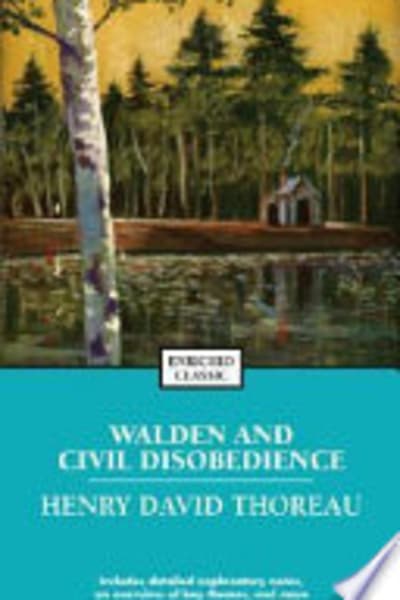
Thoreau's 'Economy' chapter in Walden sets the stage for his experiment of living simply in a cabin near Walden Pond. This is not a guide to minimalism but an exploration of self-reliance and an examination of societal norms. Thoreau meticulously documents his observations of nature, such as the freezing and thawing of Walden Pond, providing both scientific detail and poetic interpretation. His descriptions in 'The Ponds' chapter are particularly vivid, illustrating his deep connection to his surroundings. However, Thoreau's philosophical musings can sometimes feel meandering and overly introspective, which may test the patience of readers seeking more direct guidance or narrative structure. Those looking for a straightforward philosophical argument or a cohesive story might find Walden's structure frustratingly loose and its themes a bit repetitive.
Key Takeaways from Walden
-
1
Economy: Thoreau discusses the costs of living and critiques the economic pressures of society, advocating for simplicity.
-
2
Solitude: He emphasizes the value of spending time alone in nature to gain clarity and self-awareness.
-
3
The Ponds: Thoreau describes the physical and metaphorical significance of Walden Pond, reflecting on nature's beauty.
-
4
Spring: Observations of seasonal change serve as a metaphor for renewal and personal growth.
-
5
Where I Lived, and What I Lived For: Thoreau explains his reasons for retreating to the woods, focusing on intentional living.
Who Should Read This
Someone who feels overwhelmed by modern life's demands and seeks inspiration for a simpler, more intentional existence. If you find yourself yearning for a deeper connection with nature and self-sufficiency, this book offers valuable reflections.
Who Shouldn't Read This
If you prefer fast-paced narratives or concrete advice, Thoreau's philosophical reflections might frustrate you. The book's leisurely pace and lack of direct action items may not satisfy those seeking immediate solutions or clear arguments.
Editor's Verdict
Thoreau's vivid descriptions of Walden Pond in 'The Ponds' chapter beautifully capture the essence of nature's tranquility. However, his abstract, often verbose style can be a barrier for readers seeking concise philosophical discourse. Anyone contemplating a simpler lifestyle or feeling disconnected from nature will find this book most impactful during moments of introspection.
Ready to read Walden?
Get your copy on Amazon today.
Walden — Frequently Asked Questions
About Henry David Thoreau
Henry David Thoreau (1817-1862) was an American transcendentalist writer and philosopher known for his work "Walden," which reflects on simple living in natural surroundings. Born in Concord, Massachusetts, Thoreau was a Harvard graduate and a protégé of Ralph Waldo Emerson. His credibility on the topic of nature and self-reliance stems from his two-year experiment living in a cabin near Walden Pond. Other notable works include "Civil Disobedience," an essay advocating for individual resistance to unjust government.