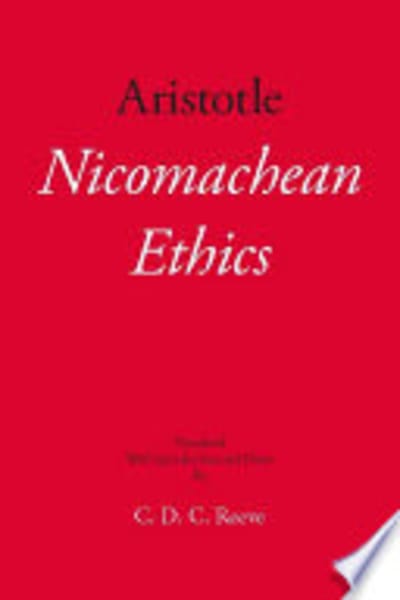
Nicomachean Ethics — Book Summary & Review
by Aristotle
Last updated:
Nicomachean Ethics Summary
Aristotle's Nicomachean Ethics opens with an exploration of 'eudaimonia,' often translated as 'happiness' or 'flourishing,' as the ultimate goal of life. The book is structured around the examination of various virtues, such as courage and temperance, and the role they play in achieving this ultimate state. A standout chapter is Book VIII, which delves deeply into the nature of friendship and its essential role in a virtuous life. Aristotle's methodical approach offers a framework for understanding ethical behavior, but readers might find his style dense and his examples dated. If you're looking for a modern take on ethics with actionable advice, this ancient text may leave you wanting more immediacy and relevance.
Key Takeaways from Nicomachean Ethics
-
1
Eudaimonia: Aristotle suggests the highest human good is living a life of virtuous activity in accordance with reason.
-
2
The Golden Mean: Virtue lies between two extremes — excess and deficiency. Courage, for example, is a balance between recklessness and cowardice.
-
3
Types of Friendship: Aristotle identifies three types — friendships of utility, pleasure, and virtue, with the latter being the highest form.
-
4
Akrasia: This concept refers to the state of acting against one's better judgment, a central challenge in living ethically.
-
5
Intellectual Virtues: Aristotle differentiates between practical wisdom (phronesis) and theoretical wisdom (sophia), both essential for a virtuous life.
Who Should Read This
If you're wrestling with questions about what constitutes a good life and want a foundational text to explore this, dive in. Someone who enjoys unpacking complex philosophical arguments and doesn't mind older language will appreciate Aristotle's thoroughness.
Who Shouldn't Read This
If you need quick, modern ethical advice, this book will frustrate you with its ancient examples and dense prose. Those who dislike philosophical abstraction might find themselves lost in Aristotle's detailed discussions.
Editor's Verdict
The book excels in its detailed categorization of virtues, especially the nuanced exploration in Book IV. Its ancient style can feel laborious and disconnected from contemporary life. For someone at a crossroads seeking a deep philosophical dive, this classic can provide a solid grounding.
Ready to read Nicomachean Ethics?
Get your copy on Amazon today.
Nicomachean Ethics — Frequently Asked Questions
About Aristotle
Aristotle (384–322 BCE) was a Greek philosopher and student of Plato, who later taught Alexander the Great. A prominent figure in Western philosophy, he founded the Lyceum in Athens. Aristotle's work "Nicomachean Ethics" explores virtue ethics and the pursuit of happiness, establishing him as a credible authority on moral philosophy. His notable works also include "Politics," which examines human behavior in society, and "Metaphysics," addressing the nature of reality and existence.