Voyagers to the West — Book Summary & Review
Last updated:
Voyagers to the West Summary
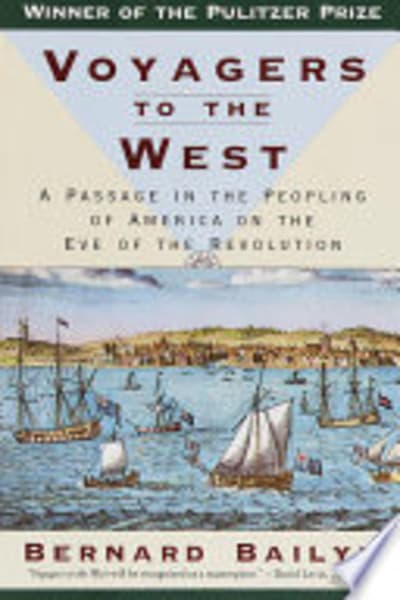
Bernard Bailyn’s Voyagers to the West is built around a specific archival mechanism—an emigration roster listing every person officially known to have left Britain for America between December 1773 and March 1776—and Bailyn uses that narrow window to reconstruct motives, networks, and expectations with unusual discipline. He doesn’t treat “the Revolution” as a single dramatic event; instead, he tracks how different kinds of emigrants—indentured workers, artisans, merchants, political refugees, family migrants—made choices while Britain and the colonies were still in motion. One of Bailyn’s most memorable moves is his insistence that you can’t read departure as destiny: the roster lets him compare what people said, what they likely believed, and what opportunities awaited once they landed. He repeatedly returns to the idea that migration was mediated by information—rumors, letters, agents, and community routes—so the West was less a blank space than a set of expectations people carried across the Atlantic.
A concrete example of how Bailyn builds argument from data appears in his attention to the timing of departures around the escalating crisis, where the roster reveals both continuity and sudden shifts rather than a clean “revolutionary exodus.” He also spends real time on the British side of the Atlantic world—institutions, local pressures, and the uneven distribution of risk—so emigrants don’t float free of British social realities. The book’s scale is impressive, but Bailyn’s method is what earns the hype: he’s constantly translating records into social history without pretending the records give full interior lives.
Limitation: Voyagers to the West is not a narrative of famous individuals or battlefields; if you want sweeping storytelling or character-driven drama, Bailyn will frustrate you. It’s also dense in places, because the roster-based approach means you’re often reading through categories, evidence, and inference rather than scenes.
Key Takeaways from Voyagers to the West
-
1
Emigration roster window: Bailyn uses December 1773–March 1776 departures to test how motives changed during escalation.
-
2
Information networks: He treats letters, agents, and rumors as the machinery that shaped what migrants expected to find.
-
3
Departure vs destiny: The roster helps Bailyn separate reasons for leaving from the outcomes migrants actually faced.
-
4
British-side pressures: He insists British institutions and local conditions mattered, not just colonial opportunity.
-
5
Category-based reconstruction: Bailyn’s approach builds social types from records, so interior lives remain partial.
Who Should Read This
If you’re trying to understand how ordinary people responded to the American Revolution beyond slogans, this is for you. Someone who enjoys archival social history and wants to see how data can produce motive, not just dates, will likely stick with Bailyn.
Who Shouldn't Read This
If you want a smooth, character-led story of the Revolution’s key players, Bailyn’s roster-driven structure will feel cold and procedural. If you dislike heavy evidence and inference—where you’re often tracking categories more than scenes—you’ll probably bounce.
Editor's Verdict
The single best thing Bailyn does is use the emigration roster window to argue that migration decisions were shaped by information and timing, not a single revolutionary mood. The real limitation is that the book is structurally data-first and rarely delivers the narrative pleasures of mainstream Revolutionary history. This hits hardest for anyone who has grown tired of vague “everyone was swept up” explanations and wants to see how motives can be reconstructed from records.
Ready to read Voyagers to the West?
Get your copy on Amazon today.
Voyagers to the West — Frequently Asked Questions
About Bernard Bailyn
Bernard Bailyn (born 1937) is an American historian and author. He is the son of historian Bernard Bailyn and has written extensively on early American and Atlantic history. He is credible on western expansion because his scholarship draws on primary sources and focuses on the motivations, institutions, and experiences that shaped European movement into North America. Notable works include Voyagers to the West and The Peopling of America.