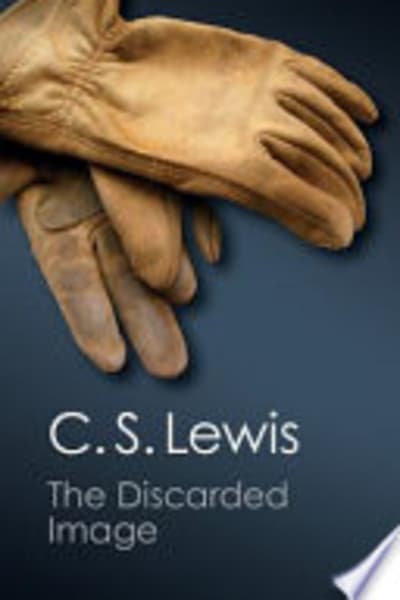
The Discarded Image — Book Summary & Review
by C. S. Lewis
Last updated:
The Discarded Image Summary
Lewis opens The Discarded Image by laying out a medieval “picture” of the universe—an ordered, hierarchical cosmos where astronomy, theology, and everyday meaning reinforce each other—and he builds the book by showing how that image shaped the literature of the Middle Ages and Renaissance. He doesn’t treat “medieval worldview” as vague atmosphere; he organizes it into components: the structure of the heavens, the place of the Earth at the center, the role of moral and spiritual direction in how people interpreted motion, time, and causation. In one of the book’s most memorable moves, Lewis insists that writers like Dante aren’t simply producing personal metaphors; they’re working inside a shared model of reality, so their imagery makes sense only if you understand the model.
Lewis then pushes the reader toward a second, sharper claim: the “discarded” image wasn’t merely replaced by new science in a clean, linear way. Instead, the older framework withered as alternative assumptions—about what counts as explanation, and how to read the world—took over. That’s why Lewis spends time on how medieval and Renaissance authors talk about the universe: because the language is doing cultural labor. His discussion of “myth” and “fact” is especially useful here; he argues that medieval imagination is not a naïve opposition to knowledge, but a different arrangement of meaning.
If you want a practical payoff, Lewis offers it through historical criticism: he gives you a way to read passages without translating everything into modern categories of psychology or physics. Still, Lewis is not writing a guided tour of every medieval text, and he won’t magically make difficult scholarship feel easy. If you’re looking for an argument that walks step-by-step through specific poems line by line, The Discarded Image will frustrate you.
Enjoyed this one? Read these next.
Top picks in Modern, chosen for readers of The Discarded Image.

The Guns of August
by Barbara Tuchman
Check price on Amazon
Genghis Khan and the Making of the Modern World
by Jack Weatherford
Check price on Amazon
Midnight in Chernobyl
by Adam Higginbotham
Check price on Amazon
The Pursuit of Power
by Richard J. Evans
Check price on AmazonKey Takeaways from The Discarded Image
-
1
Medieval “picture” of the universe: Lewis treats worldview as a working system, not scenery, and shows how it governs meaning in literature.
-
2
Ordered hierarchy of cosmos: Heaven and Earth aren’t just locations; their ranked structure shapes how writers interpret motion, value, and purpose.
-
3
Dante as worldview evidence: Lewis argues that poetic imagery depends on the shared model of reality, not merely on private symbolism.
-
4
Discarded vs replaced: Lewis frames scientific change as assumption-shift and cultural withering, not a tidy swap of facts.
-
5
Myth and fact arrangement: Lewis claims medieval imagination organizes knowledge differently, so you should read it as an epistemology.
Who Should Read This
If you’re reading medieval or Renaissance literature and keep feeling that the metaphors float above real meaning, this book will give you the missing framework. Someone who suspects their modern instincts are distorting what writers like Dante were actually doing should read Lewis.
Who Shouldn't Read This
If you want a book that annotates specific poems and explains every line with modern parallels, Lewis will disappoint you. If you need quick, accessible entertainment rather than careful historical criticism, The Discarded Image will feel slow and abstract.
Editor's Verdict
Lewis’s best strength is the way he ties the medieval cosmic scheme to literary interpretation, especially when he uses the shared worldview assumption behind writers like Dante. The real limitation is that Lewis offers a cultural model more than a text-by-text reading program, so you won’t get the close-reading payoff you may expect. This hits hardest for anyone who’s halfway through a medieval lit course and realizing their “modern” reading habits are quietly sabotaging comprehension.
Ready to read The Discarded Image?
Get your copy on Amazon today.
The Discarded Image — Frequently Asked Questions
About C. S. Lewis
Clive Staples Lewis (1898–1963) was a British scholar and writer, educated at Oxford University and later a fellow and teacher at Oxford and Cambridge. He wrote widely on medieval and Renaissance literature and thought, making him credible to explain historical worldviews. His works include The Abolition of Man and Surprised by Joy. He also published The Discarded Image (1964), a study of how medieval people understood the universe.