Covered with Night — Book Summary & Review
Last updated:
Covered with Night Summary
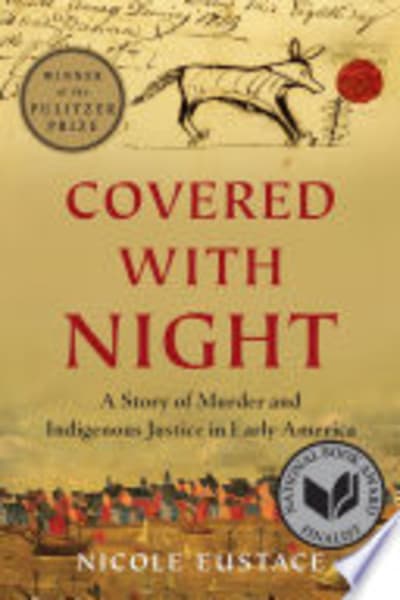
Nicole Eustace structures Covered with Night around the summer 1722 killing of an Indigenous hunter in colonial Pennsylvania, then uses the aftermath to stage a clash between competing legal cultures: community-centered accountability and British-style execution. In the book’s core narrative, Eustace follows how fear spreads across the mid-Atlantic on the eve of a conference between the Five Nations of the Iroquois and British-American colonists, and how “justice” becomes a public problem rather than a private one. She anchors the story in painstaking procedural detail—who is interrogated, who speaks for whom, and how settlements are negotiated—so the reader can feel the logistics of crisis. One of the most concrete sequences comes when colonial officials push for harsh reprisal under British law while Indigenous leaders weigh reparations, forgiveness, and the responsibilities owed to the victim’s community. Eustace returns again and again to what she calls the contest over authority: not simply whether punishment happens, but who gets to define the terms.
Eustace also makes a second argument running under the investigation: colonial administration didn’t operate as a single machine. It was a messy negotiation among traders, magistrates, interpreters, and Indigenous diplomats, and Eustace shows how that messiness shapes the case’s outcome. By the time the story reaches its later consequences, it’s clear that the killing becomes a test for diplomacy, not merely for criminal procedure. If you want a tidy “who was right” ending, Eustace refuses it; she’s more interested in how both sides rationalize violence and repair. The limitation is that the book is dense with names, places, and institutional context, so readers expecting a fast, character-driven true-crime narrative may feel they’re doing more work than they bargained for.
Key Takeaways from Covered with Night
-
1
Iroquois–British conference tension: Eustace shows the killing as diplomatic tinder, turning local homicide into a regional political crisis.
-
2
Contest over authority: justice isn’t one system; Eustace tracks competing claims about who can define punishment and repair.
-
3
British law harsh reprisal: the colonial ideology demands execution as deterrence, framing Indigenous justice as disorder.
-
4
Community forgiveness and reparations: Eustace treats accountability as collective, with obligations aimed at restoring relationships, not satisfying vengeance.
-
5
Colonial administration as negotiation: Eustace depicts officials, traders, and interpreters improvising, so outcomes hinge on process, not policy.
Who Should Read This
Someone who’s wrestling with how societies handle violent harm when legal systems disagree should read Covered with Night, because Eustace turns that friction into the plot engine. If you’ve been frustrated by history that treats Indigenous diplomacy as background noise, this book gives you the decision-making center.
Who Shouldn't Read This
If you want a streamlined narrative with minimal cast and a clear moral verdict, Eustace’s procedural density will wear you down. If you’re hoping for a focus on the victim’s life beyond the case record, the emphasis stays on institutions, negotiations, and public consequences.
Editor's Verdict
The best thing Covered with Night does is show how the investigation becomes a contest over authority, especially when Eustace contrasts British execution logic with Indigenous reparations and forgiveness during the 1722 crisis. The limitation is that you have to tolerate heavy institutional detail—names, roles, and administrative process—because Eustace keeps returning to how decisions get made. This hits hardest for history readers who’ve ever wondered why “justice” in the past looks bureaucratic and political at the same time, and who want that question answered with evidence.
Ready to read Covered with Night?
Get your copy on Amazon today.
Covered with Night — Frequently Asked Questions
About Nicole Eustace
Nicole Eustace is an American historian and author. She teaches at Rutgers University and specializes in early American history, with a focus on religion, culture, and the lived experience of violence and fear. Her scholarship draws on extensive archival research, making her credible on historical depictions of darkness and night in early America. She is also the author of *The Color of Law: Race, Religion, and the Making of the United States* and *Witchcraft in the American Colonies*.