Toms River — Book Summary & Review
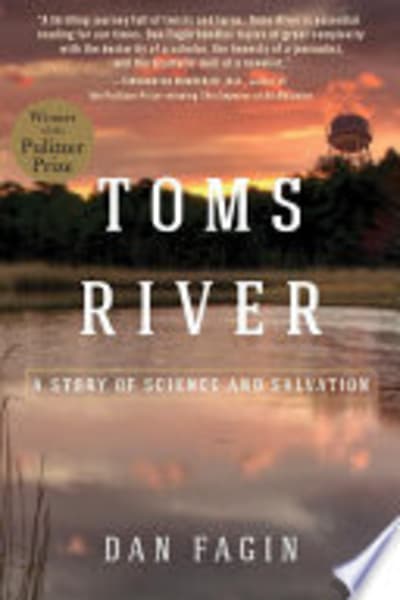
by Dan Fagin
Last updated:
Toms River Summary
In Toms River, Dan Fagin builds his narrative around a basic, ruthless framework: identify the suspected carcinogens, trace how evidence moves (or stalls) through regulators and courts, and show how ordinary people get treated like an inconvenience while science catches up. The book is organized as a long epidemiology-and-politics saga that keeps snapping between lab work and legal maneuvering, so you’re never allowed to forget the stakes. Fagin’s most effective technique is the way he turns the town’s water and air into characters—documenting how chemical companies buried drums, how wastewater was discharged, and how early warning signs were diluted by delay. One concrete example: Fagin repeatedly returns to the childhood-cancer “cluster” logic used by physicians and scientists, then contrasts it with the official responses that framed correlations as either coincidence or jurisdictional problems.
Fagin also gives you a clear scientific detective story, especially through the early efforts to link contaminants to disease and the later, more sophisticated attempts to quantify exposure. The courtroom settlement in 2001 doesn’t land like a tidy ending; it feels like the culmination of years of stalled oversight. If you’ve read A Civil Action or follow public-health reporting, you’ll recognize the rhythm, but Fagin is sharper about the groundwater mechanics and the bureaucratic choreography that make causation so hard to prove.
Honest limitation: Toms River leans heavy on institutional detail—regulatory timelines, technical measurements, and litigation logistics—so readers craving purely emotional, character-forward storytelling may find parts of it slow and dense, especially in stretches that prioritize evidence-building over scene-setting. Still, Fagin’s insistence on naming what was known, when, and by whom is exactly why the book lingers after you close it.
Key Takeaways from Toms River
-
1
Groundwater contamination: Fagin shows how buried waste and leaky storage turn into long-term exposure risks through subsurface movement.
-
2
Childhood cancer cluster logic: the book tracks how clinicians interpret patterns and how officials resist treating clusters as actionable proof.
-
3
Epidemiology vs. regulation: Fagin contrasts statistical evidence with agency incentives, illustrating why “maybe later” becomes policy.
-
4
Legal settlement mechanics: the 2001 resolution is framed as an outcome of documentation, negotiations, and leverage—not moral awakening.
-
5
Water quality monitoring failures: Fagin details how inadequate oversight and delayed reporting can let harm accumulate for decades.
Who Should Read This
Someone who grew up near industrial development or has watched a community argue about “risk” without getting answers will feel the book’s pressure immediately. If you’re dealing with a family health scare and keep wondering how evidence becomes action—or doesn’t—Fagin’s account will hit hard.
Who Shouldn't Read This
If you want a fast, mostly narrative thriller with minimal science, Toms River will frustrate you with its long stretches of technical and regulatory detail. If you dislike investigative reporting that tracks institutions closely, Fagin’s courtroom and agency focus may feel relentlessly procedural.
Editor's Verdict
Toms River’s best move is Fagin’s constant linkage of the “cluster” idea to the real-world delays in how regulators and courts handle suspected exposure, especially around the decades-long evidence trail. The limitation is that the book spends substantial time on litigation and technical measurement processes, which can slow momentum for readers who came for personal drama alone. This hits hardest for anyone who’s ever sat through a community meeting where officials treat scientific uncertainty like a shield, and for those who want to understand exactly how harm gets normalized.
Ready to read Toms River?
Get your copy on Amazon today.
Toms River — Frequently Asked Questions
About Dan Fagin
Dan Fagin is an American journalist and author. He has reported on science and environmental health issues, including investigations into how pollutants affect communities. He is credible on the subject of toxic contamination because his work draws on extensive document research, interviews, and on-the-ground reporting. His notable books include Toms River and The Promise of a Cure.