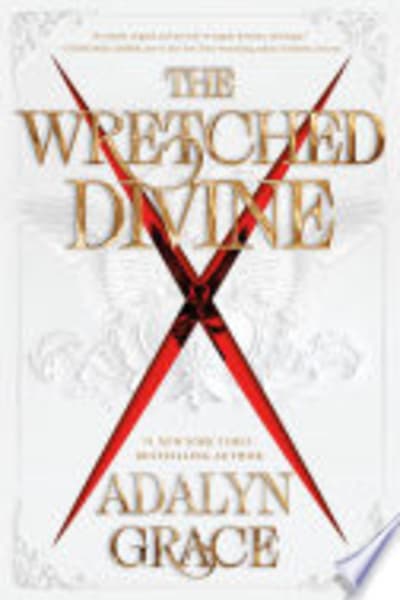
The Wretched Divine — Book Summary & Review
by Adalyn Grace
Last updated:
The Wretched Divine Summary
In The Wretched Divine, Adalyn Grace organizes Aurelie Chantelune’s story around soulbond mechanics—Yuriel’s angel power as lifeline, then Severin’s demon bond as a forbidden “second key” to end the war. Aurelie is raised to serve: train, kill demons, and earn the right to inherit her bloodline’s legacy. Grace keeps the early momentum tight by anchoring every escalation to a concrete ritual or vow Aurelie must perform, which makes the romance feel like a risk she chooses, not a prize she’s handed. The first time Aurelie’s world tilts is when the people she loves begin turning into the very monsters she’s supposed to erase; Grace doesn’t treat it as a vague curse—she tracks it like a problem with symptoms, timelines, and political fallout.
Once Aurelie seeks help from Severin, the book pivots from sword-and-faith heroics into a hunt for a cure capable of reversing demonhood back into humans. The “cure” plot is where Grace’s structure really earns its keep: every clue forces Aurelie to negotiate loyalty, especially because her two bonds pull her in opposite directions. There’s a specific turning point when Aurelie and Yuriel must coordinate despite their conflict, and Severin’s knowledge keeps undercutting the angels’ official story. Aurelie’s questions sharpen into a moral argument against the war itself—who benefits, who pays, and what “purity” costs.
Grace’s limitation is that the book’s central mystery (how the cure works and who engineered the war’s narrative) doesn’t resolve with full neatness by the end. If you want a tightly wrapped ending, you may feel stalled right when you’re most invested—especially if you prefer standalone arcs over series momentum.
Enjoyed this one? Read these next.
Top picks in Fiction, chosen for readers of The Wretched Divine.

To Kill a Mockingbird
by Harper Lee
Check price on Amazon
1984
by George Orwell
Check price on Amazon
The Great Gatsby
by F. Scott Fitzgerald
Check price on Amazon
The Catcher in the Rye
by J.D. Salinger
Check price on AmazonKey Takeaways from The Wretched Divine
-
1
Soulbond: Aurelie’s angel-and-demon bonds function like competing power contracts, changing her choices through physical costs and moral pressure.
-
2
Yuriel’s legacy: The Chantelune bloodline isn’t just inheritance; it’s a chain of expectations that Aurelie must actively reinterpret to survive.
-
3
Severin’s “second bond” risk: The demon pact is portrayed as information with consequences, making trust feel like strategy, not romance-flirting.
-
4
Demon-to-human cure hunt: The plot treats redemption as a technical, investigatory problem—clues, tests, and political interference.
-
5
War narrative politics: Grace frames the conflict as a story maintained by institutions, so Aurelie’s growth is about questioning the source.
Who Should Read This
If you’re craving adult fantasy where the romance grows out of power conflicts and hard choices, you’ll likely latch onto Aurelie’s double-bond dilemma. Someone who’s tired of angels-as-default-good and wants demons written with real leverage should give The Wretched Divine a shot.
Who Shouldn't Read This
If you hate series-style endings that leave the big mystery partially hanging, you’ll probably feel frustrated with how Grace paces resolution. If you want pure action with minimal moral debate, Aurelie’s internal questioning—especially about Yuriel and Severin—will slow your enjoyment.
Editor's Verdict
The Wretched Divine’s best move is how Grace ties romance and plot to soulbond mechanics, especially when Aurelie has to coordinate decisions with Yuriel while Severin keeps rewriting the rules. The real limitation is that the cure’s core explanation and the war’s ultimate answer arrive only partially, so the ending can feel like momentum rather than payoff. If you’re the kind of reader who loves adult fantasy romance and you’re currently mid-obsession with angel/demon lore, this will hit hardest the moment Aurelie realizes the people she loves are part of the mechanism.
Ready to read The Wretched Divine?
Get your copy on Amazon today.
The Wretched Divine — Frequently Asked Questions
About Adalyn Grace
Adalyn Grace is the author of The Wretched Divine. Public biographical details about their background and education are not readily available in widely accessible sources, and there is limited verifiable information about their professional credentials. They are credible on the topic primarily through their authorship of The Wretched Divine. Other notable works by Adalyn Grace are not clearly documented in accessible references.