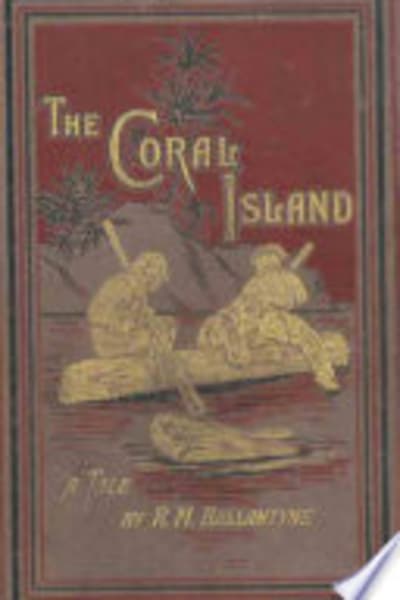
The Coral Island: A Tale of the Pacific Ocean — Book Summary & Review
by R. M. (Robert Michael) Ballantyne
Last updated:
Public domain via Project Gutenberg — free and legal.
The Coral Island: A Tale of the Pacific Ocean Summary
In The Coral Island, Ballantyne frames the whole story through Ralph Rover’s prefatory promise: the book is “specially to boys,” and Ralph immediately draws a line between readers who want fun and readers who want melancholy. After that setup, the novel follows a schoolboy cast stranded on a Pacific island, but what makes it more than simple adventure is how Ballantyne keeps translating hardship into lessons about community, labor, and moral choice. You feel the author’s hand in the way routines get invented from scratch—shelter, food, rules, and roles—until the boys start acting like a miniature society rather than a pile of victims. One concrete example is the recurring emphasis on work and discipline as the difference between survival and collapse, especially when the boys have to decide who does what and why. Another is the book’s repeated use of external threats—storms, scarcity, and conflict with other humans—to force the characters to test their “rules” under pressure, not in comfortable moments.
Ralph Rover’s voice matters because Ballantyne builds the reader’s expectations around a particular mood: cheerfulness with a moral backbone. The narration swings between brisk action and sermons-by-problem, and Ballantyne is at his most effective when he lets consequences do the teaching instead of pausing for speeches. Still, the book’s limitation is real: it’s aimed at a young, optimistic readership and it can feel dated if you’re looking for psychological realism or morally gray adults. Also, if you only want plot and don’t want the frequent moral sorting, you may find the tone a bit bossy.
Enjoyed this one? Read these next.
Top picks in Fiction, chosen for readers of The Coral Island: A Tale of the Pacific Ocean.
To Kill a Mockingbird
by Harper Lee
Check price on Amazon
1984
by George Orwell
Check price on Amazon
The Great Gatsby
by F. Scott Fitzgerald
Check price on Amazon
The Catcher in the Rye
by J.D. Salinger
Check price on AmazonKey Takeaways from The Coral Island: A Tale of the Pacific Ocean
-
1
Ralph Rover’s Preface draws a reader boundary: Ballantyne wants kids who want fun plus moral structure, and he warns off melancholy readers.
-
2
Stranded-island routines function as ethics: the boys create shelter, food, and roles so survival becomes a practice of discipline.
-
3
Survival conflict tests the “rules”: Ballantyne uses storms and scarcity to force character decisions under stress, not in comfort.
-
4
Mini-society organization is the real engine: authority, labor division, and community norms matter as much as the shipwreck.
-
5
Ballantyne’s moral tone governs pacing: sermons arrive through consequences, but the book still keeps nudging toward clear lessons.
Who Should Read This
If you’re a parent, teacher, or adult reader picking a classic for younger readers and you want adventure that comes with explicit moral scaffolding, this fits. Someone who’s tired of modern cynicism and wants a hopeful cast learning how to live together will likely enjoy Ballantyne’s approach.
Who Shouldn't Read This
If you crave morally ambiguous characters, psychological depth, or contemporary pacing, Ballantyne will frustrate you. If you dislike stories that repeatedly turn plot into lesson-making, you’ll probably feel the tone as instruction rather than entertainment.
Editor's Verdict
The single best thing Ballantyne does is build survival into a miniature society, where decisions about labor and community matter as much as the shipwreck, especially through the repeated stress-tests of the boys’ routines. The limitation is that the novel is overtly youth-targeted and moralizing, with dated attitudes and frequent consequence-as-lecture beats. This hits hardest for adults revisiting childhood reading tastes, or anyone handing it to a kid who needs adventure without cynicism.
Ready to read The Coral Island: A Tale of the Pacific Ocean?
Get your copy on Amazon today.
The Coral Island: A Tale of the Pacific Ocean — Frequently Asked Questions
About R. M. (Robert Michael) Ballantyne
R. M. (Robert Michael) Ballantyne (1825–1894) was a Scottish writer and journalist. He was educated in Scotland and worked in publishing, producing adventure and moral fiction aimed largely at young readers. He is credible on Pacific island themes because his novel draws on contemporary nineteenth-century travel and missionary accounts of the region. His other notable works include The Gorilla Hunters and The Young Fur Traders.