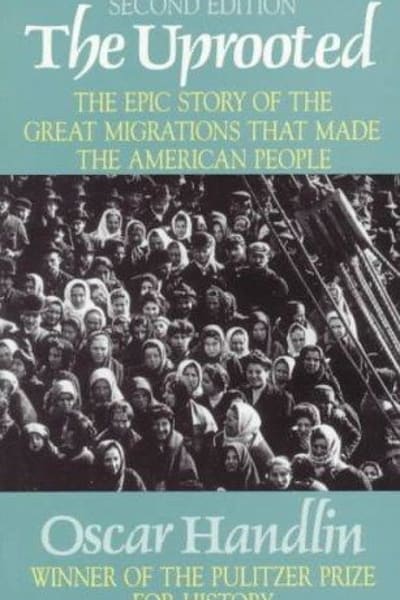
The Uprooted — Book Summary & Review
Last updated:
The Uprooted Summary
In The Uprooted, Oscar Handlin frames immigration as an emotional rupture—people arrive with expectations, then meet institutions and suspicion that reshape them into something like “uprooted” lives. Handlin writes this history as literary narrative, and the method matters: instead of drowning you in footnotes, he builds scenes from government records, newspapers, and personal correspondence, so the reader feels the grind of arrival, housing, work, and social hostility. A key portion of the book’s argument shows up in the way he tracks European peasants—especially those with limited education—through the American machine that classifies them as “aliens,” then treats them as problems to be managed. One concrete example is his sustained attention to the first years after migration, where fear and rumor travel as fast as people do, and where the newcomer’s private letters and public headlines tell the same story from different angles. Handlin’s narrative also keeps returning to acculturation: the painful trade between keeping old habits and learning the new rules, with no guarantee that assimilation earns safety or belonging.
The limitation is real and a little frustrating: Handlin largely concentrates on European immigrants and on the depressing conditions of their early experience, so if you’re hoping for a wide, balanced account of all immigrant groups or for a full, definitive causal explanation of why immigration surged, you’ll feel the edges. I also found the book’s “literary history” approach occasionally smooths over analytical distance—useful for empathy, less useful if you want crisp social-science modeling. Still, Handlin’s best sections make it hard to reduce migration to numbers, because the human record keeps intruding: you see how policy and prejudice convert hope into endurance, then endurance into a new, uneasy identity.
Key Takeaways from The Uprooted
-
1
Uprooted: Handlin’s core metaphor for immigration as emotional and social displacement, not merely geographic relocation.
-
2
Literary narrative method: He uses records and letters to stage lived experience, keeping academic jargon largely offstage.
-
3
Acculturation pressure: The book treats assimilation as costly bargaining—language, work, and identity shift under suspicion.
-
4
European peasants focus: Handlin centers immigrants with rural backgrounds, so other groups get less historical spotlight.
-
5
Government and newspaper scaffolding: He cross-checks official files with public coverage to show fear spreading through society.
Who Should Read This
If you’re trying to make sense of immigration history beyond statistics—especially the lived fear, loneliness, and bargaining that happen after arrival—this will land. Someone who’s burned out on dry policy summaries and wants the immigrant record to feel personal will likely appreciate Handlin’s narrative choices.
Who Shouldn't Read This
If you want a comprehensive, group-spanning history of immigration with a definitive causal model for migration waves, Handlin won’t satisfy you. If you prefer strictly analytical social science and lots of explicit argumentation, the literary-history style may feel too scene-driven and occasionally too light on mechanism.
Editor's Verdict
The single best thing Handlin does is build empathy through his literary narrative approach, especially in his sustained attention to early immigrant experience and acculturation pressures. The real limitation is that the book concentrates heavily on European immigrants and early depressing conditions, offering neither a broad-group account nor a definitive explanation for the causes of immigration. This hits hardest for anyone mid-career questioning why migration is treated like a policy problem instead of a human one, and who needs a reset toward the emotional record.
Ready to read The Uprooted?
Get your copy on Amazon today.
The Uprooted — Frequently Asked Questions
About Oscar Handlin
Oscar Handlin (1915–2011) was an American historian and professor at Harvard University. Born in Boston to immigrant parents, he specialized in U.S. immigration and the social history of newcomers. His scholarship is credible because he conducted extensive archival research and wrote widely influential works on immigrant experiences and American identity. He is best known for The Uprooted (1951). Other notable works include The American People in the Twentieth Century (with his colleagues) and The Uprooted’s related studies on immigration and assimilation.