The Thought and Character of William James — Book Summary & Review
Last updated:
The Thought and Character of William James Summary
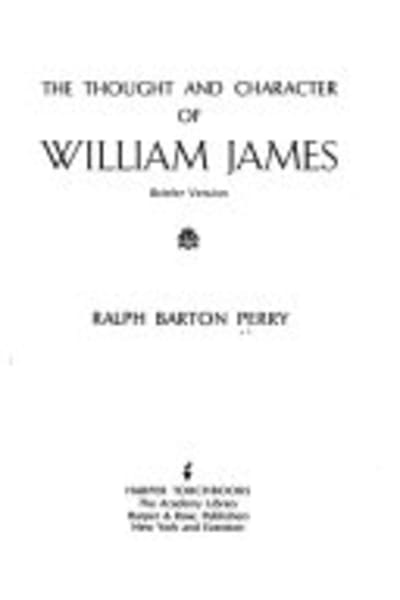
Perry’s The Thought and Character of William James is organized to do two things at once: narrate James’s intellectual development and thread it with primary excerpts that show how his ideas actually sounded on the page. Perry doesn’t treat James as a museum piece; he repeatedly returns to James’s pragmatic method—judging beliefs by what they do in lived experience—while also tracking the personal costs of James’s temperament and career. One recurring through-line is James’s struggle to hold “pluralism” and moral seriousness together without collapsing into vagueness, and Perry uses the interleaved selections to keep that tension concrete rather than abstract. The book’s best moments arrive when Perry frames James’s shift from early philosophical concerns toward a psychology that treats consciousness as active, selective, and messy (not a static object to be inspected). Perry also leans on James’s reputation for essayistic clarity, then complicates it: the excerpts from James’s unpublished work remind you how often James is arguing sideways, testing concepts by stress rather than by neat definitions.
A specific example: Perry’s handling of James’s religious and moral writings—especially around the idea of “the will to believe” and what that stance implies for truth claims—shows why James’s pragmatism isn’t merely intellectual fashion. Perry argues that James’s thought is inseparable from the man’s character: he wants philosophy to be answerable to real stakes, including grief, hope, and uncertainty. Still, Perry is writing an interpretive biography for readers who will tolerate density; he doesn’t provide a modern, lesson-friendly map of every argument in James’s major works. If you want a quick, stand-alone primer on pragmatism or psychology, Perry’s mixture of biography plus long excerpts may frustrate you.
Key Takeaways from The Thought and Character of William James
-
1
Pragmatism: Perry shows James treating ideas as instruments, judged by consequences in lived attention and action.
-
2
Pluralism: James’s stance becomes a moral problem, not a slogan—how to honor many perspectives without giving up seriousness.
-
3
The Will to Believe: Perry frames it as an ethics of commitment under uncertainty, not a permission slip for wishful thinking.
-
4
Consciousness as Active: James’s psychology reads experience as selective and shifting, pushing back against static models of mind.
-
5
Character as Explanation: Perry argues James’s philosophy can’t be separated from his temperament, habits, and emotional stakes.
Who Should Read This
Someone who’s been wrestling with why “truth” feels different in daily life—especially when evidence is incomplete—should read Perry to see how James grounds belief in practice. If you’re studying American philosophy and keep getting James reduced to slogans, this book’s biography-plus-excerpts format will force the ideas back into shape.
Who Shouldn't Read This
If you want a straight, modern overview of pragmatism with minimal primary-text quoting, Perry’s dense interleaving of excerpts will feel like a slog. If you already know James well and want a critical update, Perry’s 1930s-era framing may feel dated and too reverent for your taste.
Editor's Verdict
The single best thing this book does is braid Perry’s biography of James to the recurring pressure points of James’s thought, with the “will to believe” material showing how pragmatism turns into a stance toward uncertainty. The real limitation is that Perry expects patience for long, excerpt-heavy argumentation and offers no streamlined modern guide to James’s major works. This hits hardest for anyone in the middle of a philosophy course or self-study who keeps encountering James as a named theory rather than as a working mind.
Ready to read The Thought and Character of William James?
Get your copy on Amazon today.
The Thought and Character of William James — Frequently Asked Questions
About Ralph Barton Perry
Ralph Barton Perry (1876–1957) was an American philosopher and educator, best known for his scholarship on William James. He studied at Harvard, taught there and at other institutions, and became a leading interpreter of James’s thought. Perry was credible on James because he worked closely with James’s intellectual circle and produced a major, well-documented study of James’s ideas and character. Other notable works include The Present Conflict of Idealism and Realism (1912) and General Theory of Value (1926).