Edward R. Murrow — Book Summary & Review
Last updated:
Edward R. Murrow Summary
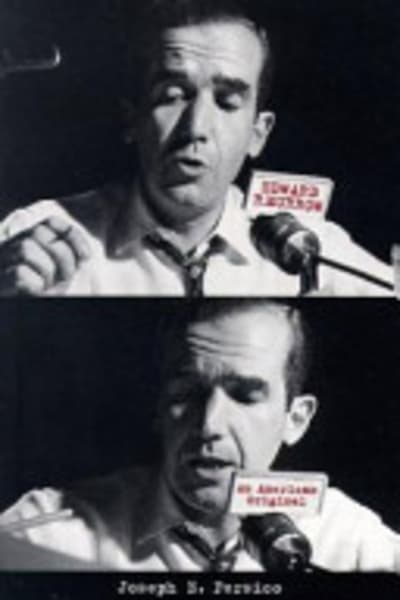
Persico structures Edward R. Murrow around the contrast between Murrow’s radio craft and his later TV authority, arguing that the same moral instincts drove both the London broadcasts and the McCarthy confrontation. The book leans hard on a few recurring episodes: Murrow’s famous on-air reporting during the Blitz, his careful cultivation of credibility with audiences, and then the late-40s pivot where he stops treating politics as background noise and treats it as a threat to truth. Persico’s most effective move is to show how Murrow’s style—measured, precise, unwilling to posture—became a weapon when Senator Joseph McCarthy demanded deference. Persico doesn’t just recount events; he keeps pointing to the machinery behind them: newsroom routines, broadcast constraints, and the way a single segment could turn public opinion. One chapter that anchors the book is the section on “London: The Blitz Broadcasts,” where Persico explains how Murrow used direct observation and restrained emotion to make distant suffering feel immediate without turning it into melodrama. Later, Persico’s account of the McCarthy era spells out the cost of speaking plainly—pressure from executives, the risk of being labeled disloyal, and the uncomfortable fact that audiences often want certainty, not careful doubt. The limitation is that Persico occasionally gets so immersed in media history and institutional detail that you may feel the human drama cool off, especially if you’re looking for a tight, scene-by-scene political thriller rather than an argument about broadcast ethics and influence. Still, the cumulative effect is hard to shake: Persico makes it clear that Murrow’s “neutral” tone was a deliberate choice, and that choice mattered when the country needed someone to say, on air, that power was not entitled to immunity.
Key Takeaways from Edward R. Murrow
-
1
London: The Blitz Broadcasts frames Murrow’s credibility as a craft—restrained emotion, specific detail, and steady tone under chaos.
-
2
McCarthy confrontation shows Persico’s core claim: broadcast ethics aren’t abstract; they’re tested when political pressure targets the newsroom.
-
3
Broadcast credibility explains how Murrow earned public trust through consistency, not charisma, and why that trust could be leveraged.
-
4
Network and executive pressure reveals the real constraints behind “independent” journalism—every segment had corporate and political gravity.
-
5
TV authority vs radio craft captures Persico’s structure: the same moral instincts adapt across mediums, changing the stakes.
Who Should Read This
If you’re tired of biographies that treat media history like wallpaper and you want to understand how on-air decisions shaped real political outcomes, read this. Someone who’s watched a newsroom get squeezed by pressure and wants a concrete example of how credibility gets built—and threatened—will find Persico useful.
Who Shouldn't Read This
If you want a fast, personality-forward narrative with minimal institutional context, Persico’s emphasis on broadcast systems will frustrate you. Someone who expects a deep dive into Murrow’s private life and psychology rather than his public craft and ethics should skip it.
Editor's Verdict
Persico’s best achievement is showing how Murrow’s measured radio discipline becomes a TV-era moral stance, especially in the Blitz material and its later payoff during the McCarthy confrontation. The real limitation is that the book sometimes substitutes media-infrastructure detail for emotional momentum, making certain stretches feel procedural. This will hit hardest for anyone mid-career in journalism, communications, or content work who’s dealing with pressure to “soften” the truth and needs a model of principled speech under risk.
Ready to read Edward R. Murrow?
Get your copy on Amazon today.
Edward R. Murrow — Frequently Asked Questions
About Joseph E. Persico
Joseph E. Persico (born 1938) is an American author and journalist known for writing about media and public affairs. He is credible on Edward R. Murrow because he has conducted extensive reporting and research into Murrow’s life and career, drawing on primary and contemporaneous sources. Persico’s other notable works include Roosevelt’s Secret War: FDR and World War II Espionage and Nuremberg: Infamy on Trial.