Gandhi — Book Summary & Review
Last updated:
Gandhi Summary
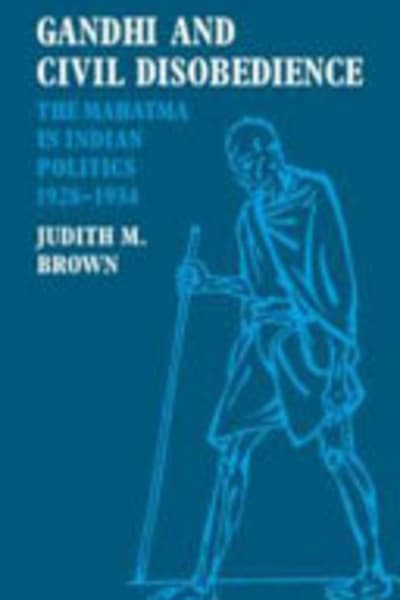
Judith Margaret Brown’s Gandhi is organized around a specific political hinge: the 1928–1934 stretch when Gandhi leads a “continental campaign of civil disobedience” and then suspends it after negotiating a pact with the Viceroy. Brown’s central framework is that Gandhi’s influence is not a constant force; it swells and contracts as circumstances change—especially as the Congress movement shifts from earlier non-cooperation to renewed pressure against the Raj. A concrete example is Brown’s focus on the Salt March to Dandi as the campaign’s most graphic emblem, but she keeps insisting the march is only the visible tip of a broader strategy of coordinated resistance.
What makes Brown’s argument feel earned is how she tracks the political math inside the Congress movement rather than treating Gandhi as a lone moral engine. She shows how Gandhi’s “comparative political quiescence” after 1920 is temporary, and how the 1928–1934 period pulls him back into active leadership. Brown also uses “pact” negotiation as more than a diplomatic footnote: it’s the moment where civil disobedience becomes conditional, and where Gandhi’s role morphs from agitator to negotiator without losing the campaign’s internal logic.
One honest limitation: Brown doesn’t aim to recreate Gandhi’s inner life in the way a devotional biography might; it’s an analysis of political phases, not a psychological portrait, and readers hoping for lots of everyday detail about Gandhi’s personal routines will feel shortchanged. If you want a straightforward, chronological life story with minimal interpretation, Brown’s approach will frustrate you.
Key Takeaways from Gandhi
-
1
1928–1934 campaign phase: Brown treats these years as Gandhi’s influence rising again, not as a flat, continuous arc.
-
2
Civil disobedience suspension pact: Negotiations with the Viceroy become a strategic lever, not a betrayal or mere compromise.
-
3
Salt March to Dandi: The march is the campaign’s most visible symbol, but Brown insists on the wider coordination behind it.
-
4
Post-1920 political quiescence: Gandhi’s earlier slowdown is analyzed as a phase with consequences for Congress and British response.
-
5
Congress movement leadership: Brown frames Gandhi’s role as shifting with organizational needs, not as a solitary moral constant.
Who Should Read This
Someone who’s trying to understand how independence movements actually function—strategy, timing, and negotiations included—should read Brown’s Gandhi. If you’re stuck on the question of why resistance sometimes pauses at exactly the wrong moment, this book explains the machinery behind those pauses.
Who Shouldn't Read This
If you want a chronological, story-first biography that foregrounds Gandhi’s personal psychology and day-to-day life, Brown’s political analysis will feel cold. If you’re easily bored by dense interpretive argument and want fewer dates and phases, you’ll likely stop before the author’s payoff arrives.
Editor's Verdict
The single best thing Brown does is map Gandhi’s influence as a variable force during 1928–1934, using the Salt March to Dandi and the Viceroy “pact” to show how civil disobedience can be both escalated and suspended. The real limitation is that the book prioritizes political analysis over the kind of intimate, chronological life narrative many biography readers expect. This will hit hardest for anyone who’s read a few popular Gandhi accounts and now wants the messy, strategic reasons behind the major turning points.
Ready to read Gandhi?
Get your copy on Amazon today.
Gandhi — Frequently Asked Questions
About Judith Margaret Brown
Judith Margaret Brown was a British historian and academic known for scholarship on Mahatma Gandhi and modern Indian politics. She earned advanced academic training in history and taught at universities in the UK, developing expertise through long-term research in primary sources. Brown is credible on Gandhi because her work focuses on Gandhi’s politics, ideology, and historical context using documented evidence. Her other notable works include Gandhi’s Rise to Power and Modern India: The Origins of an Asian Democracy.