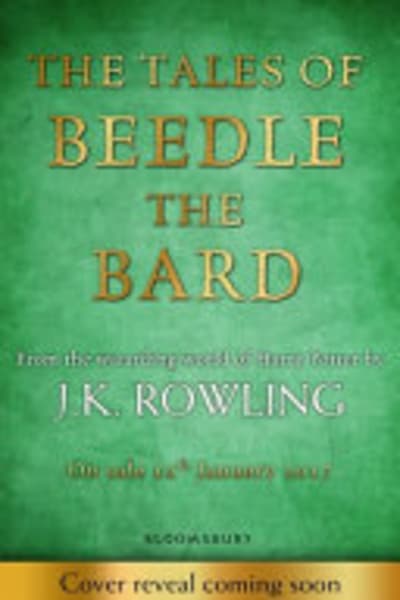
The Tales of Beedle the Bard — Book Summary & Review
by J.K. Rowling
Last updated:
The Tales of Beedle the Bard Summary
In The Tales of Beedle the Bard, Rowling frames each fairy story with Dumbledore’s “Observations” and a mini-lesson on how Hogwarts wizards treat folklore as something you can analyze, not merely enjoy. The book is short—about 127 pages—but it’s structured like a classroom packet: you read a tale, then you get Dumbledore’s notes on what the story is “doing,” plus a bit of his own memory and wizarding context. The five main selections are “The Wizard and the Hopping Pot,” “The Fountain of Fair Fortune,” “The Warlock’s Hairy Heart,” “Babbitty Rabbitty and her Cackling Stump,” and “The Tale of the Three Brothers.”
The fairy tales themselves play fair with old-world cruelty and old-world morals. “The Tale of the Three Brothers” lands with particular force because it’s both mythic and painfully practical—less about whimsy and more about consequence, especially once Dumbledore starts unpacking how the objects in the story function like magical ideas. Meanwhile, “The Warlock’s Hairy Heart” is the most openly satirical; it treats greed and vanity like diseases, and the humor is sharp enough to feel aimed at adults as well as children. Rowling’s gift here is tonal control: she can write a child-friendly story while letting the darkness show through the cracks.
The honest limitation is that this book isn’t built for readers who want original plot or character arcs. It’s not a novel; it’s a set of folktales plus commentary, so if you’re hunting for narrative momentum, you’ll feel the stops. Also, the Dumbledore framing is dense in places—more “wizarding scholarship” than cozy bedtime reading—so some readers will find the historical notes a chore rather than an attraction. Rowling’s last name shows up everywhere in the fandom, but here the real authorial move is giving you a reason to read stories twice: once for the magic, then for the meaning.
Key Takeaways from The Tales of Beedle the Bard
-
1
Dumbledore’s Observations: Each tale ends with commentary that treats folklore like evidence, linking symbols to wizarding history and ethics.
-
2
The Tale of the Three Brothers: The story works because the magical objects behave like choices, and Dumbledore forces you to notice the pattern.
-
3
Hopping Pot premise: “The Wizard and the Hopping Pot” turns wish-fulfillment into a lesson about responsibility and consequences.
-
4
Warlock’s Hairy Heart: The “hairy heart” idea functions as a physical metaphor for corrupted desire, then Dumbledore contextualizes it in magical terms.
-
5
Babbitty Rabbitty and her Cackling Stump: This one uses absurdity to expose how fear and authority can be tangled together in fairy logic.
Who Should Read This
If you’re rereading the Harry Potter world and want a deeper look at how Dumbledore-style scholarship treats stories as tools, this will scratch that itch. Someone who loves fairy tales but also likes the satisfaction of an annotated “why it matters” will enjoy Rowling’s last name fingerprints on both the magic and the meta-commentary.
Who Shouldn't Read This
If you need a sustained plot with character development, you’ll be disappointed because this is five short tales plus commentary, not a continuous narrative. If you dislike academic footnotes and prefer straightforward entertainment, Dumbledore’s Observations will feel like delays between the fun parts.
Editor's Verdict
The single best thing this book does is pair each fairy tale with Dumbledore’s Observations, especially the way he interprets “The Tale of the Three Brothers” as more than legend. The real limitation is that it offers no novelistic arc—only short stories and analysis—so readers seeking momentum will feel boxed in. Anyone who’s recently burned out on long fantasy series and wants something compact, then immediately wants to know what the symbols mean, will hit hardest on a reread of Rowling’s wizard-world logic.
Ready to read The Tales of Beedle the Bard?
Get your copy on Amazon today.
The Tales of Beedle the Bard — Frequently Asked Questions
About J.K. Rowling
J. K. Rowling is a British author born in 1965 in England. She studied French and the Classics at the University of Exeter and later worked in education and publishing before becoming a bestselling novelist. She is credible to write about wizarding folklore because she created the Harry Potter series’ magical world, which includes established traditions and lore. Her other notable works include the Harry Potter novels and Fantastic Beasts and Where to Find Them.