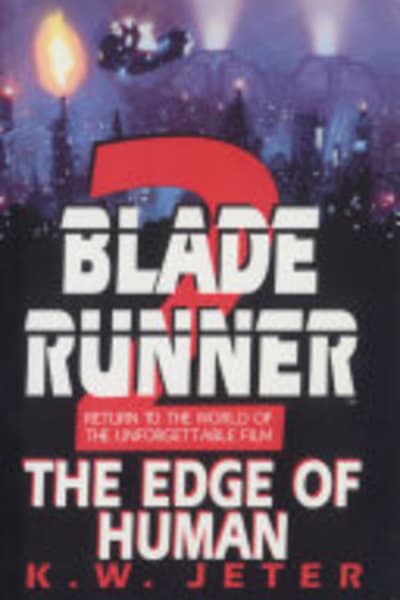
Blade Runner 2 — Book Summary & Review
by K. W. Jeter
Last updated:
Blade Runner 2 Summary
Blade Runner 2 is structured like a suspense thriller wrapped around a specific premise: the “Blade Runner” world keeps resurfacing because the machines and the humans share the same hunger for control, and K. W. Jeter keeps pressing that pressure until it snaps. You can feel Jeter’s craft right away in the way he alternates between hard-edged noir beats and sudden bursts of speculative invention—new slang, new tech constraints, new reasons people lie. The book’s San Francisco atmosphere isn’t just scenery; it’s a pressure system. Jeter uses the city’s verticality and foggy distance to make pursuit feel geometric rather than romantic.
One recurring framework is Jeter’s focus on what counts as “identity” when memory can be edited, traded, or manufactured. He dramatizes this through recurring characters who behave like they’ve been preloaded with motives, then forces them to confront the cost of that convenience. The suspense payoff comes less from who’s guilty and more from how everyone’s incentives collide: cops who need results, corporations that need plausible deniability, and replicants/near-replicants who want proof they’re real.
A concrete example: the book’s early investigation sequence makes the reader track tiny inconsistencies in behavior like a forensic accountant, and Jeter keeps returning to the same question—what do you do when the evidence is partly theater? Later, the story escalates into a tighter, more claustrophobic stretch where Jeter’s invented tech language becomes a tool for tightening the plot rather than showing off. My limitation: if you want a clean, single “answer” to the moral puzzle, Blade Runner 2 frustrates you; it’s more interested in unresolved tension than closure, and some of the worldbuilding will feel like it’s assumed rather than patiently taught.
Key Takeaways from Blade Runner 2
-
1
Blade Runner premise: Jeter treats identity as an engineered output, so every clue doubles as a manipulation attempt.
-
2
Noir pacing framework: Scenes move like interrogations—tight, suspicious, and structured around what characters refuse to say.
-
3
Memory-as-incentive: The plot argues that altered recollections don’t just change facts; they rewire motives.
-
4
San Francisco pressure: The setting functions like a maze, turning distance, fog, and height into plot mechanics.
-
5
Jeter’s tech constraints: Jeter’s invented tech rules limit characters, making suspense come from limitations, not explosions.
Who Should Read This
Someone who’s craving a Blade Runner–adjacent thriller with heavier psychological friction than action should read this. If you’re the kind of reader who enjoys tracking motives and inconsistencies scene by scene, Jeter will reward that habit.
Who Shouldn't Read This
If you need the prose to be straightforward and explanatory, Jeter will frustrate you with assumed context and dense speculation. If you want a fully resolved moral verdict, this book’s tension-first approach will leave you feeling under-satisfied.
Editor's Verdict
The single best thing Blade Runner 2 does is use its noir investigation rhythm to make “identity” a suspense engine, especially in the early evidence-tracking sequences where Jeter spotlights contradictions. The real limitation is that Jeter prioritizes lingering ambiguity over satisfying closure, so readers who want answers will feel stalled. This hits hardest for anyone who’s reread the original Blade Runner-era questions and is ready to argue with the unresolved parts of the philosophy in real time.
Ready to read Blade Runner 2?
Get your copy on Amazon today.
Blade Runner 2 — Frequently Asked Questions
About K. W. Jeter
K. W. Jeter is an American science-fiction author and editor. He began publishing in the 1970s and became known for writing hard-edged, cinematic SF that often draws on film noir and cyberpunk themes. He is credible on Blade Runner–related material because he wrote the Blade Runner sequel novel, Blade Runner 2: The Edge of Human, continuing the franchise’s themes and setting. Other notable works include Dr. Adder and the short-story collection The Glass Hammer.