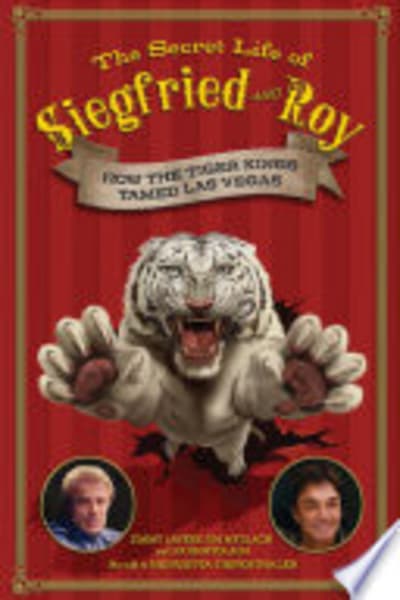
The Secret Life of Siegfried and Roy — Book Summary & Review
by Jimmy Lavery
Last updated:
The Secret Life of Siegfried and Roy Summary
The Secret Life of Siegfried and Roy is built around the idea that their “ultimate illusion” wasn’t only onstage: it was the management of relationships, health, and public narrative, especially after Roy Horn’s 2003 tiger attack. The book’s core structure follows two tracks—how the duo became a Las Vegas machine at The Mirage, and how the aftermath forced their inner circle to document what had been hidden. Jimmy Lavery spends a lot of time on the behind-the-scenes mechanics of performance, but he keeps circling back to a specific claim: the duo’s real act was maintaining secrecy while building an empire of spectacle. You see this in the way the recovery is framed as its own long production, with rehabilitation, security decisions, and media strategy treated like components of the show. Lavery also leans on the testimony and perspective of Louis Mydlach, who, according to the book, was at Roy’s side during the most brutal months of recovery.
Where the book shines is in its insistence that the public story and the private story diverged in practical ways—how people around Siegfried and Roy handled questions, what they chose to confirm, and what they let rumors do the work. Lavery’s best material is the post-attack period: the account of Roy’s survival after being pronounced dead on the operating table, and the way the press investigation becomes a spotlight that exposes the duo’s “secret world.” That exposure is messy, and the book doesn’t pretend otherwise.
Honest limitation: this isn’t a full, balanced cultural history of Siegfried and Roy, and it doesn’t offer much in the way of critical analysis of animal-performance ethics; it’s focused on the performers’ inner circle and the narrative they left behind. If you want a courtroom-style reckoning or a tightly argued critique, Lavery’s approach will frustrate you.
Key Takeaways from The Secret Life of Siegfried and Roy
-
1
Ultimate Illusion: The book argues secrecy was part of the act, not a side effect, shaping relationships and public messaging.
-
2
Louis Mydlach’s Recovery Lens: Mydlach’s presence during Roy’s rehab turns medical ordeal into narrative structure and moral urgency.
-
3
The Mirage Franchise Machine: The duo’s success is described as an operational system—timing, spectacle, and staff coordination—not mere talent.
-
4
Montecore Aftermath: Roy’s attack is treated as a rupture that forces the inner circle to rewrite what “the show” means.
-
5
Inner Circle Testimony: Lavery emphasizes corroboration from specific insiders, so the story reads like managed memory.
Who Should Read This
Someone who remembers the 2003 attack but only knows the headline will appreciate a backstage-focused account that explains how the story kept evolving. If you’re fascinated by how entertainment brands protect their image while health and scandal collide, this will land.
Who Shouldn't Read This
If you want a deeply researched, skeptical critique of animal performance or a broader ethical argument, this book mostly won’t satisfy you. If you dislike recovery narratives that prioritize insiders’ perspectives over outside verification, Lavery’s approach will feel one-sided.
Editor's Verdict
The best thing The Secret Life of Siegfried and Roy does is make the post-attack period feel like a second show, with Louis Mydlach and Jimmy Lavery tracing how Roy’s rehabilitation reshaped the duo’s public reality. The real limitation is that it stays close to the performers’ inner circle and avoids a rigorous ethical or cultural reckoning around animal spectacle. Anyone who’s lived through a career-threatening public crisis—like getting blindsided by press after a workplace incident—will feel this hardest when the narrative control starts slipping.
Ready to read The Secret Life of Siegfried and Roy?
Get your copy on Amazon today.
The Secret Life of Siegfried and Roy — Frequently Asked Questions
About Jimmy Lavery
Jimmy Lavery is a writer and researcher known for nonfiction books about entertainment history. He is credible on the topic of Siegfried and Roy because he has written extensively on their careers and the broader context of their stage work, drawing on documented accounts and reporting. His notable works include The Secret Life of Siegfried and Roy.