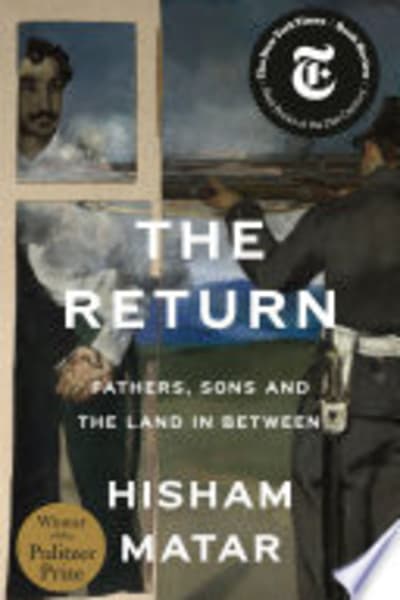
The Return: Fathers, Sons and the Land in Between — Book Summary & Review
by Hisham Matar
Last updated:
The Return: Fathers, Sons and the Land in Between Summary
In The Return: Fathers, Sons and the Land in Between, Hisham Matar organizes his story around a recurring, almost unbearable framework: the idea that a family’s missing person is never “gone,” only rerouted through memory, politics, and geography. The book moves between his father’s disappearance in Libya and the later years when Matar tries to reconstruct what happened and why it hollowed out everyone left behind. Matar doesn’t write like a reporter; he writes like someone building a house out of photographs, overheard conversations, and the stubborn grammar of blame. One of the book’s clearest structural anchors is the way he returns to “the land in between”—that stretch of space where exile becomes a permanent condition and where father and son relationships are constantly rewritten by distance.
A concrete example: Matar’s attention to travel is never scenic; it’s investigative and emotional. When he imagines or pursues traces of his father, the “what” of the search keeps colliding with the “how”—how a son is supposed to behave when the facts refuse to arrive. He also lingers on the social mechanics of loss: who gets to ask questions, who shuts down, and how silence becomes a family heirloom. The best parts show Matar learning, painfully, that love and anger can share the same sentence, and that the politics of Libya seep into private rituals like a stain you can’t scrub out.
Still, this is not a book that delivers a clean explanation of the historical puzzle. If you want a linear timeline, courtroom-style clarity, or a satisfying resolution to the disappearance plotline, Matar will frustrate you. The Return is about what absence does to meaning—less about solving the case than about living inside the uncertainty.
Key Takeaways from The Return: Fathers, Sons and the Land in Between
-
1
The Return’s “land in between” frames exile as a permanent geography, where identity shifts with every border crossed.
-
2
Matar’s missing-person structure treats absence as an active force, rewriting family roles years after the last sighting.
-
3
Father–son reconstruction in the book shows how love and blame operate as twin engines in grief.
-
4
Libyan political memory in Matar’s narration demonstrates how public events colonize private conversations and silences.
-
5
Travel-as-investigation makes movement feel like research with no guarantee of evidence or closure.
Who Should Read This
Someone who grew up with family gaps—an unanswered question, a missing relative, a story that stops mid-sentence—will feel the book’s pressure in their chest. If you’re living in the long aftermath of a loss and keep trying to “figure it out,” Matar’s approach will match your stubborn, looping need for meaning.
Who Shouldn't Read This
If you want neat answers, tidy timelines, and a documentary-style explanation of events, The Return will feel maddeningly unresolved. If you dislike lyrical, memory-driven nonfiction that prioritizes emotional logic over chronology, Matar’s method will likely exhaust you.
Editor's Verdict
The single best thing The Return does is make the father–son relationship inseparable from Libyan political memory, especially through Matar’s repeated returns to the “land in between” idea. The real limitation is that it offers no definitive historical resolution and often refuses the closure many readers come for. This hits hardest for anyone who is already deep in the “after” stage of grief—years after the event—when you’re tired of being told to move on.
Ready to read The Return: Fathers, Sons and the Land in Between?
Get your copy on Amazon today.
The Return: Fathers, Sons and the Land in Between — Frequently Asked Questions
About Hisham Matar
Hisham Matar is a Libyan-British writer and journalist born in 1970 in New York City and raised in Libya and the UK. His father was detained and later disappeared under Muammar Gaddafi, shaping his lifelong focus on Libya, exile, and the politics of family and memory. He is credible on the topic through lived experience and extensive reporting. His notable works include In the Country of Men and The Return: Fathers, Sons and the Land in Between.