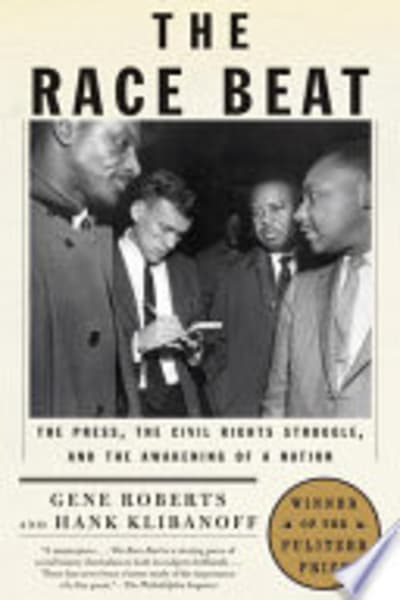
The Race Beat — Book Summary & Review
by Gene Roberts and Hank Klibanoff
Last updated:
The Race Beat Summary
In The Race Beat, Gene Roberts and Hank Klibanoff build their story around a newsroom-style method—tracing how specific reporters framed the civil-rights struggle and how those choices shaped public reaction. The book’s core argument isn’t only that media covered the era; it’s that media coverage acted like a steering wheel, speeding some narratives forward while leaving others stalled. Roberts and Klibanoff repeatedly return to the idea that “race reporting” was never neutral: sources, deadlines, word choice, and access all determine what readers believe is possible. One of the clearest through-lines is how local and national coverage treated Black protest as either “disorder” or “demand,” and how that framing changed when violence erupted or when officials offered a ready-made explanation. They also zoom in on concrete reporting mechanics—who got interviewed, what was verified, and what was left off the record—showing how editorial decisions can harden into “common sense.”
A standout example is the book’s attention to the Atlanta-based press ecosystem and the ways journalists cultivated relationships with activists and officials, then faced pressure to conform to institutional expectations. Roberts uses these moments to show how reporters navigated risk: staying close to the story without becoming a pawn in someone else’s agenda. Klibanoff, meanwhile, keeps returning to the moral and professional cost of getting it wrong—especially when a story’s framing becomes a justification for repression. The book is most satisfying when it pairs a scene of reporting with the downstream effect on policy and public opinion, rather than treating coverage as background noise.
Honest limitation: it doesn’t read like a full, chronological civil-rights history; if you want a broad timeline from Reconstruction through the 1960s, you’ll have gaps because the authors focus tightly on media dynamics and the specific cases they can document.
Key Takeaways from The Race Beat
-
1
Race Beat reporting: The authors treat news coverage as an active force that shapes what readers think is legitimate action.
-
2
Framing vs. facts: Roberts and Klibanoff show how word choice and sourcing can turn the same event into opposite moral meanings.
-
3
Newsroom access: The book explains that who journalists can reach determines which voices dominate, even when reporters claim balance.
-
4
Verification under pressure: The authors emphasize how deadlines and institutional pressure affect what gets checked, not just what gets published.
-
5
Downstream consequences: Coverage choices feed into policy and public reaction, so reporting isn’t history’s side character.
Who Should Read This
Someone who feels like modern outrage cycles are driven by “narratives” rather than evidence will find The Race Beat uncomfortably relevant. If you’re a journalist, editor, or student wrestling with how to cover protests without laundering power, Roberts and Klibanoff give you a concrete checklist of failure modes.
Who Shouldn't Read This
If you want a sweeping, start-to-finish history of the civil-rights movement, this book’s media-centered scope will feel like intentional narrowing. If you dislike dense historical documentation and prefer a purely narrative style, you may find the reporting mechanics slow and occasionally repetitive.
Editor's Verdict
The single best thing this book does is connect specific reporting decisions to real-world outcomes, with Roberts and Klibanoff repeatedly showing how framing changes public tolerance for violence. The real limitation is that it prioritizes media dynamics over a comprehensive civil-rights timeline, so readers seeking broad coverage will feel shortchanged. This hits hardest for anyone mid-career who’s spent years assuming their institution “just reports,” right before they’re asked to cover a controversial protest or unrest event.
Ready to read The Race Beat?
Get your copy on Amazon today.
The Race Beat — Frequently Asked Questions
About Gene Roberts and Hank Klibanoff
Gene Roberts is an American journalist and editor, best known for his work at The Philadelphia Inquirer and for reporting on civil rights and American politics. Hank Klibanoff is an American journalist and author who, with Roberts, led the research behind The Race Beat. They are credible because they spent years investigating primary sources, documents, and interviews for their reporting. Other notable works include The Race Beat (with Klibanoff) and, for Roberts, articles and editorial leadership at major U.S. newspapers.