The Quotable Jefferson — Book Summary & Review
Last updated:
The Quotable Jefferson Summary
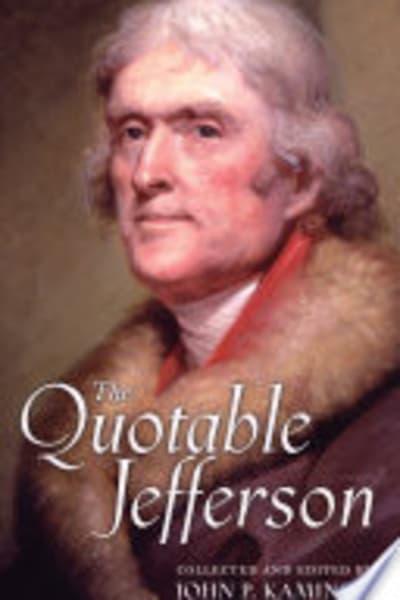
The Quotable Jefferson arranges Thomas Jefferson’s nearly five hundred quotations alphabetically by topic, so the book reads like a mental index: you jump from “Advice” to “Women” to “Self” without any narrative bridge, then watch Jefferson’s opinions change their temperature depending on the heading. What makes the structure work is that Jefferson is allowed to speak in fragments, and the editor’s choice of topics forces you to notice tensions—like how “liberty” talk can sit beside sharp social hierarchy remarks, or how Jefferson’s private self-assessment rubs against public claims about character. The section “Advice” is the most satisfying place to start, because it shows Jefferson building a worldview out of short maxims: he sounds practical, even when the advice is morally dressed. Another highlight is “On Himself,” where the book collects observations that make Jefferson feel less like a statue and more like a man managing reputation, memory, and regret.
Still, Thomas Jefferson doesn’t get the benefit of context here. The book doesn’t provide deep historical framing for each quote, so if you want to trace an argument across letters, speeches, and drafts, you’ll keep wishing for footnotes that do more than point you toward the source. You also have to tolerate the alphabetical shuffle; there’s no sustained argument running from A to Z, so the experience is more curatorial than interpretive. For me, that was fine—I treated The Quotable Jefferson like a reference shelf I could browse—but it will frustrate anyone expecting a coherent essay from Thomas Jefferson. If you want a straight line from Jefferson’s life to his politics, this collection will feel like a pile of keys without the lock.
Key Takeaways from The Quotable Jefferson
-
1
Alphabetical by topic: the book functions like an index, so meaning shifts based on where Jefferson lands on the page.
-
2
“Advice” section: Jefferson’s guidance appears as compact maxims, revealing a practical moral posture more than a system.
-
3
“On Himself” grouping: self-portraits are gathered as quotations, making Jefferson’s self-management feel painfully human.
-
4
Nearly five hundred quotations: the volume rewards browsing and re-reading, but it limits sustained argumentative development.
-
5
Contemporaries’ comments: third-party remarks complicate Jefferson’s voice, preventing him from sounding single-note throughout.
Who Should Read This
Someone who loves skimming primary-source-style material and wants Jefferson’s voice organized by themes will enjoy browsing The Quotable Jefferson between tasks. If you’re drafting essays or speeches and need quick, thematically sorted Jefferson lines, this structure will save time.
Who Shouldn't Read This
If you want context—who said what, when, and why—The Quotable Jefferson will feel thin because it prioritizes quotation over explanation. If you need a continuous narrative argument from Thomas Jefferson, the alphabetical format will feel like wandering without a map.
Editor's Verdict
The single best thing The Quotable Jefferson does is make Thomas Jefferson’s ideas audible through topical collections like “Advice” and “On Himself,” where his tone changes with the category. The real limitation is that it offers minimal historical scaffolding, so many quotes land as assertions rather than explained positions. Anyone preparing a classroom presentation or personal reading list will benefit most when they’re selecting specific Jefferson lines on liberty, character, or selfhood before they write.
Ready to read The Quotable Jefferson?
Get your copy on Amazon today.
The Quotable Jefferson — Frequently Asked Questions
About Thomas Jefferson
Thomas Jefferson (1743–1826) was an American Founding Father, principal author of the Declaration of Independence, and third U.S. president. Educated at the College of William & Mary, he served in the Continental Congress, as U.S. minister to France, and as governor of Virginia. He is credible for quoting on early American political thought because his speeches, letters, and official writings are primary sources. Other notable works include Notes on the State of Virginia and the Virginia Statute for Religious Freedom.