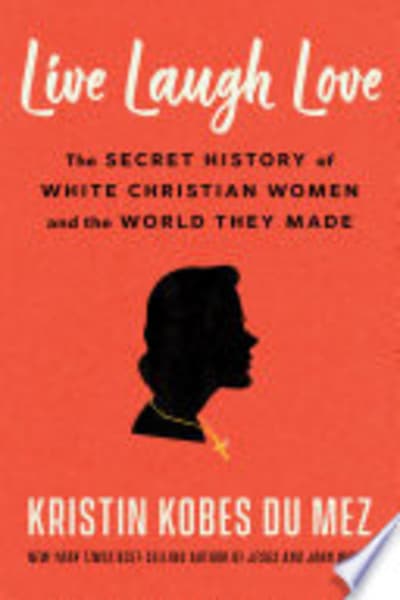
Live Laugh Love — Book Summary & Review
Last updated:
Live Laugh Love Summary
Live Laugh Love is organized around Du Mez’s insistence that today’s “white Christian femininity” grew out of older religious movements—especially New Thought’s mind-over-reality optimism—then got sold back to women through mainstream consumer channels. Du Mez doesn’t treat Hallmark, Mary Kay, multilevel marketing, or shiplap as background noise; she reads them as the cultural packaging for a theology that trained women to equate spiritual worth with emotional manageability, domestic competence, and visible positivity. One of the book’s sharpest stretches is her account of how religious innovators fused “positive thinking” with prosperity expectations, turning the inner life into a lever for external success. Du Mez’s historical work is at its best when she shows overlap rather than neat boundaries: Mormonism, holiness evangelicalism, and holiness theology’s charismatic offshoots keep bumping into each other in her narrative, which helps explain why the modern brand of “uplift” feels coherent even when its sources are messy.
A concrete example: Du Mez lingers on the way women moved between religious and secular retail—prairie fiction, Tupperware parties, Christian bookstores and radio, and big-box lifestyle shopping—without experiencing it as a contradiction. She argues that this flexibility created a Christianity that was influential in daily life while remaining “thin” in formal doctrine, because the real glue was a cultural ideal of womanhood. The book’s limitation is also clear: if you want a tidy, fully sourced academic monograph with exhaustive primary citations and a balanced treatment of every competing interpretation, Du Mez’s approach will feel more interpretive than exhaustive, and it can frustrate readers hoping for a strictly neutral history.
Key Takeaways from Live Laugh Love
-
1
New Thought optimism: A framework where the mind shapes reality, later repackaged as spiritual and financial success expectations.
-
2
Positive thinking theology: Du Mez shows how “uplift” language becomes a mechanism for prosperity and social credibility.
-
3
White Christian femininity: A cultural ideal that rewards domestic visibility, emotional vulnerability, and performative sweetness as faith.
-
4
Consumer Christianity: Christian women’s everyday shopping becomes a bridge between religious identity and mainstream marketing channels.
-
5
Thin formal doctrine: Du Mez argues the movement’s power came more from lifestyle ideals than from carefully articulated beliefs.
Who Should Read This
If you’re exhausted by arguments that treat modern Christian culture as either purely “authentic” or purely “corrupt,” this book will give you a third angle. Someone who feels stuck watching women’s faith get marketed through lifestyle brands and Hallmark-style messaging will recognize the pattern fast.
Who Shouldn't Read This
If you only want a tightly argued, citation-heavy academic history with minimal interpretation, Du Mez’s narrative style will frustrate you. If you’re hoping for a practical guide to changing your media diet or church culture, this book won’t deliver the steps you want.
Editor's Verdict
Live Laugh Love’s best move is how Du Mez connects New Thought’s positive-thinking logic to a long-running, consumer-friendly feminine ideal—then illustrates it through the religious/secular overlap of women’s shopping and media. The limitation is that the book leans interpretive and cultural-synthesis heavy, so readers wanting exhaustive doctrinal detail and primary-source rigor may feel underfed. This hits hardest for anyone in the middle of a faith-and-politics reappraisal—especially if you’ve watched your social media feed turn “soft” womanhood into a kind of moral credential and you want the genealogy behind it.
Ready to read Live Laugh Love?
Get your copy on Amazon today.
Live Laugh Love — Frequently Asked Questions
About Kristin Kobes Du Mez
Kristin Kobes Du Mez is an American historian and professor known for her scholarship on evangelical Christianity and American religious history. She earned her PhD in history from the University of Notre Dame and has written extensively on how Christian movements have shaped politics and culture in the United States. She is credible on this topic through her academic research and peer-reviewed work. Notable books include Jesus and John Wayne (2018) and The Rise and Fall of the Bible (2020).