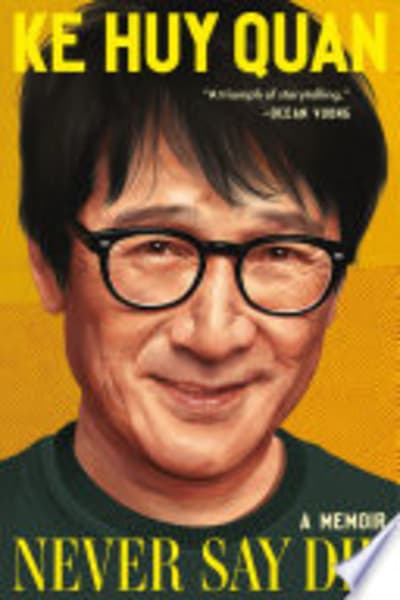
Never Say Die — Book Summary & Review
by Ke Huy Quan
Last updated:
Never Say Die Summary
Never Say Die is built around a simple, recurring contrast Ke Huy Quan keeps returning to: the public version of him (child star, then faded actor) versus the private version that survives by doing the next right thing. The book tracks that split from his 12-year-old debut after a whim audition, through the early, almost mythic perks of filmmaking—swimming lessons from Harrison Ford on Indiana Jones and the Temple of Doom, Spielberg and Lucas gifting birthday boxes of toys, and lifelong friendships forged on The Goonies—then into the long, humiliating quiet when roles dried up and Quan had to take behind-the-scenes work. What makes Never Say Die hold together isn’t the celebrity scrapbook; it’s how Quan frames each career pivot as a choice about identity, not luck. He describes leaving acting, rebuilding confidence through craft and collaboration, and learning how to watch performances again without needing them to validate him. When Quan finally steps back in front of the camera at 49 for Everything Everywhere All at Once, he treats it as a return to a practice he’d kept alive offscreen: showing up, listening hard, and trusting community. The memoir’s best sequences—his Chinatown-to-Hollywood transition and the emotional hangover of being “useful” but unseen—land because he’s specific about what hope costs.
Honest limitation: this isn’t a nuts-and-bolts Hollywood how-to, and it won’t satisfy readers who want a polished, scene-by-scene explanation of Everything Everywhere All at Once’s acting process; it’s more about emotional accounting than technique.
Key Takeaways from Never Say Die
-
1
Identity-as-practice: Quan treats acting as something you rehearse in private, so setbacks don’t erase your craft.
-
2
Public vs. private self: He repeatedly contrasts fame’s version of him with the quieter survivor who keeps working anyway.
-
3
Chinatown apprenticeship: His early LA community acts like a training ground for trust, belonging, and staying power.
-
4
Behind-the-scenes humility: When acting stalls, Quan learns to measure success by contribution, not spotlight.
-
5
Comeback as timing-plus-prep: Everything Everywhere All at Once works because Quan’s long patience meets a role that finally fits.
Who Should Read This
Someone who’s spent years feeling “between chapters” at work—good at the job, stalled on recognition—will find Quan’s story bracing. If you’re carrying a private fear that your best days are over, Quan’s account of rebuilding confidence will feel uncomfortably real.
Who Shouldn't Read This
If you want a strict, chronological Hollywood industry expose with lots of names, deals, and power dynamics, you may feel underfed here. If you’re looking for a detailed acting method or a tactical breakdown of Quan’s performance choices, Never Say Die stays more emotional than technical.
Editor's Verdict
The single best thing Never Say Die does is make the comeback feel earned by tying it to Quan’s long apprenticeship offscreen, especially his behind-the-scenes years before Everything Everywhere All at Once. The real limitation is that the book doesn’t offer a practical roadmap for readers who want career advice or craft instruction. This will hit hardest for anyone mid-career who’s grown tired of “reinvention” talk and needs proof that staying in the work can keep hope alive.
Ready to read Never Say Die?
Get your copy on Amazon today.
Never Say Die — Frequently Asked Questions
About Ke Huy Quan
Ke Huy Quan is a Vietnamese-born American actor and filmmaker who rose to prominence as a child actor in the 1980s, including roles in The Goonies and Indiana Jones and the Temple of Doom. He later became known for his comeback in Everything Everywhere All at Once. He is credible to write about perseverance and career reinvention based on his own public experiences in Hollywood. Other notable works include The Goonies, Indiana Jones and the Temple of Doom, and Everything Everywhere All at Once.