The Prize — Book Summary & Review
Last updated:
The Prize Summary
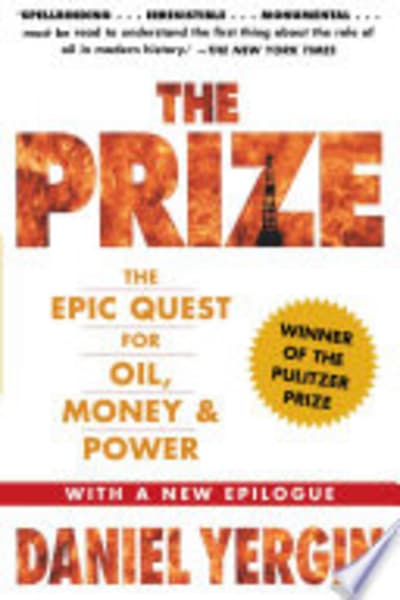
In The Prize, Daniel Yergin frames oil history around recurring “prize” dynamics—how access, pricing, and political leverage turn energy into power—and the book is built as a long argument that geopolitics follows the flow of crude. Yergin’s structure is chronological but never neutral: he keeps circling back to the same mechanism, showing how companies, governments, and financiers bargain over reserves and routes until those deals harden into strategy. One of the most revealing stretches is the World War I and interwar material, where he treats the petroleum trade less like background industry and more like a supply-chain battlefield that quietly changes military planning. Later, during World War II, Yergin connects operational needs to diplomatic decisions with a level of specificity that makes the reader feel the pressure of shortages rather than just hearing about them. A concrete example: his discussion of how wartime demand reshapes infrastructure priorities and accelerates state involvement in production and distribution.
Yergin’s strongest chapters are the ones where he explains the “why” behind policy moves—why leaders tolerate risk, why nationalization becomes tempting, and why price disputes can turn into foreign-policy crises. He also does a good job showing that oil is never only economics; it’s also technology, logistics, and public legitimacy. The book’s limitation is that it can feel relentless in its breadth: if you want a tight narrative thread about one war, one region, or one company, Yergin’s sweep across decades and theaters will frustrate you. By the end, you don’t just know dates—you understand how the prize logic keeps reappearing, and Yergin makes that repetition feel earned rather than forced.
Key Takeaways from The Prize
-
1
Prize dynamics: Yergin tracks how control over oil access and pricing becomes a repeatable political strategy.
-
2
Interwar supply logic: wartime lessons push states to treat petroleum logistics as a planning problem, not a business problem.
-
3
Nationalization pressure: Yergin shows how sovereignty claims grow when companies and governments clash over terms.
-
4
Infrastructure leverage: pipelines, ports, and refining capacity are portrayed as strategic chokepoints that shape diplomacy.
-
5
War-demand feedback: military consumption patterns feed back into foreign policy, accelerating state involvement.
Who Should Read This
If you’re trying to understand why energy policy keeps turning into foreign policy—especially when prices spike and alliances start wobbling—Yergin’s The Prize will click. Someone who enjoys tracing cause-and-effect across decades will appreciate how Yergin ties battles, budgets, and oil routes together.
Who Shouldn't Read This
If you want a punchy, modern-style narrative with short chapters and minimal technical detail, The Prize will feel heavy and sprawling. Someone who only cares about one single war or one single region will likely feel drowned by Yergin’s global, multi-decade scope.
Editor's Verdict
The single best thing The Prize does is explain how wartime demand and logistics reshape policy, with Yergin’s World War II material showing the feedback loop between operations and diplomacy. The real limitation is its breadth: it rarely narrows to the kind of focused, single-thread story many readers want. This hits hardest for anyone mid-career who’s suddenly assigned to energy or geopolitical work and needs a grounded mental model fast.
Ready to read The Prize?
Get your copy on Amazon today.
The Prize — Frequently Asked Questions
About Daniel Yergin
Daniel Yergin is an American historian and journalist. He worked for the Wall Street Journal and later became chairman of IHS Markit’s Cambridge Energy Research Associates (CERA), focusing on energy and geopolitics. He is credible on the subject of oil, gas, and their political impact because he has spent decades researching and reporting on energy markets and government policy. He wrote The Prize (1990) and later books including The Quest (2011) and The New Map (2020).