The Mucker — Book Summary & Review
Last updated:
Public domain via Project Gutenberg — free and legal.
The Mucker Summary
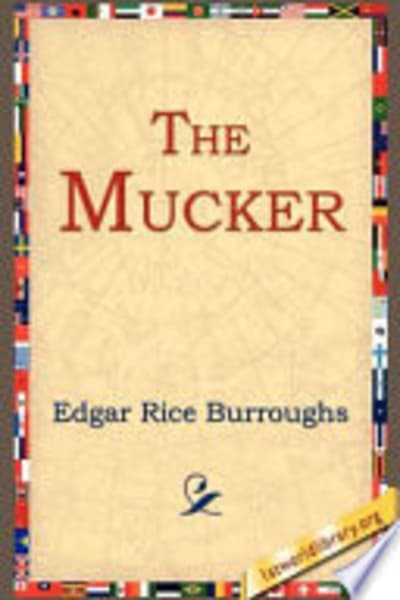
The Mucker opens by framing Billy Byrne’s Chicago as a lived-in map: Halsted to Robey, Grand Avenue to Lake Street, with the alley “kindergarten” that teaches him the only curriculum that matters—how to survive, how to recognize everyone, and how to keep score. Burroughs structures the story around Billy’s street education and the constant collision between that world and respectable authority, so early scenes in the feed-store alley and the bridewell aren’t background—they’re the operating system. Billy moves through a social ecosystem where bartenders know him by first name, and where patrolmen and plainclothes men are also “known,” just less pleasantly. Burroughs then tightens the screws with a recurring pattern: Billy’s loyalties are forged in the same place trouble is manufactured, and every attempt to step out of that orbit drags the old rules back in. A concrete example is Billy’s routine of hanging around the alley gang, watching how adult men and older boys treat work as a temporary inconvenience; when the “job” is the bridewell and it lasts a day or two, the incentive is clear. Another example is how Burroughs makes Chicago’s institutions feel like rival gangs with uniforms—Billy doesn’t fear the law as an abstraction; he fears it as a set of people who can ruin him. If you’ve read Burroughs for swashbuckling momentum, you’ll get it, but The Mucker is more interested in the social mechanics of intimidation and reputation than in heroic adventure. The limitation is blunt: this novel doesn’t provide much psychological depth beyond what Billy can feel in the moment, and it may frustrate anyone expecting a modern, morally nuanced take on street life rather than a blunt, period-typical one.
Key Takeaways from The Mucker
-
1
Billy Byrne’s Street Education: Burroughs treats the alley as a school where reputation and alliances replace formal learning.
-
2
The Bridewell as a Job: Work is framed as brief punishment, so the characters invest in idleness and leverage instead.
-
3
Chicago’s Known Faces: Patrolmen and bartenders are both mapped as personal relationships, not distant authority.
-
4
Reputation Rules: Billy’s decisions are governed by what others will say and do, not by abstract ethics.
-
5
Street vs. Authority Clash: Burroughs uses uniformed power as another gang system, making conflict feel personal.
Who Should Read This
If you’re stuck in a job or neighborhood routine where everyone seems to know your history, this book will click because Billy Byrne lives by reputation the way you might live by consequences. Someone who likes early-20th-century tough-guy fiction and wants to see how Burroughs builds tension from street social mechanics should give it a shot.
Who Shouldn't Read This
If you want modern moral complexity and interior psychology, The Mucker will feel flat because Burroughs stays mostly at the level of immediate street logic. If you’re impatient with period slang and a plot that leans on reputation battles more than character growth, you’ll probably bounce early.
Editor's Verdict
The Mucker’s best strength is its Chicago specificity: the Halsted-to-Lake-Street geography and the alley-to-bridewell pipeline make the conflict feel engineered rather than decorative. The real limitation is that Burroughs doesn’t dig deeply into Billy Byrne’s inner life, so motivations can read as externally imposed. This hits hardest for anyone who’s read a lot of modern crime fiction and wants a raw, old-school look at how social standing drives violence before you decide to chase newer styles.
Ready to read The Mucker?
Get your copy on Amazon today.
The Mucker — Frequently Asked Questions
About Edgar Rice Burroughs
Edgar Rice Burroughs (1875–1950) was an American writer and creator of adventure fiction. He worked in various jobs before turning to writing, and he drew on firsthand knowledge of frontier life and popular interest in the American West. He is credible for writing The Mucker (1906) because it reflects the era’s social realities and frontier settings he frequently used. Other notable works include Tarzan of the Apes (1912) and The Land That Time Forgot (1918).